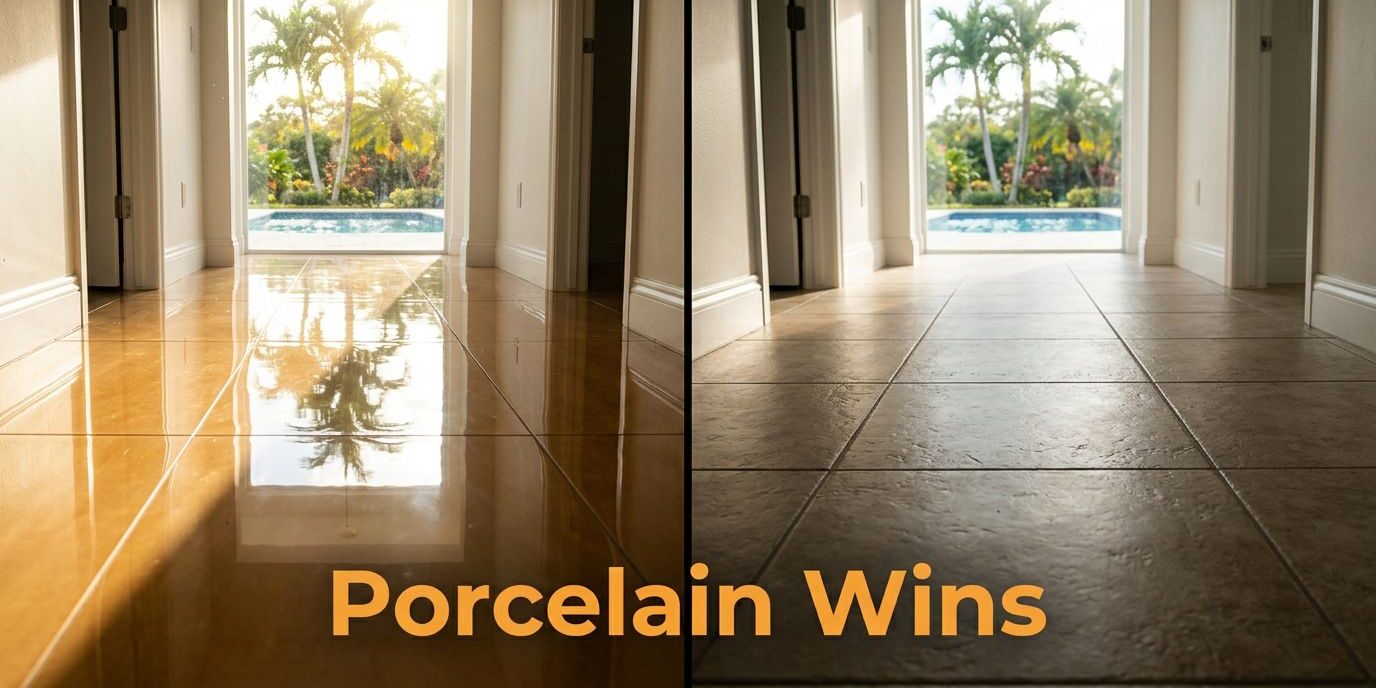
Florida floors do not get an easy life. They endure wet flip-flops, wind-blown sand, dripping umbrellas, pool traffic, and humidity that never seems to leave. When you are weighing the pros and cons of porcelain vs ceramic tile, it helps to understand how each material withstands these specific environmental stressors.
If you want my short answer, I usually pick porcelain tile for most Florida floors. Ceramic tile still has a place in the home, but I save it for lower-traffic areas.
Looks matter on day one, but performance matters for the next ten years. That is where this choice gets real, as the long-term durability of your flooring determines how well your home maintains its value and appearance over time.
Key Takeaways
- Porcelain Reigns Supreme for Florida: Due to its superior density and low water absorption, porcelain is the more reliable choice for Florida’s unique environment of sand, humidity, and constant moisture.
- Performance vs. Aesthetics: While both materials can look beautiful, porcelain provides significantly better long-term durability against the daily abrasion of grit and heavy foot traffic.
- Strategic Use of Ceramic: Ceramic tile remains a viable, cost-effective option for low-traffic, dry areas like guest bedrooms or offices where the floor is not subjected to harsh outdoor elements.
- Installation is Crucial: Regardless of material choice, the longevity of your floor depends on professional installation, including proper substrate preparation and the use of correct setting materials for local climate conditions.
Florida changes the tile decision fast
When I compare porcelain tile and ceramic tile for a Florida floor, I don’t start with color. I start with what the floor will deal with every day.
In Southwest Florida, that means moisture, grit, and heat. A front entry can get sand tracked in all week. A kitchen floor sees spills, dog bowls, and heavy foot traffic in high-traffic areas. A lanai or pool-adjacent space gets wet feet and strong sun. A retail floor or office lobby gets all of that, plus more wear.
Sand is the sneaky part. It looks harmless, but it acts like sandpaper under shoes. Over time, this constant wear and tear can degrade weaker surfaces and make a floor look tired sooner than expected.
Humidity matters too. Tile itself doesn’t swell like wood, but moisture still affects the whole system. Thinset, grout, movement joints, and the tile body all need to work together. If the tile absorbs more water, or if the installation isn’t right, Florida will expose it. Because of this, moisture resistance is a critical factor for any flooring material used in the region.
That’s why I don’t treat these materials as a style debate. I treat them as a performance decision.
For most busy floors, I want a denser tile with lower water absorption. That pushes me toward porcelain more often than not. Ceramic can still work well, but only when the room is a better match.
What porcelain and ceramic tile actually are
A lot of people think porcelain and ceramic are completely different materials. They are actually closely related. Porcelain tile is a type of ceramic, but it is made from a refined clay base and kiln-fired at significantly higher temperatures. This manufacturing process creates a material with superior density, making it much harder and less porous than its counterpart.
Standard ceramic tile is still durable and can look great in many spaces. However, when used for flooring, it generally offers a bit less toughness and has a higher water absorption rate compared to porcelain. In a mild, dry room, that difference may not be a major concern, but in Florida, it often is.
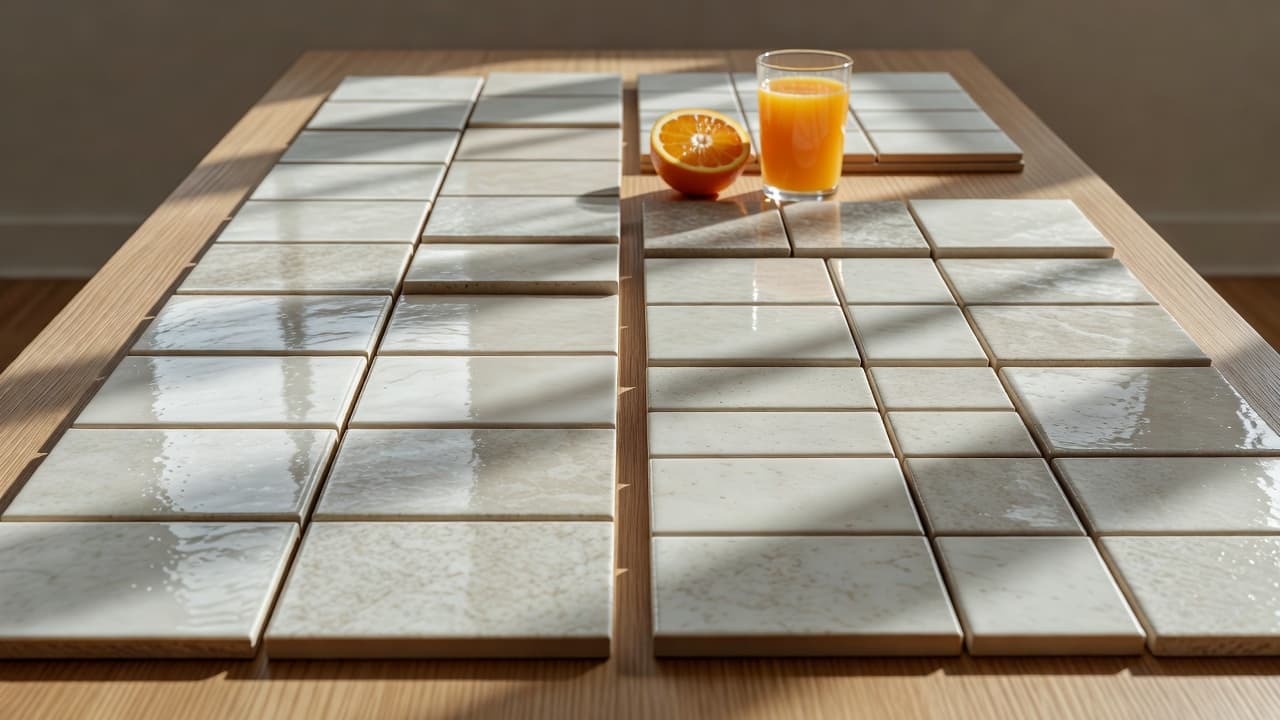
On a sample board, both can look great. Under Florida traffic, the differences show up faster.
Here is the quick side-by-side I give clients.
| Factor | Porcelain tile | Ceramic tile | What that means for Florida floors |
|---|---|---|---|
| Water absorption rate | Very low, often 0.5% or less | Higher than porcelain | Porcelain handles moisture better |
| Density | Harder and denser | Slightly softer | Porcelain usually holds up better in busy areas |
| Installation | Harder to cut | Easier to cut | Ceramic can reduce labor in some jobs |
| Price | Often higher | Often lower | Ceramic is a budget-friendly option |
That does not make ceramic a bad product. It simply means the margin for error is smaller.
If the floor is in a guest room, a quiet office, or another low-traffic spot, ceramic tile may be all you need. If it is a main living area, entry, kitchen, or business floor, porcelain tile usually gives me a safer long-term bet.
How each tile handles moisture, traffic, and slippery conditions
This is where the porcelain versus ceramic question stops being theoretical. It becomes about daily life.
On moisture, porcelain tile usually wins. Its dense body absorbs less water, which makes it a stronger fit for bathrooms, shower floors, kitchens, laundry rooms, and any floor near a patio or pool. Glazed ceramic tile can still resist surface moisture well, but if the tile body is more porous, it has less forgiveness when conditions stay damp.
Traffic tells a similar story. In a busy home, vacation rental, storefront, or office, floors take constant abrasion. Chairs roll, coolers drag, and grit gets ground in. Porcelain tile tends to handle that abuse better, offering superior stain resistance while keeping its look longer in high-traffic areas.
Chipping is another point people forget. If a ceramic tile chips, the body underneath can show more clearly. Some porcelain products hide wear better, especially if you select through-body options where the color runs throughout the entire tile. That can matter on a floor that gets hit by dropped cans, tools, or heavy furniture.
If I know a floor will see wet feet, gritty shoes, or steady traffic, I don’t gamble. I pick porcelain first.
Slip-resistance is the one area where people often guess wrong. A glossy porcelain can be slick, while a textured ceramic can have better grip. The real issue is not only the material; it is the surface finish.
So if you are choosing tile for a bathroom floor, lanai, entry, or pool-adjacent area, don’t stop at just comparing the materials. Check the texture, the rating for floor use, and whether the finish makes sense when the floor gets wet.
When ceramic tile is the smarter buy
I do not tell everyone to spend more on porcelain tile. That is lazy advice.
Ceramic tile makes sense when the room is dry, the traffic is lighter, and the budget matters. In those cases, this budget-friendly option can deliver a clean, durable, and attractive floor without pushing the price up for no good reason.
I like ceramic tile best in spaces where the floor is not under constant attack. Think of spare bedrooms, low-use guest baths, a private office, or a quiet room in a home that does not open straight to the outdoors. Ceramic is also a fantastic fit for kitchen backsplash designs or decorative wall coverings where you want to show off a specific glaze. Because ceramic offers a wider array of textures, colors, and that coveted handmade look, you can often find a unique glaze that captures a specific design aesthetic better than other materials.
A few times when I think ceramic tile deserves a real look:
- In a lightly used bedroom where sand and water are not constant problems
- In a guest bathroom that does not get daily heavy traffic
- In a private office with minimal wear
- In a budget-conscious remodel where floor performance demands are modest
There is one catch, and it matters. Buy floor-rated ceramic tile. Some people fall in love with a wall tile look and try to force it onto the floor. That is a bad trade.
Ceramic can also be easier to cut and fit, which is a major advantage for those tackling DIY projects. On smaller jobs, or on floors with lots of corners and detail cuts, that can help control labor costs. So yes, ceramic can save money up front. I just would not chase that savings in the wrong room.
My room-by-room picks for Florida homes and businesses
If I am choosing flooring for a Florida kitchen, main living area, hallway, or entry, I choose porcelain tile almost every time. Those floors see too much foot traffic and abrasive grit for me to feel confident about most ceramic tile options.
For bathroom floors, porcelain tile remains my top pick. Because of its low porosity, it handles moisture much better than other materials, giving me fewer maintenance worries down the road. In a low-use guest bath, ceramic tile can still work, but I would not call it my default choice.
Bedrooms are where ceramic tile gets more breathing room. In a quiet bedroom, especially one tucked away from exterior doors, this material can be a sensible way to save money without compromising on quality.
For lanais, sunrooms, and pool-adjacent spaces, I lean hard toward porcelain. Florida weather is notoriously rough on surfaces intended for outdoor use. Keep in mind that the tile alone cannot carry the whole job; you also need the right slip rating, proper setting materials, and carefully placed movement joints.
Business owners usually need the durability of porcelain more than homeowners do. Any commercial spaces like retail shops, restaurants, office lobbies, or salons face constant, heavy traffic. That is where the investment in higher-grade materials pays off.
One more thing, and I say this every chance I get: the tile type is only half the story. A poor installation can ruin even the most expensive flooring. Because porcelain is so dense, a professional installation requires specialized tools to cut and set the material correctly. Proper prep, a flat substrate, high-quality mortar, sound grout work, and the inclusion of movement joints matter just as much as the tile in the box.
Frequently Asked Questions
Is porcelain tile waterproof?
Porcelain is highly water-resistant due to its low absorption rate, typically 0.5% or less. While no flooring material is strictly ‘waterproof’ in all scenarios, porcelain’s dense composition makes it the best choice for wet areas like bathrooms, kitchens, and pool-adjacent spaces.
Can I use ceramic tile in a Florida kitchen?
While you can use ceramic tile in a kitchen, it is generally less ideal than porcelain for high-traffic areas. Because kitchen floors endure spills, heavy foot traffic, and potential impact, the extra toughness of porcelain is usually worth the investment to prevent premature wear and chipping.
Why does sand matter so much for floor selection?
In Florida, tracked-in sand acts like abrasive sandpaper underfoot, constantly grinding down the surface of your flooring. A harder, denser material like porcelain stands up to this consistent friction much better than softer ceramic options, helping the floor maintain its appearance for years longer.
Is ceramic tile always cheaper than porcelain?
Generally, yes, ceramic tile is often more budget-friendly and easier to cut during installation, which can save on labor costs. However, you should only choose it based on budget if the room has light traffic and low exposure to moisture, as replacing a worn floor later will end up costing more than the initial savings.
Final thoughts
If you want one winner for most Florida floors, I give the edge to porcelain tile. Because it is denser, less absorbent, and better suited to the wet, sandy, and high-traffic conditions common in our climate, it consistently outperforms other options.
Of course, ceramic tile still has a solid place in home design. I recommend it when the room is calmer, drier, and more budget-sensitive.
When you evaluate the porcelain vs ceramic tile debate, the most important factor is long-term durability. The best-looking floor in the showroom is not always the best floor for the Florida lifestyle. I trust the material that still looks pristine after beach sand, summer storms, and years of footsteps. Ultimately, your choice should prioritize the environment of your specific space to ensure your floors stand the test of time.