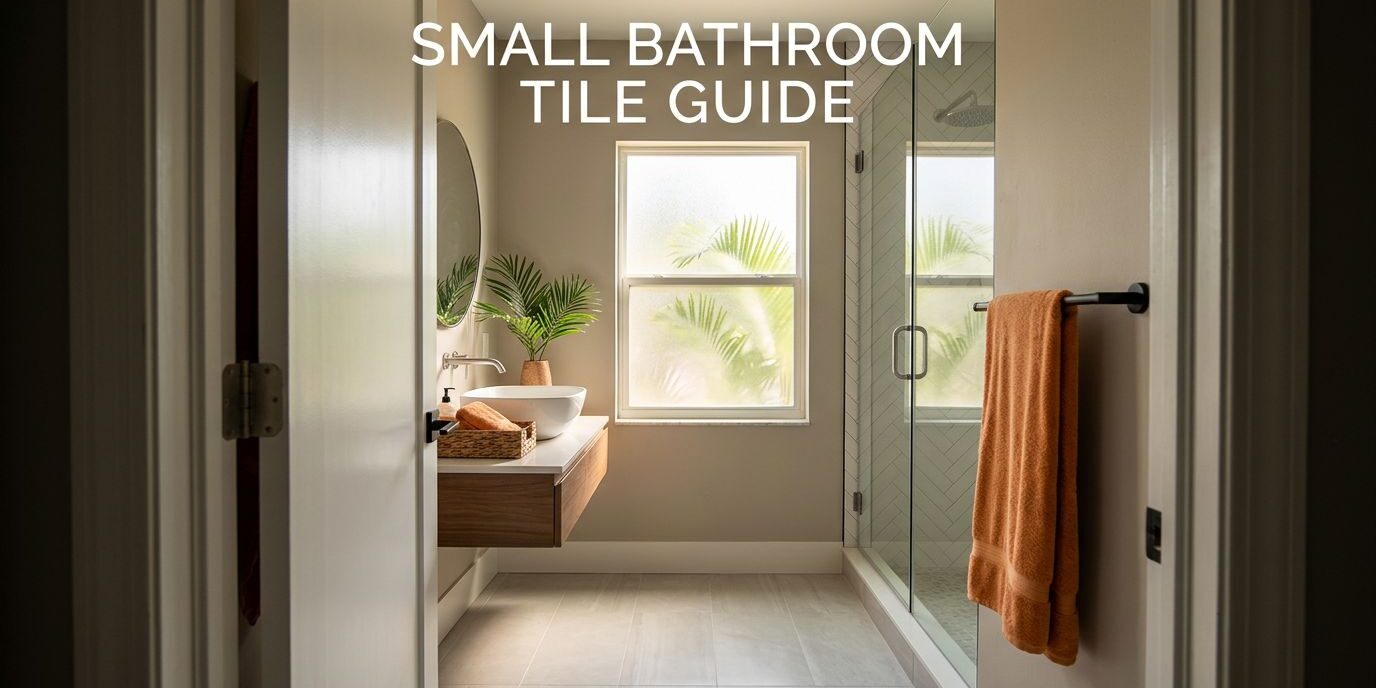
Choosing the ideal tile size small bathrooms requires careful planning to ensure the area feels open rather than cramped. The right selection can visually expand the room, simplify your cleaning routine, and provide a polished finish without making the layout look overly busy.
I consider several factors beyond the room’s total square footage when recommending a tile. Beyond simple dimensions, I look at how the tile choice influences space perception, along with the floor plan, shower dimensions, drain location, grout line frequency, moisture exposure, and the installation surface. Here is how I approach selecting the perfect tile sizes for small Florida bathrooms.
Key Takeaways
- Optimize Perception: Using large format tiles in small bathrooms minimizes grout lines, creating a more continuous, expansive visual flow that makes the space feel larger.
- Strategic Sizing: While 12-by-24-inch porcelain tile is ideal for open floor areas, smaller 12-by-12-inch tiles provide more installation flexibility for irregular layouts with many fixtures.
- Shower Functionality: Shower floors require smaller mosaic tiles (2-by-2 or 3-by-3 inches) to accommodate necessary slopes toward the drain and provide essential slip resistance.
- Prioritize Durability: Porcelain is the recommended material for Florida homes due to its high density, low water absorption, and resistance to coastal elements like sand and humidity.
How Tile Size Changes the Look of a Small Bathroom
Tile does not physically increase the size of a bathroom, but it can change how large the room appears. Every grout line breaks up the floor and walls, which defines the perceived space. When a small room features many small format tile options and contrasting grout lines, the surface can look crowded and divided.
Using a large format tile creates longer visual lines that open up the floor. For instance, a rectangular tile can make a narrow floor feel more continuous than traditional square tiles that force grout joints in every direction. Choosing a light colored tile also helps reflect natural and artificial light, which is particularly useful in bathrooms with limited windows.
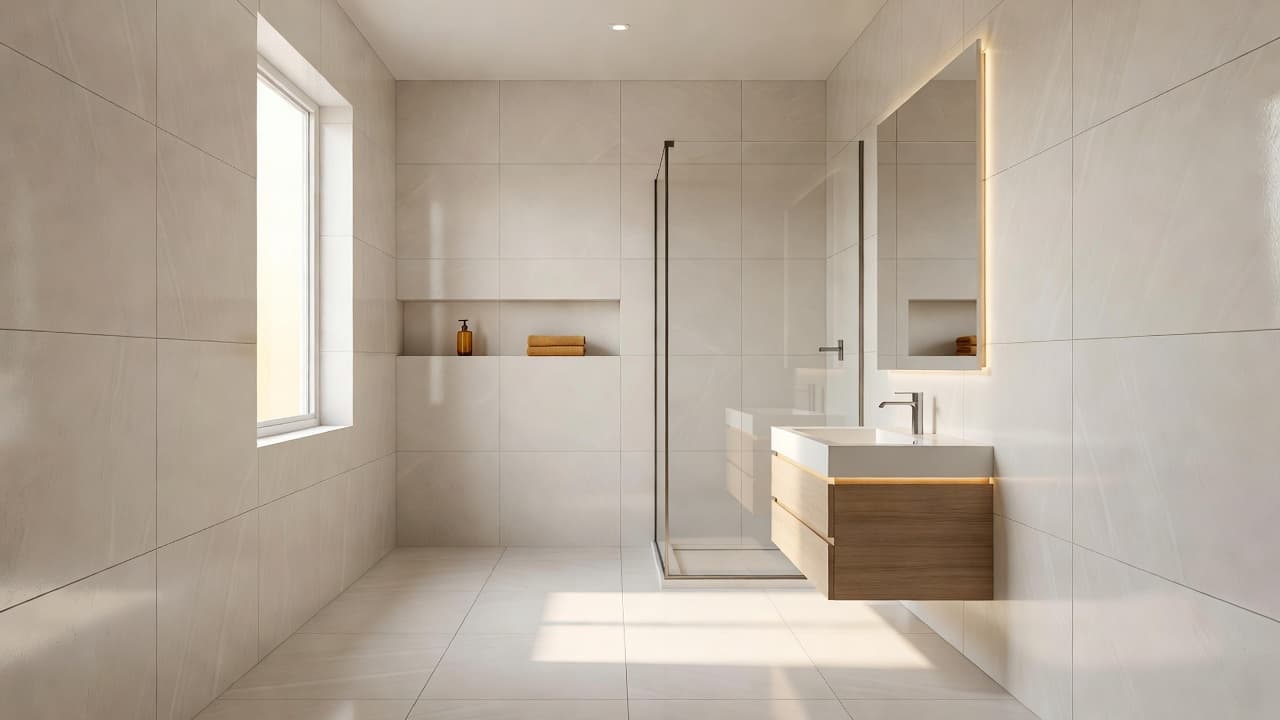
Large format tile can work especially well on bathroom walls and inside shower walls. Fewer grout joints create a cleaner appearance around a vanity, bathtub, or shower enclosure. If the same tile continues from the floor into the shower walls, the bathroom can feel more connected and spacious.
That does not mean the largest available tile is always the right choice. A tile that requires several narrow cuts around the toilet, vanity, or doorway can look less balanced than a slightly smaller option. I always plan the layout before installation so the room does not end with awkward slivers at the edges.
The best tile size is the one that creates balanced cuts, comfortable traction, and a clean visual flow.
Florida bathrooms also need practical planning. Humidity, wet feet, beach sand, and moisture from the shower can quickly expose a poor material or weak installation. Size affects appearance, but the tile’s rating, surface finish, grout, and foundation matter just as much.
The Best Tile Sizes for Small Bathroom Floors
For many small Florida bathrooms, I recommend 12-by-24-inch porcelain tile when the bathroom floors are reasonably open and level. This size offers a modern look without becoming difficult to place around common bathroom fixtures. It works well in a simple rectangular layout and can make the floor feel longer when installed with the long side running through the room.
A 12-by-12-inch square tile is another dependable option. It offers more flexibility around corners, plumbing fixtures, and compact floor plans. If the bathroom has several angles or a small separate toilet area, 12-by-12-inch square tiles can produce a more even layout with fewer challenging cuts.
Rectangular tile options like 8-by-16-inch or 10-by-20-inch pieces are also useful when you want some of the visual benefits of a larger format without using oversized pieces. Their proportions can add direction to the room, especially in a narrow bathroom.
For a quick comparison, I usually look at these common choices:
| Tile size | Best use | Main advantage | Watch-out |
|---|---|---|---|
| 12 x 24 inches | Open bathroom floors and walls | Fewer grout lines and a spacious appearance | Needs a flat, well-prepared surface |
| 12 x 12 inches | Compact or irregular floors | Easier cuts and flexible layout | More grout joints |
| 8 x 16 inches | Narrow bathrooms and feature walls | Adds direction without oversized cuts | Layout must be planned carefully |
| 2 x 2 or 3 x 3 inches | Shower floors and tight areas | Works around slopes and drains | Requires more grout maintenance |
| 4 x 4 or 6 x 6 inches | Traditional designs and accents | Easy to arrange around fixtures | Can look busy with high-contrast grout |
The takeaway is simple: 12-by-24-inch porcelain tile is often a strong choice for open areas, while 12-by-12-inch square tiles offer more installation flexibility. I choose between them after measuring the room and checking the existing surface.
The shower floor is different. A shower floor pan needs to direct water toward the drain, so large rigid tiles can create problems around slopes and corners. Smaller 2-by-2-inch or 3-by-3-inch mosaic tiles are often better because the extra grout joints provide traction and allow the tile surface to follow the pitch of the shower floor pan.
Mosaic tiles can look attractive in a shower, but the installation still needs careful attention. The sheets must be aligned correctly, and the grout joints should remain consistent. A small mistake can become obvious across the entire floor.
Porcelain Tile Is a Reliable Choice for Florida Bathrooms
Tile size is only one part of the decision. I also consider how the bathroom is used, how much moisture it receives, and how much cleaning the homeowner wants to do.
Porcelain tile is usually my first recommendation for Florida bathroom floors and shower areas. It is dense, absorbs very little water, and holds up well against daily foot traffic. Because porcelain tile commonly has a water absorption rate of less than 0.5 percent, it offers a strong advantage in moisture-prone rooms.
It also handles sand better than softer flooring materials. Sand tracked in from a lanai, pool deck, or beach can act like fine grit underfoot. Over time, that friction can wear down a surface that is not designed for harsh conditions. If you prefer a natural wood aesthetic, wood plank tiles are an excellent, durable alternative that stands up to these coastal elements much better than traditional materials.
Ceramic tile can still be a practical option for bathroom walls and light-use areas. It offers a wide range of colors and designs, and it is often easier to cut during installation. For a busy bathroom floor, however, I generally prefer the added density and durability of porcelain tile over ceramic tile.
Natural stone, marble, and travertine offer distinctive variation and a higher-end appearance. They need more care, and many natural stones require sealing to protect against staining and moisture. I discuss maintenance before installation so you know what the finished surface will need over time.
The finish is just as important as the material. While glossy finishes can reflect light beautifully on a wall, they may not provide the slip resistance you want on a wet floor. For bathroom floors, I look for a surface that balances traction, easy cleaning, and a comfortable feel underfoot.
A beautiful bathroom floor still needs to feel safe when water, bare feet, and Florida humidity are part of daily life.
Large-Format Tile, Grout, and Layout Details
Many homeowners select large format tile because they want fewer grout lines. That can be a smart choice, but grout still has an important job. It helps protect the joints and completes the appearance of the floor.
A grout color close to the tile creates a quieter surface. By using a monochromatic color scheme, you can make the floor look more continuous. Darker or contrasting grout highlights the pattern and can make each piece stand out. In a small bathroom, I often recommend a coordinated grout color when the goal is to make the space feel as open as possible.
Large format tile also demands better preparation. The bathroom floors need to be flat enough for the tile to sit properly. Uneven areas can cause lippage, which is when one tile edge sits higher than the next. That issue is uncomfortable underfoot and easy to see once the light hits the floor.
Before I install new tile, I check the existing floor and subfloor. If old tile or flooring needs to come out, I handle demolition, removal, and disposal. The surface may need cleaning, leveling, repair, or additional preparation before the new installation begins.
The room’s fixtures affect the layout too. I measure around the toilet flange, vanity, shower curb, doorway, and baseboards. A good plan places full or generously sized tiles in the most visible areas. Smaller cuts belong near less noticeable edges whenever the room allows it.
Rectified porcelain tile has precisely cut edges and can support narrow grout joints, but it still needs accurate installation. Narrow joints do not hide errors. They make alignment even more important.
I also pay close attention to transitions between the bathroom and adjoining flooring. A clean transition prevents an abrupt change in height and helps the bathroom feel connected to the rest of the home.
Choosing Tile Size for Bathroom Walls and Showers
Bathroom walls provide more design freedom than floors because they do not require the same level of traction. Using large format tile for your shower walls creates a clean, upscale aesthetic around a tub or shower area. These larger pieces also minimize the number of grout lines, which makes cleaning your shower walls much easier in the long run.
For a small shower, I often recommend combining large wall tiles with smaller mosaic tiles on the floor. This pairing provides visual consistency while allowing the shower floor to follow the necessary slope toward the drain. If you want to add character without overwhelming the space, a narrow accent wall using subway tile can create a beautiful focal point.
The orientation of your tile significantly impacts the room’s perception. Utilizing vertical tile placement can make a low ceiling feel taller, while a horizontal layout can make a narrow wall appear wider. The best direction depends on your bathroom’s specific proportions and the placement of fixtures, niches, and plumbing.
I suggest avoiding the temptation to choose wall tile based on appearance alone. Every shower requires a sound waterproofing system behind the tile, and the surface needs proper coverage, sealed corners, and careful movement planning. While tile is water resistant, the entire shower assembly must be engineered to manage moisture effectively.
A full shower remodel typically takes about one to two weeks, depending on demolition, waterproofing, tile details, and drying time. A smaller bathroom tile installation often takes two to five days. I provide a clear timeline before work begins and keep you updated as the project moves forward.
My Practical Tile Size Recommendations
When I visit a bathroom, I start with measurements instead of a catalog. I want to know the room’s width, the location of every fixture, and whether the existing floor is flat and stable.
In general, my recommendations look like this:
- For an open bathroom floor, 12-by-24-inch porcelain tile is often a strong choice.
- For a tight or irregular floor, 12-by-12-inch square tiles or medium rectangular tile can create better cuts.
- For a shower floor, 2-by-2-inch or 3-by-3-inch mosaic tiles usually handle slopes more effectively.
- For shower walls, 12-by-24-inch tile creates fewer grout lines and a clean finish.
- For a traditional style, 4-by-4-inch or 6-by-6-inch square tiles can add character without overwhelming the space.
- For a narrow bathroom, rectangular tile can guide the eye along the room’s length or width.
Your preferred design still matters. A small bathroom does not have to look plain. Porcelain tile can resemble stone, marble, concrete, or wood plank tiles, while ceramic tile and natural stone offer additional colors and textures.
I help homeowners compare samples in the actual room because bathroom lighting can change how a tile looks. A light colored tile sample that appears soft in a showroom may look much brighter beside white trim or darker under vanity lighting.
Frequently Asked Questions
Can I use large format tiles on my small bathroom floor?
Yes, large format tiles like 12-by-24-inch pieces can make a small bathroom appear more open by reducing the number of grout joints. However, you must ensure your floor is perfectly level to prevent ‘lippage’ and carefully plan the layout to avoid awkward, narrow tile cuts around fixtures.
Why are smaller tiles better for shower floors?
Shower floors must be sloped toward the drain to ensure proper water removal, which is difficult to achieve with large, rigid tiles. Small mosaic tiles are flexible enough to follow these slopes and provide extra grout lines that improve traction and safety in wet conditions.
What is the advantage of using porcelain tile in Florida?
Florida’s humid environment and exposure to sand require durable flooring that resists water damage and surface abrasion. Porcelain is a top choice because it has a very low water absorption rate and is hard enough to withstand fine grit tracked in from the beach or pool area.
Does grout color affect how big a small bathroom looks?
Yes, using a grout color that closely matches your tile creates a monochromatic look that hides the grid pattern, making the floor feel more continuous and spacious. High-contrast grout, by comparison, emphasizes the individual tile shapes and can make a small room feel busier or more divided.
Make a Small Bathroom Feel Larger With the Right Tile
The best tile size for a small Florida bathroom depends on more than just the dimensions of the room. Using large format tile can reduce visual interruptions to create an open appearance, while medium tile may produce a better layout in a crowded or irregular space. Shower floors usually require smaller pieces to ensure proper drainage, improved traction, and accurate placement.
Ultimately, choosing large format tile helps minimize visible grout lines, which gives bathroom floors a cohesive and expansive feel. Because of its durability and low maintenance, porcelain tile remains the most reliable choice for the humid Florida environment.
I focus on the complete installation, including tile selection, surface preparation, leveling, waterproofing, grout, drainage, and final details. Distinctive Tile & Marble of SWFL Inc. provides free, detailed estimates for bathroom floors, shower remodels, and custom tile work in Cape Coral, Fort Myers, Bonita Springs, and surrounding Southwest Florida communities.
With the right size and a carefully planned layout, even a compact bathroom can feel comfortable, durable, and beautifully finished.