A tile floor can look perfect on installation day and still fail later if the concrete slab underneath was not prepared correctly. The right tile underlayment Florida homes need depends on moisture, cracking, flatness, traffic, and whether the floor is indoors or outdoors. Similar care applies to roof underlayment during a tile roof replacement, especially in Florida’s high humidity and tropical storms, where materials and methods must meet the Florida Building Code.
I have worked on enough Florida renovations to know that the tile itself is only part of the project. Porcelain, ceramic, or travertine can all perform well when the slab and installation system match the space, just as a tile roof replacement depends on the right roof underlayment, roof deck, and roof installation practices. The right choice starts with examining the concrete or roof deck before work begins.
A waterproof membrane can help protect a slab from moisture migration and a roof deck from water intrusion, but it must be selected for the specific application. For flooring, the tile underlayment Florida homeowners choose should support the tile system, while roof underlayment must provide the appropriate protection beneath the finished tile roof.
Key Takeaways
- The best tile underlayment Florida homes need depends on slab condition, moisture, cracking, flatness, traffic, and whether the area is indoors or outdoors.
- A sound, dry, and flat concrete slab may support direct-bond tile installation, while cracks, movement, moisture, or unevenness may require a membrane, moisture mitigation system, or leveling underlayment.
- Roofing materials such as synthetic underlayment, self-adhered underlayment, and asphalt felt are designed for roof assemblies and should not be used automatically beneath floor tile.
- Proper slab preparation, mortar coverage, movement joints, drainage, and exterior-rated materials are essential for long-term tile performance in Florida conditions.
- Porcelain is a durable, low-absorption option for many Florida floors, while outdoor and pool-area installations also require suitable wet traction and drainage.
Why Florida Concrete Slabs Need Careful Preparation
Florida slabs deal with humidity, moisture movement, temperature changes, and normal building movement. Even when a slab looks solid, it may contain hairline cracks, uneven areas, old adhesive, paint, dust, or moisture that can affect the tile bond. Similar preparation concerns apply to a roof deck, where thermal movement, storm exposure, and existing damage can affect concrete and clay roof tiles.
Concrete also continues to move slightly as conditions change. Tile is rigid, so it doesn’t tolerate every type of movement below it. When the slab shifts and the tile installation has no way to manage that stress, cracks may appear through the tile, grout, or both. On a roof deck, properly selected roof underlayment helps create a more reliable base beneath the finished roofing materials.
Moisture creates a different concern. Water vapor can move through concrete and interfere with mortar adhesion, which is why a moisture barrier may be needed after the slab is properly tested. A slab that looks dry on top may still have moisture conditions that require testing before tile is installed. On a roof deck, a roof leak can lead to water damage beneath concrete or clay tiles, especially during severe storms in high-velocity hurricane zones. Roof underlayment and a properly installed moisture barrier help limit moisture-related problems.
If a coating, adhesive, or previous flooring is already present, I want to know how it will affect the new installation before any tile is set. Roof deck preparation also requires checking for deterioration, openings, and other conditions that could allow water damage after a roof leak. Depending on the assembly, roof underlayment may work with a secondary water barrier to help protect the structure from wind uplift and storm-driven water.
A good tile underlayment system may help separate the tile from minor movement, manage moisture, or create a better setting surface. Roof underlayment serves a related purpose beneath roofing materials, but neither system can correct major structural problems, active water intrusion, or a slab or roof deck that is moving significantly. Those concerns need to be addressed first.
A membrane can protect a tile installation from certain types of slab movement, but it cannot repair a damaged foundation or replace roof underlayment where a roof deck needs proper storm protection.
Best tile underlayment Florida Slabs Can Handle
There isn’t one underlayment that fits every concrete floor, and roofing underlayment products should not be used automatically beneath tile. I typically consider four installation conditions before choosing the best tile underlayment Florida conditions demand.
A sound, dry, and flat slab may not need a separate underlayment. When the concrete is properly prepared and the selected mortar is approved for the tile and location, tile can often be bonded directly to the slab. This adhesive set approach reduces layers and keeps the installation straightforward.
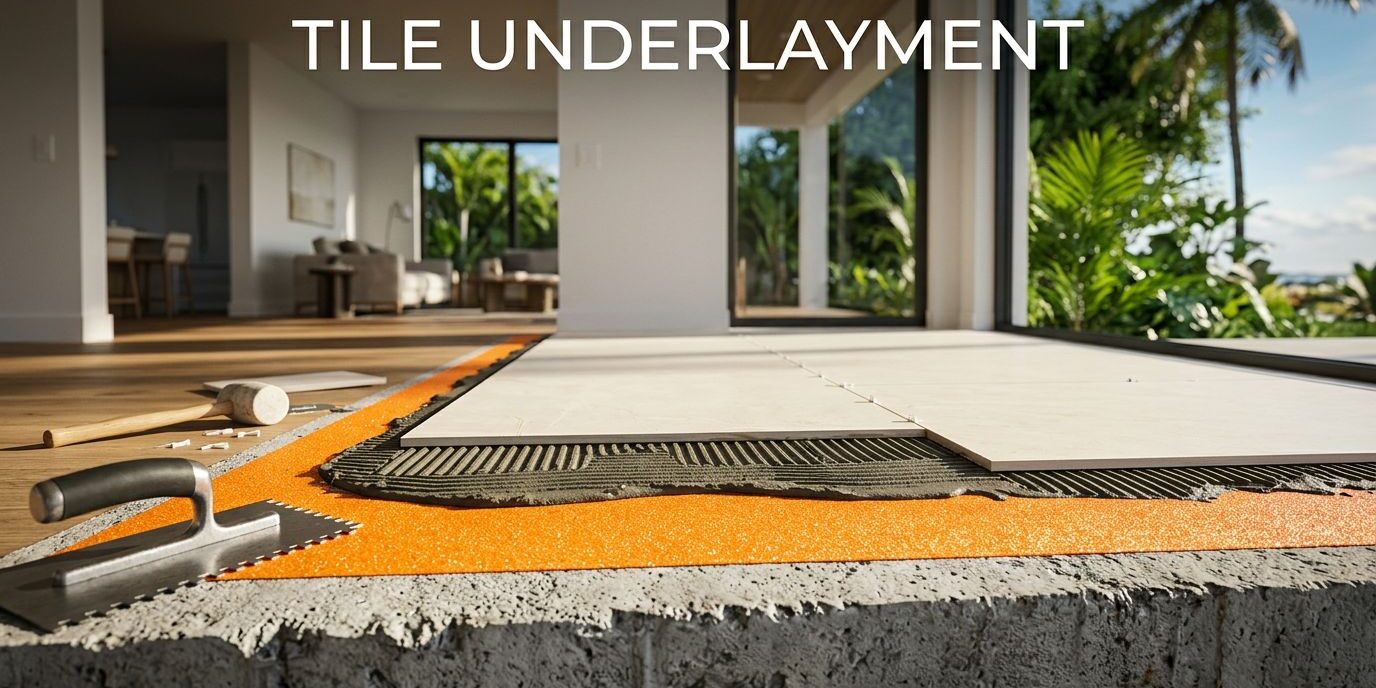
A slab with minor cracks or movement may need an uncoupling or crack-isolation membrane. These products create a separation layer between the concrete and tile. The goal is to reduce the transfer of certain stresses into the finished surface. The membrane must be selected for the tile, room, and type of movement present.
A slab with high moisture may need a moisture mitigation coating or waterproof membrane. In some cases, an epoxy moisture system is applied over the concrete before the tile or an approved cementitious underlayment is installed. The CTASC guidance on porcelain tile over concrete with moisture explains why moisture testing and product compatibility matter in this situation.
An uneven interior slab may need a cement-based leveling underlayment. This can improve flatness before tile installation, especially with large-format porcelain. However, a leveling product is not automatically a waterproofing system or a solution for an active crack.
Roofing projects use different underlayment categories, so the terms can cause confusion when comparing materials. Synthetic underlayment and asphalt felt are commonly used beneath roof coverings, with asphalt felt typically being mechanically attached to the roof deck. These products are not substitutes for a tile crack-isolation or moisture-control system over concrete.
A self-adhered underlayment, often described as peel and stick, uses an adhesive backing to bond to the roof deck. Many of these products contain rubberized asphalt, which can provide strong adhesion and water resistance when installed according to the manufacturer’s requirements. A self-adhered underlayment may also function as a waterproof membrane in specific roofing details, but that does not make it suitable beneath floor tile.
Synthetic underlayment is lightweight and resistant to tearing, while asphalt felt remains a familiar, economical option for many roof assemblies. A second type of peel and stick product may use rubberized asphalt for improved sealing around penetrations and vulnerable areas. Neither synthetic underlayment nor asphalt felt should be selected for a Florida concrete tile floor unless the complete system specifically approves that use.
The following comparison makes the differences easier to understand.
| Slab or roof condition | Usually considered | What it helps with |
|---|---|---|
| Sound, dry, flat concrete | Direct-bond mortar installation | A stable setting surface |
| Minor slab cracks | Crack-isolation membrane | Reducing transfer of some cracks |
| Movement between slab and tile | Uncoupling membrane | Managing certain stresses |
| Excess moisture vapor | Moisture mitigation system or approved waterproof membrane | Controlling moisture before bonding |
| Uneven interior concrete | Cement-based leveling underlayment | Improving surface flatness |
| Exterior wet area | Approved exterior membrane system | Moisture management and movement control |
| Roof deck requiring standard coverage | Synthetic underlayment or asphalt felt | Secondary protection beneath roofing |
| Roof deck requiring enhanced adhesion | Self-adhered underlayment | Sealing and water resistance at approved details |
The takeaway is simple: the best tile underlayment Florida projects need is the one that matches the slab problem. Roofing materials such as synthetic underlayment, self-adhered underlayment, and asphalt felt belong to different assemblies, even when their descriptions sound similar. Adding extra material without a reason can create compatibility issues, raise the project cost, and make the installation more complicated.
Porcelain Tile Is Usually the Best Surface for Florida Floors
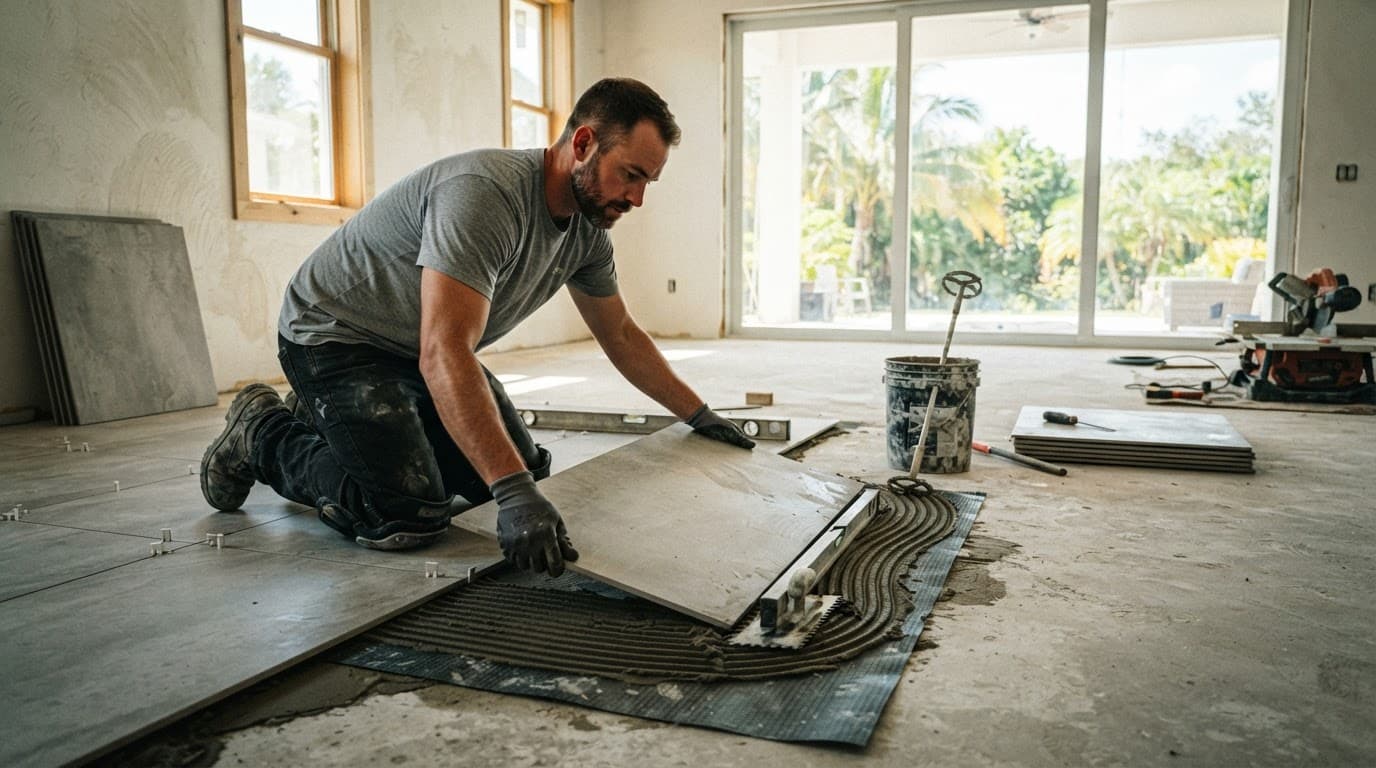
Once the slab system is selected, the tile material becomes the next decision. For most busy Florida homes and businesses, exterior-rated or properly rated porcelain is my first recommendation.
Porcelain is dense and typically has a water absorption rate of 0.5% or less. That low absorption makes it a strong choice for kitchens, entries, bathrooms, screened lanais, rental properties, and pool-adjacent areas. It also handles tracked-in sand better than many softer surfaces.
Florida sand acts like fine sandpaper underfoot. It enters through doors, comes off shoes, collects around pool areas, and gets carried through a home by pets and children. A dense porcelain floor can handle that daily abrasion while remaining easy to sweep and mop.
Porcelain also offers excellent design flexibility. You can choose wood-look planks, natural stone patterns, concrete-inspired finishes, or marble-style surfaces without taking on the maintenance associated with some natural materials.
A similar focus on the supporting assembly matters when choosing roofing materials. Concrete and clay tiles need a properly installed roof underlayment to help protect the structure, manage moisture, and support a longer roof lifespan. In many Florida roofing systems, synthetic underlayment provides consistent coverage and improved resistance to demanding weather conditions.
For interior living areas, rectified porcelain with large-format tiles can create a clean, open appearance with fewer grout lines. In entries and outdoor spaces, I often prefer a matte or lightly textured finish because it provides better visual forgiveness and more practical traction than a polished surface.
Concrete and clay tiles can also perform well on Florida roofs when the roof underlayment is selected and installed for the specific assembly. A durable synthetic underlayment helps reduce the risk of water damage and can contribute to a longer roof lifespan, especially during periods of heavy rain and wind.
Travertine remains a beautiful choice when you want natural variation and a warm stone appearance. It needs more attention, including careful leveling, proper drainage, and regular sealing. Ceramic tile can work in light-use or covered spaces, but I am more cautious with it in exposed lanais, commercial entries, pool decks, and floors that receive heavy sand and moisture. As with flooring, the roof underlayment beneath a tile roof plays an important role in the system’s long-term performance.
Underlayment Does Not Replace Proper Slab Preparation
Even the best tile underlayment Florida contractors use will fail if the concrete is not ready for it. Structural preparation matters in every part of a Florida property, from slab preparation to roof sheathing and the roof deck, where a qualified roofing contractor must identify weak areas before work begins.
Before installation, I look for dust, paint, old flooring adhesive, damaged concrete, high spots, low spots, control joints, and visible cracks. The surface needs to be clean and suitable for the selected mortar or membrane. A membrane won’t bond correctly to a contaminated or unstable surface, just as improper flashing installation during a tile roof replacement can allow a roof leak to develop.
Flatness matters even more when large-format porcelain is used. High spots can keep the tile from sitting properly, while low areas can leave voids beneath the tile. Those voids may create weak points under heavy furniture, appliances, rolling loads, or regular foot traffic.
I also pay close attention to movement joints. Control joints in the slab cannot be ignored or filled in as though they aren’t there. The tile assembly needs movement accommodation that follows the requirements of the installation system. Roof work has similar failure points, since roof sheathing, the roof deck, and flashing installation must be inspected and completed according to the Florida Building Code.
Common installation problems include:
- Using mortar that isn’t suited to the tile or location.
- Leaving insufficient mortar coverage beneath the tile.
- Setting tile over paint, dust, or a damaged surface.
- Skipping movement space around walls, columns, and fixed objects.
- Creating lippage between adjacent tile edges.
- Treating a moisture problem as though it were only a surface problem.
- Starting a tile roof replacement without having a roofing contractor verify the roof sheathing and roof deck.
Lippage is more than a cosmetic issue. Uneven edges can create trip points and give sand, dirt, and grime a place to collect. Precise setting and proper substrate preparation keep the finished floor flatter, cleaner, and more comfortable underfoot.
The same attention to detail helps prevent a roof leak after a tile roof replacement. Proper flashing installation and roof sheathing repairs should follow the Florida Building Code, with a qualified roofing contractor addressing deficiencies before the roof system is covered.
Outdoor Slabs Need Drainage and Exterior-Rated Materials
A screened lanai may feel like an indoor room, but the floor still experiences outdoor conditions. Pool decks, patios, and lanais may receive rain, sunscreen, wet feet, leaves, pool chemicals, and standing water when the surface doesn’t drain correctly. Exposed roof structures also require protection from severe moisture, storm exposure, and wind uplift, especially in high-velocity hurricane zones.
For these areas, I want an exterior-rated tile and an underlayment or membrane system approved for outdoor use. A peel and stick, self-adhered underlayment can help provide a secondary water barrier beneath compatible assemblies, while a waterproof membrane beneath tile helps protect the slab and surrounding structure. The surface should provide traction when wet without becoming so rough that it traps dirt and becomes difficult to clean. I avoid polished tile around pools because a glossy appearance isn’t worth the safety concern when the floor is wet.
Drainage is equally important. A waterproof membrane can’t make water flow away from a home if the slab has the wrong slope. Water should move toward the proper drainage area instead of sitting beneath furniture, along walls, or near door openings. In roof and lanai assemblies, the secondary water barrier should also be installed as part of a complete storm-resistant system that accounts for wind uplift.
Porcelain pavers are a strong option for many pool decks because they offer low absorption, durability, and a wide selection of stone-look and concrete-look designs. Travertine can deliver a classic Florida appearance, but its porous nature requires a more detailed maintenance plan.
A professional evaluation should confirm:
- The slab is structurally sound and suitable for tile.
- Water drains away instead of collecting on the surface.
- The tile finish offers appropriate wet traction.
- The membrane and mortar are rated for the location.
- Movement joints and perimeter spacing are included.
- The selected grout can handle the area’s exposure.
- A wind mitigation inspection verifies that exterior and roof components are installed to resist severe wind uplift.
- A second wind mitigation inspection, when required after repairs or upgrades, documents the approved secondary water barrier and related storm protections.
How to Choose the Right System for Your Project
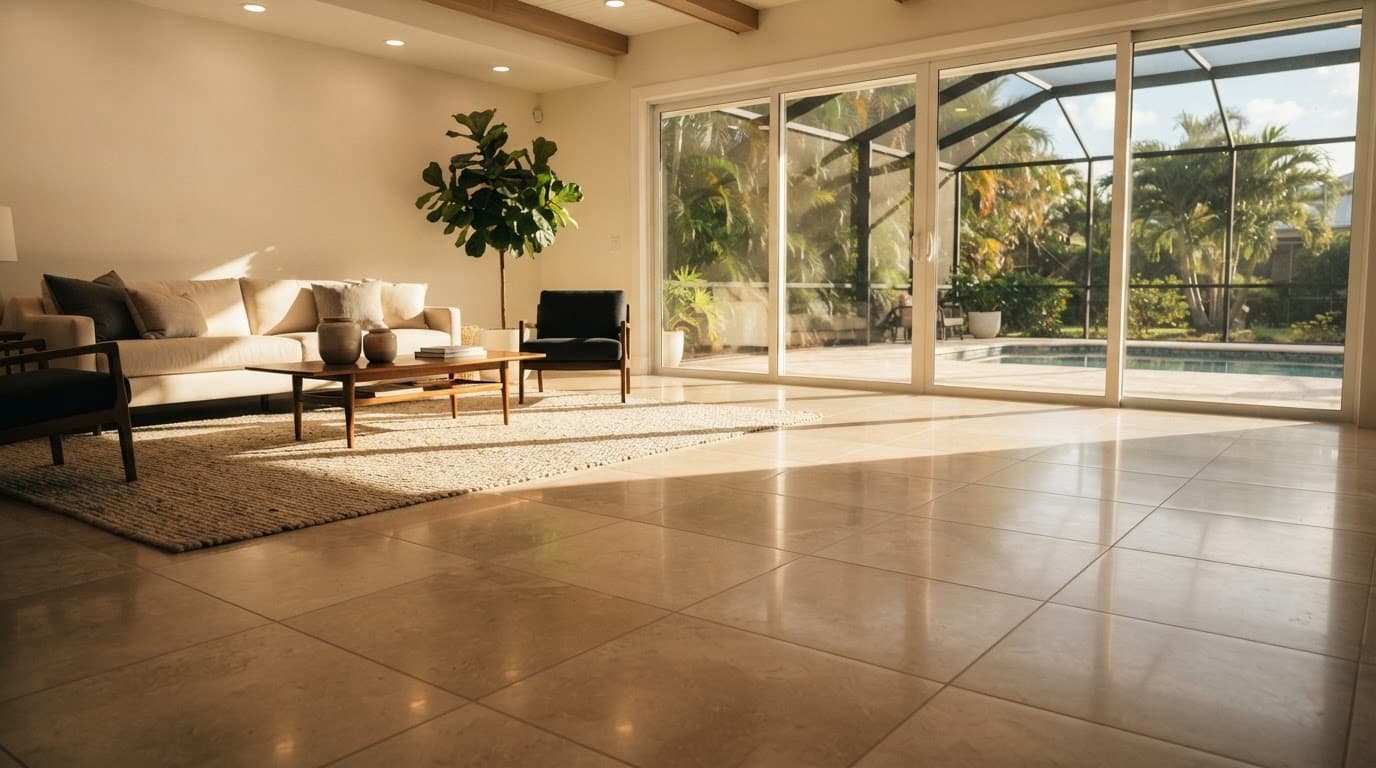
I start with the space, not the product brochure. A quiet guest room has different needs than a busy entry, commercial lobby, or pool deck, and a roofing contractor or tile specialist can help match the complete system to the project.
Ask yourself whether the floor will receive rain, splash, wet feet, tracked-in sand, heavy furniture, or rolling traffic. Consider whether the slab has visible cracks, old coatings, uneven areas, or a history of moisture. Those answers help narrow the installation system before design decisions begin, just as a roof installation requires evaluating the structure, drainage, and materials before work starts.
For a typical dry interior slab, direct-bond installation may be the right answer after proper preparation. For a slab with minor cracks, an approved crack-isolation membrane can add protection. If moisture testing shows a problem, the system may require a dedicated mitigation product before tile is installed.
I also consider the tile size and material. Large-format porcelain needs a flatter substrate and careful mortar coverage. Travertine requires close attention to leveling because natural stone can show unevenness quickly. Outdoor tile needs the correct finish, drainage, and exterior-rated materials.
If the project includes a tile roof replacement or roof installation, work with a licensed roofing contractor who understands the Florida Building Code. The right roofing system may include synthetic underlayment, while routine tile roof maintenance helps protect that underlayment from moisture and damage over time. A professional can also determine whether tile roof replacement is necessary or whether targeted repairs and maintenance are sufficient.
The lowest upfront option is not always the lowest long-term cost. Replacing cracked tile, repairing damaged grout, correcting drainage, and removing a failed installation can cost far more than selecting the correct system at the beginning. For roofing projects, proper roof installation, quality synthetic underlayment, and scheduled tile roof maintenance can likewise help prevent premature repairs.
At Distinctive Tile & Marble of SWFL Inc., I believe the installation plan should be clear before work begins. That includes slab preparation, product selection, timeline, and the details that protect the finished floor. When roofing work is also involved, consulting a roofing contractor before roof installation helps coordinate the tile and roofing systems from the start.
Frequently Asked Questions
Does every Florida concrete slab need tile underlayment?
No. A clean, dry, flat, and structurally sound slab may allow tile to be installed directly with an approved mortar. Cracks, moisture, movement, or uneven areas may require a membrane or leveling system.
What is the best tile underlayment for a cracked concrete slab?
An approved crack-isolation or uncoupling membrane is commonly considered for minor cracks and certain types of movement. It cannot correct structural damage or significant slab movement, which must be addressed first.
Can roofing underlayment be used beneath floor tile?
No. Synthetic underlayment, asphalt felt, and self-adhered roofing underlayment are designed for roof assemblies. Floor tile requires a compatible crack-isolation, uncoupling, moisture-control, or leveling product selected for the slab and installation conditions.
Is porcelain tile a good choice for Florida homes?
Yes. Porcelain has low water absorption and generally handles humidity, tracked-in sand, and heavy foot traffic well. Exterior areas still need properly rated tile, appropriate wet traction, drainage, and compatible installation materials.
Does a waterproof membrane fix poor slab drainage?
No. A waterproof membrane can help manage moisture, but it cannot correct incorrect slope or standing water. The slab must drain properly, and the complete exterior system must include suitable tile, mortar, movement joints, and membrane products.
Conclusion
The best tile underlayment Florida homeowners choose for a concrete slab depends on the slab’s condition and the floor’s exposure. A dry, flat slab may need only direct-bond installation, while cracks, moisture, unevenness, or outdoor exposure may call for a membrane or leveling system. For roofing structures, the right roof underlayment and a properly selected waterproof membrane are equally important for managing moisture and protecting the assembly.
For most Florida homes and businesses, I recommend starting with properly rated porcelain and pairing it with careful preparation, the correct mortar, movement accommodation, and professional installation. On tile roofs, choosing the appropriate roof underlayment helps maximize roof lifespan and reduce the need for ongoing tile roof maintenance. A beautiful tile floor or roof begins below the surface, and the right foundation keeps it durable for years.