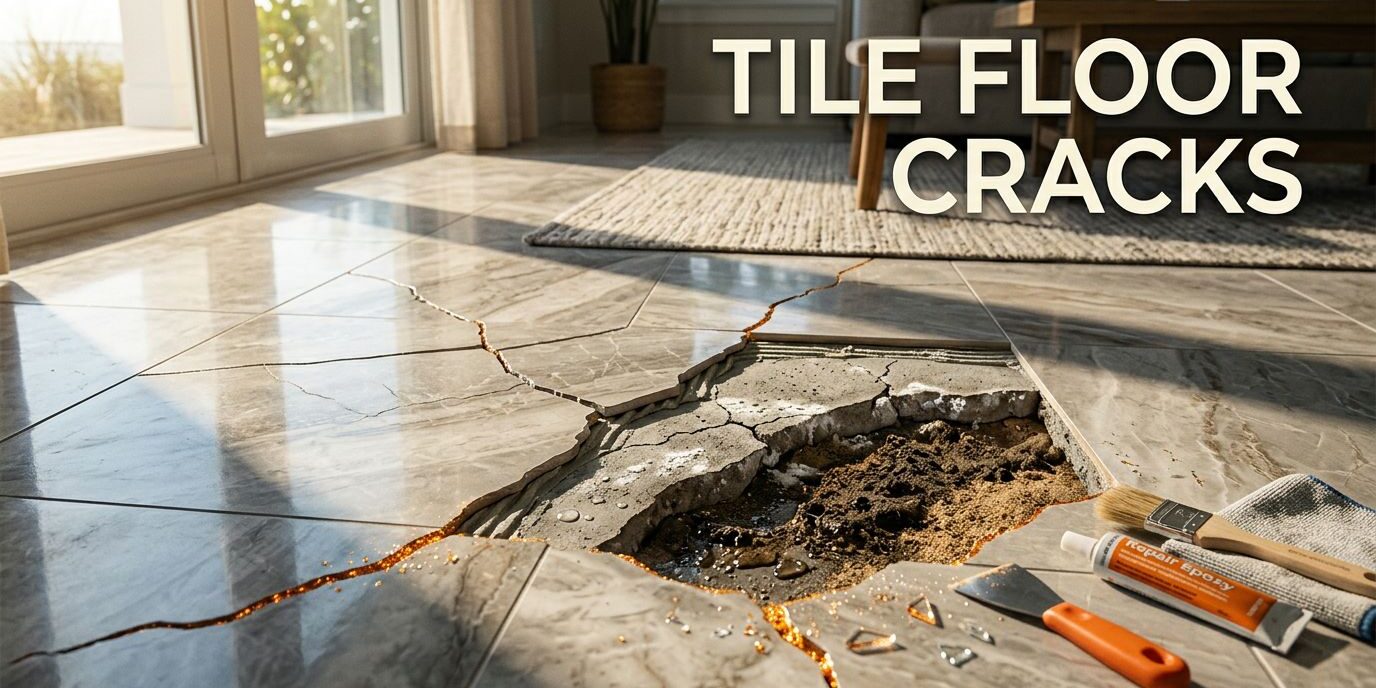
If you have searched for tile floor cracks Florida homeowners deal with, you already know how frustrating the problem can be. Dealing with cracked tile floors is a common headache, especially when several fractures point to movement below the surface in Florida homes.
Florida homes face heat, humidity, moisture, sand, and shifting concrete slabs. In my experience, the tile is often blamed first, even though the real problem usually begins with the substrate or installation. Understanding the cause helps you choose the right repair and prevent the damage from spreading.
Key Takeaways
- Most cracked tile floors come from movement in the slab, subfloor, mortar, or surrounding structure.
- Florida heat and moisture make proper movement joints, drainage, and subfloor preparation especially important in Florida homes.
- A crack isolation membrane can help protect tile from minor substrate cracks, but it cannot correct major structural movement.
- Exterior-rated porcelain tile is my first choice for many Florida floors because it handles moisture, traffic, and sand with less maintenance.
- Professional installation gives the tile a sound, level base and the correct support beneath every piece.
Why Tile Floor Cracks in Florida Homes
Tile is hard, durable, and moisture-resistant, but it isn’t flexible. When the surface beneath it moves, the tile has limited ability to absorb that stress. Something eventually gives, and the result may be a cracked tile floor or fractured grout joints.
Florida homes commonly use concrete slabs as the foundation for interior floors. That slab can develop hairline cracks as it cures, settles, or responds to changes in moisture and temperature. A tile installation placed directly over an untreated crack may eventually copy that same line.
Slab and subfloor movement
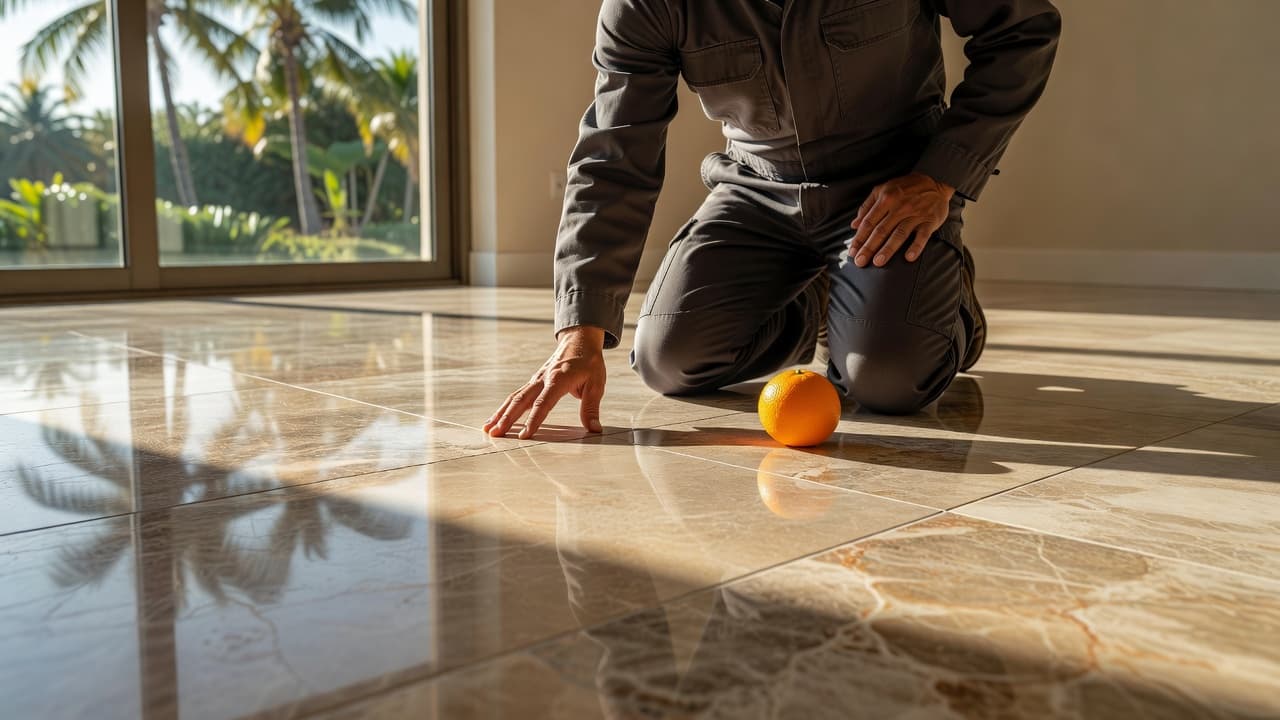
Concrete can shift slightly without looking damaged from a distance. The movement may come from settlement, soil conditions, changes in moisture, or an existing control joint. Because concrete slab movement can transfer stress directly upward, tile needs a stable, properly prepared surface.
Wood subfloors present distinct challenges. They expand and contract with humidity, and they can flex under foot traffic if the framing or underlayment isn’t adequate. A concrete subfloor or wood base experiencing structural movement will often lead to loose tile or grout cracks near doorways, transitions, or heavily used walkways.
A public homeowner discussion about foundation-related tile cracking shows why a recurring crack deserves more attention than a simple cosmetic patch.
Heat, humidity, and moisture
Florida’s climate creates regular changes in temperature and moisture. Interior rooms may stay cool with air conditioning, while lanais, pool decks, garages, and entry areas experience direct heat and rain.
Tile and concrete don’t always expand and contract at the same rate. This thermal expansion, combined with a lack of perimeter room and correctly placed movement joints, builds intense pressure inside the installation. That pressure may push tiles against one another or force grout out of the joints.
Moisture can create another set of problems. Prolonged moisture exposure that reaches the substrate through cracks, poor drainage, or an improperly sealed area can weaken the bond beneath the tile. In outdoor spaces, standing water adds stress during every cycle of wetting and drying.
Installation mistakes
Even a high-quality porcelain, stone, or ceramic tile can crack when an improper tile installation is rushed. Common problems include:
- Installing over a dusty, uneven, painted, or damaged surface
- Using the wrong thinset mortar for the tile and location
- Leaving voids beneath the tile
- Skipping an uncoupling membrane or crack isolation layer where appropriate
- Ignoring control joints in the concrete
- Failing to provide perimeter movement space
- Creating lippage, which leaves tile edges uneven
- Setting outdoor tile without accounting for drainage and weather exposure
The mortar needs good contact beneath the tile. Empty areas can become weak points when someone walks across the surface, moves furniture, or drops a heavy object.
Impact and everyday wear
Not every cracked tile floor points to a foundation issue. A heavy appliance, dropped tool, metal furniture leg, or concentrated impact can break one tile. Sand also matters in Florida homes. Tracked-in grit acts like fine abrasion under shoes, especially in entries and pool-adjacent rooms.
That wear usually dulls or scratches the surface before it causes a full crack. However, a tile with an existing weak spot may break after repeated traffic or impact.
How to Identify the Source of the Cracks
The location and pattern of a crack often provide the first useful clue when diagnosing cracked tile floors before planning any tile crack repair. I look at the tile, grout, nearby walls, transitions, and the condition of the slab before recommending a fix.
A crack that travels in a long, fairly straight line across multiple tiles may follow a slab crack or control joint. A single star-shaped crack is more consistent with impact damage. Cracks concentrated around a doorway may point to movement between rooms or a weak transition.
Loose or hollow-sounding tiles also deserve attention. A tile may produce hollow sounds when the mortar coverage is incomplete. That doesn’t guarantee it will crack, but it tells me the tile may not have the support it needs.
Grout provides another clue. When grout cracks or appears crumbling, separating, or popping out across a larger area, it can indicate movement, moisture, or an installation problem. If the same damage keeps returning after a tile replacement, replacing the tile alone won’t solve the underlying issue.
Watch for related signs, including:
- Doors that begin sticking near the damaged floor
- Cracks continuing into walls or baseboards
- Uneven areas that feel raised or sunken
- Water collecting near exterior doors or pool areas
- Several cracked tiles following the same line
- Fresh cracks appearing after an earlier repair
One isolated broken tile can often be addressed with standard tile crack repair, but a spreading pattern requires a broader inspection. If the damage appears structural or affects several areas of the home, a structural engineer may need to evaluate the slab.
How to Prevent Tile Floor Cracks in Florida
Prevention begins before the first tile is set. A careful installation protects the tile by controlling movement, supporting the material, and managing moisture.
Prepare the surface properly
Thorough subfloor preparation is essential because the concrete needs to be clean, solid, dry enough for the planned system, and reasonably flat. Old adhesive, paint, loose coatings, dust, and damaged material can interfere with the bond.
I don’t want to cover an active problem with new tile. Existing cracks should be evaluated first, and minor non-structural issues may call for a crack isolation membrane or an anti-fracture membrane to isolate the surface from concrete slab movement.
Proper floor leveling is also important because tile follows the surface beneath it. If the base is uneven, pressure can concentrate at corners and edges, and large-format tile needs particular care since even small changes in the substrate can create unsupported areas.
Use movement joints where they belong
Expansion joints give the installation room to respond to expansion and contraction. They may be needed at room perimeters, changes in plane, transitions, large open areas, and existing concrete joints.
These expansion joints should not be filled like ordinary grout. They need the correct flexible sealant or approved joint system for the location. Covering a concrete control joint with rigid tile and grout is a common reason cracks return in a straight line.
Choose the right mortar and coverage
Tile size, material, location, and exposure all affect mortar selection. Dense porcelain needs a suitable thinset mortar and careful handling, while outdoor and wet areas may require products designed for those conditions.
Proper coverage beneath the tile matters just as much as the mortar itself. The installer should check coverage, especially on large tile and exterior work, so the finished surface has dependable support instead of hollow pockets.
Control water outside
A tile surface cannot correct poor drainage. On pool decks, patios, and screened lanais, the base should direct water away from the home rather than allowing it to sit against doors or beneath the installation.
I also pay close attention to the transition between indoor and outdoor surfaces, especially where high humidity and moisture exposure are constant factors. Exterior tile needs the right rating and finish, but the slab and drainage plan still control much of the long-term performance.
Allow the installation to cure
Walking on tile or moving heavy furniture too soon can disturb the bond. Mortar and grout need adequate cure time according to the product instructions and site conditions.
A professional installer should explain when the floor can receive light foot traffic, regular use, and furniture. Protecting the work during this period is a small step that helps preserve the finished result.
Selecting Tile for Florida Floors
Material choice doesn’t prevent every crack, but it affects how the floor handles moisture, traffic, sand, and impact. These are the options I consider most often:
| Material | Strengths | Watch-outs | Best fit |
|---|---|---|---|
| Exterior-rated porcelain tile | Dense, low absorption, durable, and easy to maintain | Requires proper cutting and installation | Kitchens, entries, lanais, pool decks, and busy commercial areas |
| Travertine | Warm natural variation and a classic Florida appearance | More porous, needs sealing, leveling, and regular care | Homeowners who want a natural stone look |
| Ceramic tile | Affordable, versatile, and easier to cut | Less forgiving in heavy traffic or exposed wet areas | Light-use rooms and covered interior spaces |
For most Florida homes, porcelain tile is my first call. It handles sand better than many softer materials, resists moisture, and comes in stone, concrete, and wood-look designs. A matte or lightly textured finish is usually a better choice than polished tile in wet or pool-adjacent areas, especially if you want to avoid slippery surfaces and water damage.
Travertine remains a beautiful option when the homeowner wants real stone and accepts the maintenance. Ceramic tile can work well in the right interior room, but I don’t place it at the top of the list for an exposed pool deck or heavily used entry where cracked tile floors might become an issue.
Maintenance also protects the floor. Sweep sand regularly, clean with products approved for the material, and address spills or standing water instead of allowing them to remain. For additional surface-care guidance, these recommendations for cleaning glass mosaic shower tile show why the cleaner and method should match the tile.
Professional Installation Protects the Investment
Cracked tile prevention depends on details most homeowners never see after the job is complete. Hiring an experienced flooring contractor helps avoid improper tile installation and inadequate subfloor preparation, while the condition of the substrate, mortar coverage, layout, movement joints, grout, transitions, and drainage all affect the final result.
At Distinctive Tile & Marble of SWFL Inc., I approach each project with the room and the Florida climate in mind. That includes interior floors, kitchens, bathrooms, lanais, patios, pool decks, and commercial areas in Cape Coral, Fort Myers, Bonita Springs, Tampa Bay, and nearby communities for Florida homes.
We handle old tile removal, disposal, surface preparation, tile replacement, tile crack repair, and installation planning. A typical living-area project may take three to seven days, while bathroom tile often takes two to five days. The actual schedule depends on the room size, material, repairs, and layout.
A detailed estimate should identify preparation, demolition, leveling, tile, grout, cleanup, and the expected timeline. Clear information at the beginning helps prevent expensive surprises later.
Frequently Asked Questions
Why do tile floors crack so often in Florida homes?
Florida homes frequently experience tile cracks due to a combination of shifting concrete slabs, high humidity, thermal expansion, and intense moisture. When the substrate moves or expands beneath rigid tile, the stress transfers upward and often causes fractures in the tile or grout.
Can I just replace the cracked tiles, or do I need to fix the subfloor?
Replacing only the broken tiles is usually a temporary fix if the underlying movement or installation error is not addressed. If the root cause is slab shifting or improper mortar coverage, the new tiles will likely crack again over time.
What is a crack isolation membrane, and do I need one?
A crack isolation membrane is a specialized layer installed between the subfloor and the tile to protect the surface from minor, non-structural substrate cracks. While it helps manage everyday concrete movement, it cannot correct major structural shifts or severe foundation issues.
Which type of tile holds up best against Florida’s climate and sand?
Exterior-rated porcelain tile is generally the top choice for Florida floors because it has very low moisture absorption and resists abrasive sand well. It performs reliably across kitchens, entries, lanais, and pool decks with minimal maintenance.
Conclusion
Tile floor cracks Florida homeowners deal with usually begin with concrete subfloor movement, moisture, impact, or improper tile installation beneath the surface. Replacing the visible tile without correcting the cause often leads to the same damage returning.
A sound substrate, proper movement joints, correct mortar coverage, suitable tile, and controlled drainage provide the strongest protection. When you need effective tile crack repair or want to safeguard cracked tile floors against Florida’s heat, humidity, sand, and daily traffic, durability starts before installation, not after the first damage appears.