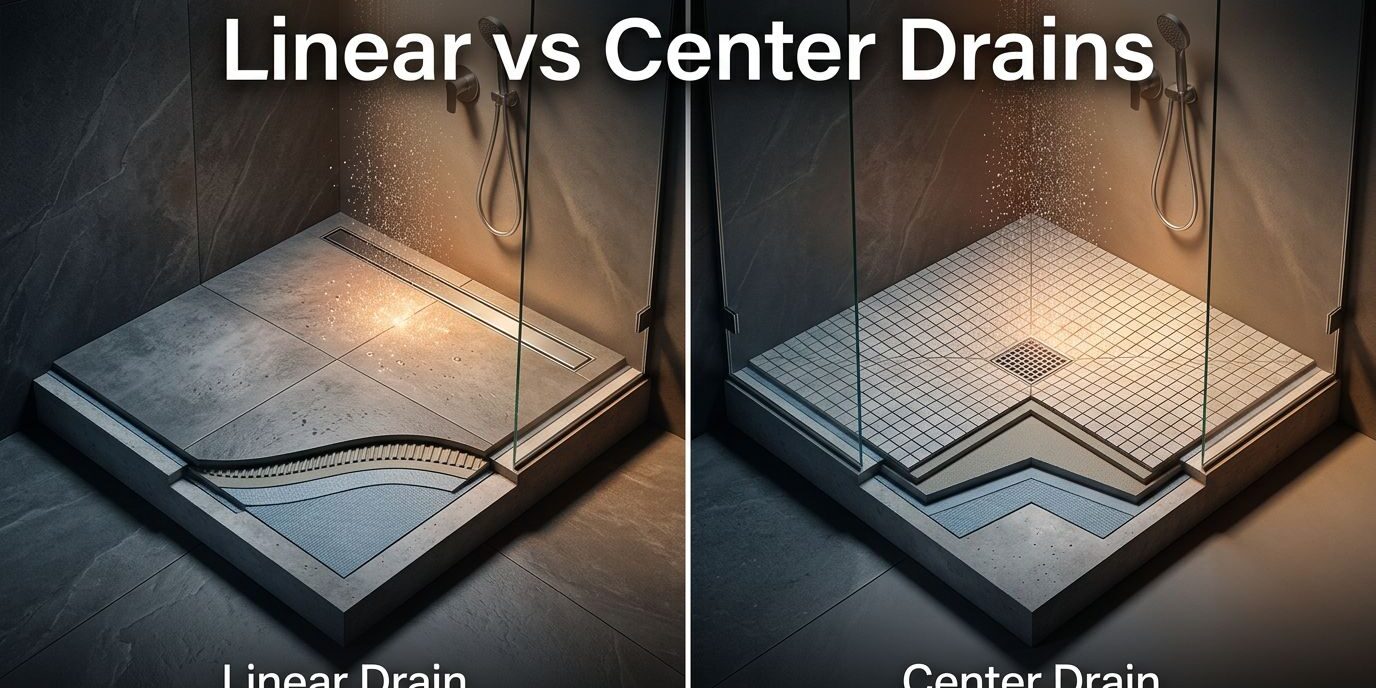
A curbless shower should feel open, comfortable, and easy to use, but the drain you choose affects far more than appearance. It controls the slope, tile layout, waterproofing details, cleaning routine, and even the overall cost of the project.
When homeowners consult me during a bathroom remodel regarding linear drains vs center drains, I start by evaluating the space itself. How large is the shower? Where can the plumbing run? What tile do you want? Once those questions are addressed, the right drainage option for your curbless shower becomes much easier to identify.
Key Takeaways
- Linear drains allow for a single-direction slope, which simplifies the process of installing large format tile.
- Center drains generally feature a lower installation cost and work with traditional layouts, though they require a multi-directional slope toward the drain.
- A curbless shower requires careful waterproofing, a properly prepared subfloor, and precise attention to drainage.
- Drain location is just as important as drain style, especially when planning a seamless bathroom floor transition.
- The best choice depends on your specific tile selection, plumbing configuration, long-term maintenance requirements, and overall installation conditions.
How the Two Drain Styles Work
A linear shower drain, often referred to as a channel drain, is a long, narrow fixture positioned along a wall, at the shower entrance, or across part of the shower floor. Water moves toward the drain along one primary slope. Many of these linear systems can be covered with a decorative grate or a tile insert, which gives the installation a more discreet and modern appearance.
Center drains are the familiar round or square fixtures placed near the middle of the shower. In this configuration, the floor slopes toward that central point from multiple directions. This design has been used in bathrooms for decades and remains a dependable choice for many shower renovations.
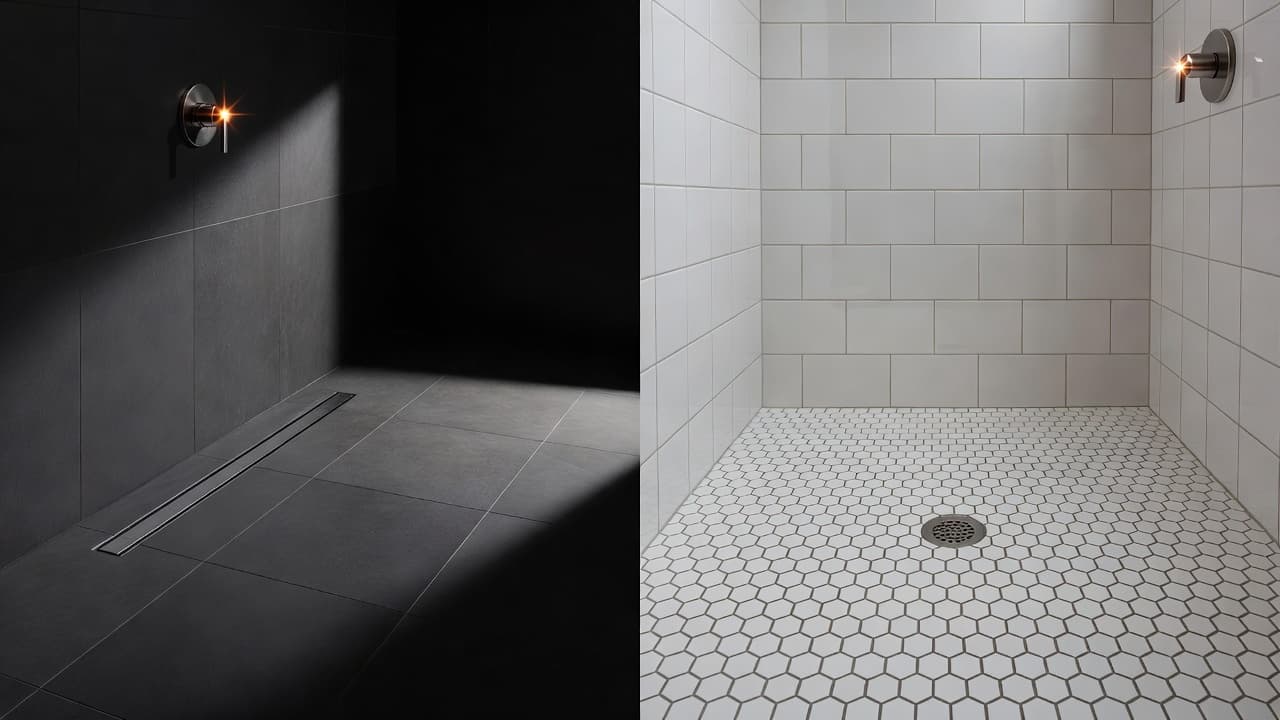
The primary difference lies in how each option manages water and tile installation. With a linear drain, I can often create one continuous slope across the shower floor. Conversely, with a center drain, I must form four sloped planes that meet at the central point.
According to Oatey’s comparison of linear and center drains, both options involve different requirements for layout, installation, cleaning, and overall design. When evaluating water flow and drainage efficiency, it becomes clear that neither drain is automatically the right choice for every curbless shower.
Linear Drains Create a Cleaner Tile Layout
One of the primary reasons homeowners choose a linear drain is the freedom it provides when selecting tile. Using large format tile across a shower floor is much easier with a single slope directed toward a linear drain, which significantly enhances the aesthetic appeal of the space. This approach creates fewer grout lines and a more continuous, sophisticated appearance.
A center drain creates a different challenge. Large tiles are rigid, and they do not naturally bend over a multi-directional slope. To follow the floor geometry correctly, the installer must perform envelope cuts or use smaller tiles and additional sections. While smaller mosaic tile often works well because the many grout lines naturally follow the changes in slope, larger pieces require a more technical installation process.
That does not mean a center drain always requires small tile. Experienced installers can use larger pieces in some layouts, but the tile pattern, drain position, and slope must be meticulously planned together before installation begins.
I also pay attention to lippage, which is the height difference between adjacent tile edges. Multiple slopes create more opportunities for uneven edges if the floor preparation or tile cuts are not precise. A level, properly shaped shower floor protects both the aesthetic finish and the drainage performance.
Linear drains also support several design approaches:
- A wall-to-wall installation can blend seamlessly into the back wall of the shower.
- A drain at the entrance can effectively separate the wet area from the dry bathroom floor.
- A tile-insert cover can make the drain appear nearly invisible.
- A decorative grate can add a touch of contrast or coordinate with your existing fixtures.
The result is a modern and organized look, especially when the drain runs along the same wall as the shower fixtures.
The Advantages and Tradeoffs of Linear Drains
Linear drains offer several practical benefits for homeowners planning a curbless shower. The single-plane slope can simplify the tile layout and create a more open visual effect. It also makes large-format tile more practical, which many homeowners prefer for a clean, low-grout design.
Placement is another advantage. A wall drain can keep the center of the shower floor visually clear. A drain near the entrance can help manage water before it reaches the rest of the bathroom, but the surrounding waterproofing and floor slope must be carefully designed.
Linear drains can also work well for bathrooms designed with accessibility in mind. A barrier-free entry removes the raised threshold, while the long drain can support a broad transition into the shower, making it an excellent choice for aging in place. The drain alone does not make a shower accessible, though. Clear floor space, shower controls, grab bars, slope, and other details all require proper planning.
The tradeoffs deserve equal attention. Linear drains generally involve a higher installation cost than basic center drains, and the system may require more detailed waterproofing and framing work. The drain body also needs to connect correctly to the existing plumbing, which can affect the bathroom floor and subfloor.
Cleaning is another consideration, as hair, soap, and mineral buildup can collect along the length of the channel. While homeowners discussing this issue in a real-world linear drain comparison often highlight maintenance requirements as a factor they initially overlooked, most high-quality systems offer better clog resistance. These systems usually include a removable cover or strainer, but regular cleaning remains essential for optimal performance.
Why Center Drains Remain a Reliable Choice
Center drains are familiar, widely available, and often more affordable. This reliability is a major benefit when a homeowner wants to control renovation costs while maintaining high standards for a custom bathroom design. Because they have been a staple in the industry for decades, these drains are incredibly easy to find in a variety of finishes, shapes, and sizes.
A center drain is an excellent fit when the existing plumbing layout is already in place or when a homeowner prefers a classic aesthetic. This drain style works particularly well with small-format tile, intricate mosaics, and many natural stone designs. In these instances, the extra grout joints provide visual detail while helping the tile transition smoothly across the four-way slope required for proper water flow.
Because center drains have been the standard for so long, repairs and replacement parts are easy to source. A standard drain installation makes sense in a guest bathroom, a rental property, or a straightforward shower conversion where the aesthetic goals do not require the specialized look of a linear system.
The primary technical consideration for this setup is the shape of the shower pan. To ensure the shower pan effectively manages water flow, the floor must be sloped precisely from every direction toward the center. This requires accurate planning and careful tile placement during the installation process. If the slope is incorrect, or if the tile cuts and waterproofing are not handled with precision, the shower may suffer from standing water, cracked grout, or moisture infiltration below the surface.
A center drain also occupies a central position on the floor, which can either be a deliberate design choice or a compromise. Some homeowners appreciate the symmetry of this traditional bathroom design layout. Others may find that the centered hardware interrupts the flow of their tile work. Ultimately, the decision comes down to whether you want your drain to be a visible feature or if you prefer a design that fades into the background.
Linear Drains vs Center Drains: A Practical Comparison
The following comparison helps me narrow down the right choice during a bathroom consultation when choosing between linear shower drains and traditional center drains.
| Consideration | Linear Shower Drains | Center Drains |
|---|---|---|
| Floor slope | Requires a simple single-direction slope | Requires a complex multi-directional slope |
| Large format tile | Ideal for seamless, clean aesthetics | May require more cuts and planning |
| Small mosaic tile | Works well, but not required | A natural fit for the multi-directional slope |
| Typical installation cost | Often higher | Usually more budget-friendly |
| Drain appearance | Long, modern, or tile-covered | Traditional round or square design |
| Cleaning | Channel and strainer need regular cleaning | Simple grate and trap maintenance |
| Plumbing changes | May require more planning | Often easier in existing layouts |
| Curbless transition | Works well with wall or entry placement | Works well with proper full-floor slope |
The takeaway is simple. Linear shower drains give me more tile and layout flexibility, while center drains often provide homeowners with a simpler and less expensive installation path.
What Matters Most in a Curbless Shower Installation
The drain decision is only one part of the project. A curbless shower depends on the entire floor assembly working correctly. Before any tile is installed, I inspect the subfloor or concrete slab for cracks, uneven areas, moisture concerns, and the correct elevation for the drain.
The shower floor must slope toward the drain without creating a sharp lip at the entrance. If the bathroom floor and shower floor do not meet at the right height, removing the curb will not automatically create a safe, water-controlled transition that meets ADA compliance standards.
Waterproofing needs to extend beyond the immediate shower floor to accommodate a full wet room design. The walls, corners, drain connection, niches, benches, and transitions all require a high-quality waterproofing membrane to ensure a watertight seal. A beautiful tile installation cannot compensate for missing or poorly connected waterproofing.
Drain selection should happen before the tile order is finalized. The drain body, flange, grate height, mortar bed, waterproofing system, and tile thickness all need to work together. I also check the manufacturer installation requirements, as linear drain systems often have specific drainage capacity specifications and unique methods for how they connect and seal to the subfloor.
The finish matters, too. A polished surface can become slippery when wet, while a matte or lightly textured floor may provide better traction. Tile material alone does not determine safety. Finish, grout joints, slope, drainage, and installation quality all play a part in creating a secure environment.
For bathrooms in Southwest Florida, I also think about wet feet, humidity, pool traffic, and frequent cleaning. Porcelain is often a dependable floor choice because it resists moisture and handles regular use. Natural stone can look exceptional, but some materials need sealing and more careful maintenance to thrive in a high-moisture climate.
Which Drain Should You Choose?
I usually recommend linear shower drains when a bathroom design calls for large format tile, a seamless wall to wall aesthetic, or a highly customized layout. These drains provide a sleek appearance and a more open floor pattern, which is particularly effective in a spacious primary bathroom.
In contrast, center drains are often the better choice for more budget conscious projects, scenarios where existing plumbing is already well positioned, or when you prefer the look of classic mosaic tile. These traditional drains deliver excellent performance, provided the floor slope and waterproofing are handled correctly.
When planning a commercial bathroom, a rental property, or a frequently used guest suite, maintenance and ease of replacement may carry more weight in your decision. For a custom home renovation, the tile layout and overall visual balance are often the most important factors.
I never choose a drainage system by appearance alone. I evaluate the structure, plumbing, tile selection, water flow, and daily use first. By considering these technical requirements, I can recommend the style that best supports the longevity and functionality of your complete installation.
Frequently Asked Questions
Can I use a linear drain in a bathroom with existing plumbing?
Yes, you can use a linear drain with existing plumbing, though it may require relocating the drain pipe or adjusting the floor framing to accommodate the channel. Because linear drains are typically installed against a wall or at the entrance, the plumbing must be rerouted to that specific location rather than the center of the shower.
Is one drain style easier to clean than the other?
Both styles require regular cleaning to prevent soap scum and hair buildup, but the maintenance process differs. Linear drains have a longer channel that collects debris over a larger surface area, whereas center drains are more compact and usually feature a single, easily removable strainer basket.
Which drain style is more cost-effective for a renovation?
Center drains are generally more budget-friendly due to their simpler installation requirements and lower material costs. Linear drains often involve more complex framing, waterproofing, and specialized installation techniques, which can increase the overall labor and material expense of your project.
Do I need a specific type of tile for a center drain?
While you can use various tile sizes, center drains work best with smaller tiles or mosaic patterns because they can easily conform to the four-way slope required. Large-format tiles are more difficult to install with center drains, as they often require precise cuts to prevent lippage and ensure the floor slopes correctly toward the middle.
Conclusion
The final decision between linear shower drains and center drains depends on how you want your shower to function, its visual impact, and how it integrates with your existing bathroom layout. Linear shower drains are ideal for supporting one-direction slopes and the use of large-format tile, while center drains offer a traditional, familiar installation with a lower starting cost and excellent compatibility with mosaic tile.
Ultimately, a successful curbless shower installation relies on planning the drain, slope, waterproofing, and tile as part of a single, cohesive system. When the shower floor and subfloor preparation receive professional attention and careful coordination, the finished result feels polished, comfortable, and built to withstand years of everyday use.