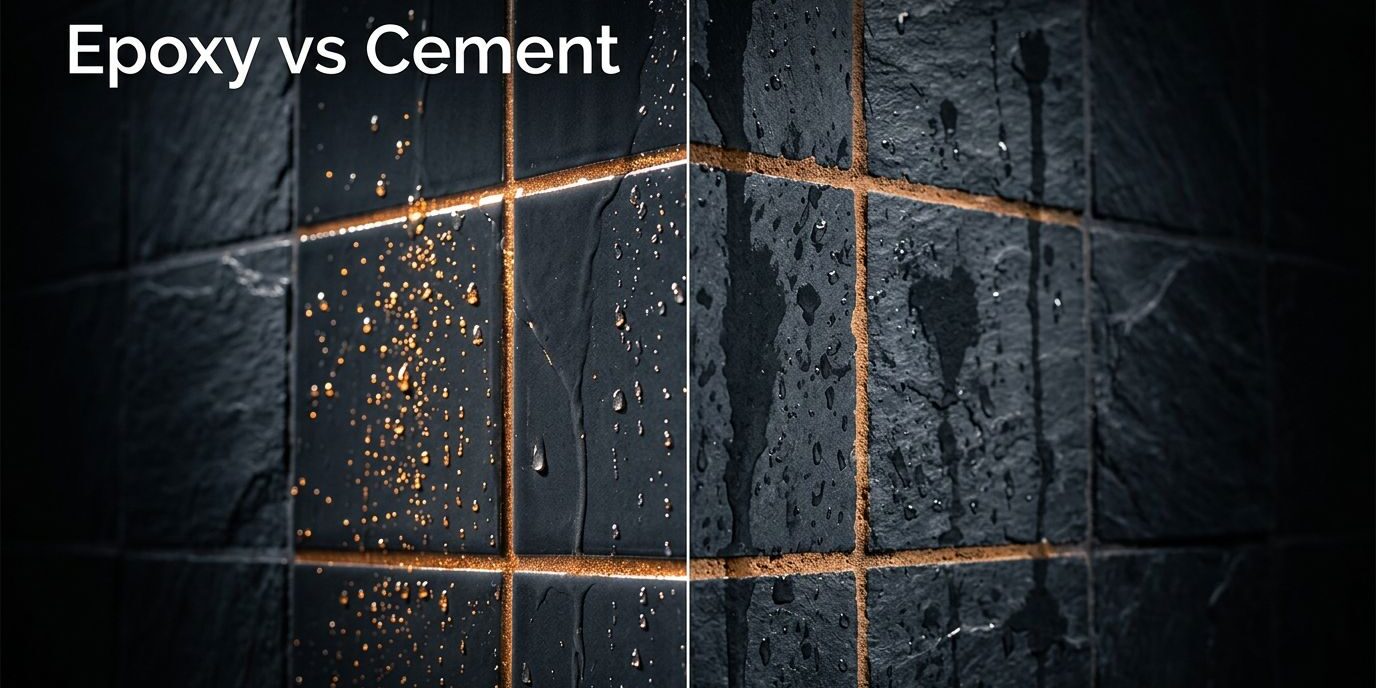
Wet rooms punish weak grout quickly. A shower, a tub surround, or a bathroom floor must endure constant exposure to water, steam, soap, and frequent cleaning, so the wrong material choice becomes obvious much sooner than most homeowners expect.
When I plan a wet room, I do not start with tile color. I start by evaluating how hard the space will work, how often it gets wet, and how much maintenance the owner is willing to handle. This evaluation is exactly where the debate between epoxy grout vs cement grout becomes critical. Deciding between the durability of epoxy grout and the traditional application of cement grout will dictate the long-term success and appearance of the entire installation.
Key Takeaways
- Assess Room Usage: Evaluate your wet room based on daily water exposure and your willingness to perform regular maintenance before selecting a grout type.
- Performance Differences: Epoxy grout is non-porous and highly stain-resistant, making it ideal for high-traffic showers, while cement grout is more affordable but requires periodic sealing.
- Installation Complexity: Epoxy grout has a shorter working time and requires a skilled professional to apply correctly compared to the more forgiving nature of cement-based products.
- System Integrity: Remember that grout is not a waterproof membrane; ensure your tile installation includes proper sloping and waterproofing, regardless of the grout you choose.
Why wet rooms change the grout decision
In a dry room, grout has an easy life. In a wet room, it must stay clean, hold together, and deal with moisture day after day.
That is why I treat grout as part of the room’s workload, rather than just a tiny finishing detail. If the shower gets used every morning, if the bathroom floor stays damp, or if the space gets cleaned hard and often, the grout choice affects how the whole room ages. Choosing the right material is essential to minimize the growth of mold and mildew, which can thrive in high moisture environments.
I also keep one thing front and center. While some high-quality grouts are designed to be water-resistant, grout itself is not a waterproof system. The membrane, slope, and prep behind the tile do the real heavy lifting. Grout is the finished face of the job, and if that face is weak, the room starts looking tired long before the tile should. Selecting the correct material now will significantly reduce the amount of maintenance required to keep your wet room looking its best for years to come.
Grout should help a wet room stay clean. It should never be asked to save a bad shower pan.
Epoxy grout vs cement grout, side by side
Here is the simplest way I break it down when comparing these two materials.
| Factor | Epoxy grout | Cement grout |
|---|---|---|
| Water resistance | Non-porous and waterproof | More absorbent, needs regular care |
| Stain resistance | Highly stain-resistant | Can stain easily if not sealed |
| Maintenance | Minimal routine upkeep | Requires frequent sealing |
| Installation | Less forgiving, needs an expert hand | Easier to work with and adjust |
| Price | Higher upfront cost | Lower upfront cost |
| Best fit | Showers, busy baths, high-moisture areas | Lighter-use baths, decorative tile |
This is the clean, finished look I want to protect.

The table is plain on purpose. When evaluating epoxy grout vs cement grout, the right choice usually comes down to water exposure, maintenance, and installer skill. Epoxy is the tougher choice for long-term durability, especially when you want to keep your ceramic tile looking pristine. While cement grout remains the easier choice for some, the specific needs of your grout lines will ultimately determine which material makes more sense for your project.
Where I choose epoxy grout first
When I want the grout to work hard without constant attention, I lean toward epoxy grout. It is a mixture of resin and hardener that provides incredible durability and chemical resistance, making it an ideal choice for busy showers, family bathrooms, high-traffic areas, and any room where water is part of daily life.
I usually reach for epoxy grout when:
- The shower gets used every day and requires long-term moisture protection.
- Water sits on the floor longer than it should, necessitating superior stain resistance.
- The homeowner wants less maintenance and less scrubbing over the life of the tile.
- The room needs a cleaner, more consistent look that holds up under pressure.
- The space is part of a rental or a high-use property where durability is a priority.
Epoxy grout is popular for a reason. It handles moisture well and resists staining better than traditional cement alternatives. That performance matters when soap scum, shampoo, and bathroom cleaners hit the same joints repeatedly. It also helps when the owner wants a surface that looks polished without the need for frequent sealing or labor-intensive upkeep.
The tradeoff is real. Epoxy grout is less forgiving during installation. The working time is shorter, and it asks for a steady hand and precise application. That is not a problem for a skilled installer, but it does matter. I do not want someone learning the ropes on a shower floor.
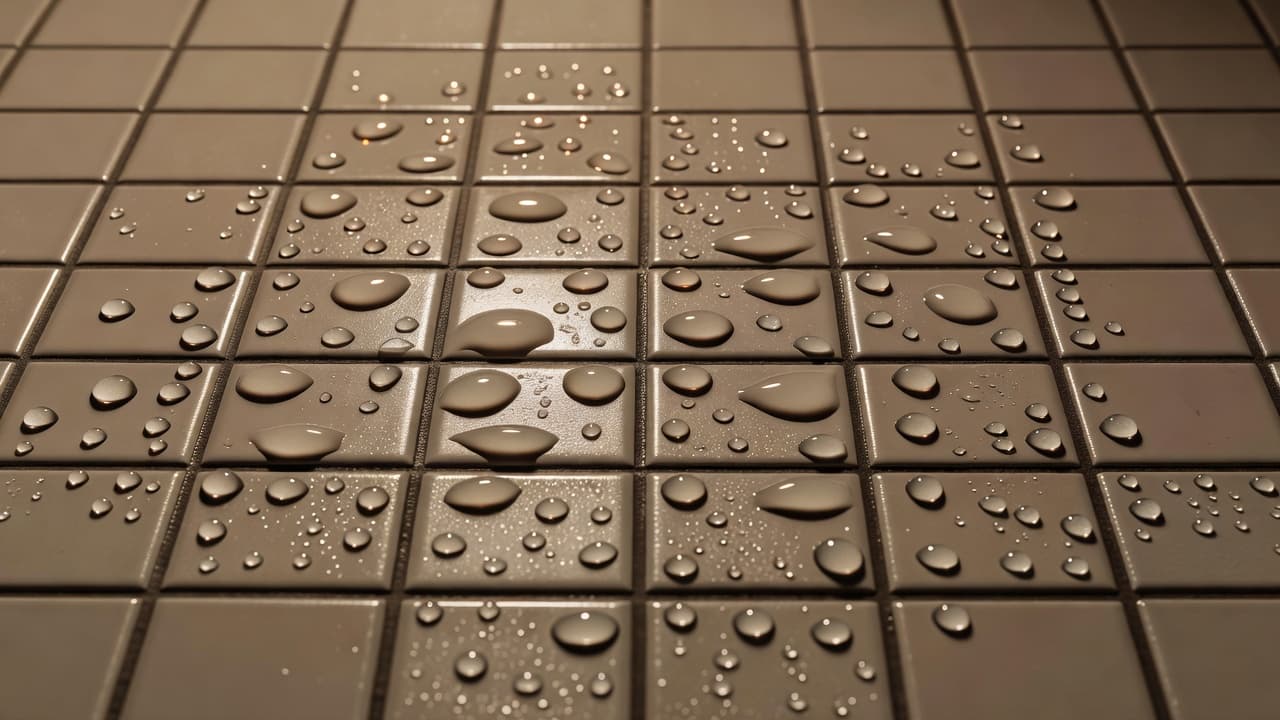
When I see that beading effect on a finished surface, I know the room is set up for easier cleanup. That is the kind of result most homeowners want in a wet room, even if they do not describe it using technical terms.
Where cement grout still earns a place
I do not rule out cement grout entirely. I often use it when a space is less demanding, when the project budget is a priority, or when the owner is willing to commit to regular maintenance.
Traditional cement grout generally comes in two varieties: sanded grout and unsanded grout. Choosing between them often depends on the width of your tile joints. Regardless of the type, cement grout is inherently porous, which means it will absorb moisture and stains unless you apply a high-quality sealant. This necessity makes periodic sealing a mandatory part of home upkeep. While the initial price of these products is significantly lower than epoxy, it is important to consider the potential long-term cost of maintenance and frequent re-sealing required to keep the finish looking new.
Cement grout is familiar, workable, and often easier to install. Many tile setters prefer it because the application process is predictable, which helps ensure a clean, professional finish without unnecessary complications. For many wall tile projects, cement grout remains a practical choice, especially in areas where the grout lines are not subjected to constant standing water.
The main drawback remains the maintenance. Because cement grout is porous, it can collect grime or develop moisture marks quickly if it is not properly protected. In a wet room, this requires the owner to be diligent about cleaning and re-sealing. If that work is neglected, the aesthetic quality of the installation will suffer.
I still use cement grout in locations where the room does not take a daily beating. I also find it to be an excellent solution when a homeowner wants a lower upfront price and fully understands the trade-offs involved. That is a perfectly fair choice for many households; it just is not the recommendation I make first for a shower floor or other high-moisture zones.
Installation decides whether the grout lasts
I say this all the time, tile type is only half the story. The same is true for grout. Even a premium product will fail if the tile installation is sloppy. When it comes to wet rooms, installation difficulty is a major factor, as the material requirements for epoxy versus cement grout differ significantly.
In wet rooms, I prioritize a flat substrate, correct waterproofing, and a precise slope before grout ever enters the picture. If the shower pan holds water, the grout will not fix that. If movement joints are skipped, the room can experience cracking or shifting later. Furthermore, if the wrong products are used together, you risk poor bonding and the eventual growth of mold and mildew in the joints.
That is why I tell homeowners to work with licensed contractors for complex floor and wall projects. Wet rooms are not the place to guess. A professional understands the necessary drying times, cleanup procedures, and the technical details that ensure the room performs long after the project is done.
I also consider the tile material itself. Dense porcelain tile requires specific tools and careful handling, and that same level of expertise must carry through the grout stage. A well-built wet room is a system where the tile, grout, membrane, and slope must function as a cohesive unit.
For me, this is where cheap labor turns expensive. Saving money upfront does not help if the room needs repairs later. I want the bathroom to look good, stay clean, and hold up under real use by preventing common issues like water infiltration and structural movement.
How I make the call on a real project
When I help a homeowner choose between epoxy and cement grout, I keep the question simple. How wet is the room, and how much upkeep do you want?
If the answer is “very wet” and “I want low maintenance,” epoxy grout usually wins. It is remarkably resilient, which is why I often recommend it for a kitchen backsplash or even high-exposure areas like swimming pools. If the answer is “moderate use” and “I want a lower starting cost,” cement grout can fit the plan. That is the honest way I look at it.
For most showers and busy bathroom floors, I lean epoxy first. It fits the way those spaces actually live. For some wall tile and lighter use wet areas, cement grout still works well when the owner understands the care it needs. I do not push one material into every job; I simply match the grout to the room.
Considering the trade-off of epoxy grout vs cement grout early in the planning phase keeps the project practical. It also ensures the finish looks good long after the excitement of the remodel wears off. A wet room should still look sharp after a year of steam, splashes, and daily cleaning, and selecting the right material is the best way to make that happen.
Frequently Asked Questions
Is epoxy grout worth the extra cost?
If your bathroom sees daily heavy use, the higher upfront cost of epoxy grout is generally a sound investment. It eliminates the need for recurring sealing and resists mold much better than cement options, ultimately saving you time and cleaning effort over the years.
Can I install epoxy grout myself as a DIY project?
It is generally recommended to hire a professional for epoxy grout because it sets very quickly and is difficult to clean up if it dries on the tile surface. Unless you have experience with specific resin-based materials, the risk of damaging your tile finish is high.
How often does cement grout need to be sealed?
Cement grout is porous and typically requires resealing every 6 to 12 months, depending on the intensity of use and the cleaning products you employ. Failing to maintain this schedule can result in stained grout lines and a higher risk of moisture penetration.
Will choosing epoxy grout prevent all mold in my shower?
While epoxy grout is highly resistant to mold and mildew because it does not absorb moisture, it cannot stop mold from growing on surface soap scum or debris. Regular cleaning is still necessary to keep the shower sanitary and looking fresh.
Conclusion
Wet rooms do not reward guesswork. They reward the grout that matches the amount of water, traffic, and maintenance the space will see.
If you are looking for the premium performance choice, I recommend epoxy grout for its superior resistance to moisture. If you prefer the standard budget choice, cement grout remains a reliable and cost-effective alternative for many projects. The right answer is not always the most expensive one; it is the material that best fits the room and your lifestyle.
When water is part of the daily routine, I want the final result to offer the best balance of durability and maintenance. By choosing the right grout now, you ensure the space stays protected and easy to clean for years to come.