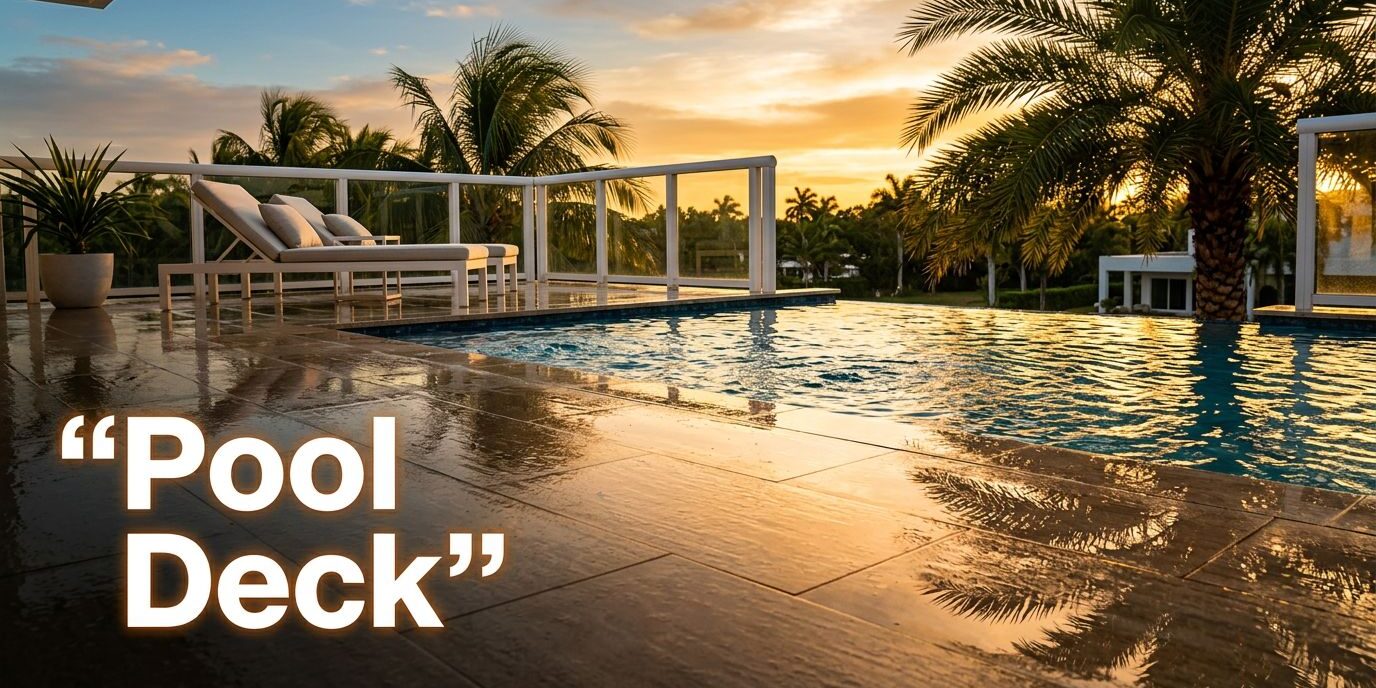
A deck in the South Florida climate takes a beating, yet it remains the centerpiece of your outdoor living space. The sun bakes it, heavy rain soaks it, sand grinds across it, and wet feet hit it all day long. I do not start with color or pattern. I start with traction, moisture resistance, and ease of cleanup.
If a deck turns slick after a storm or starts breaking down under a concrete slab, it stops being a design choice and becomes a safety hazard. Selecting the right pool deck materials Florida homeowners can trust ensures that your patio looks great and performs reliably. The ideal pool deck tile Florida homes need has to balance high-end aesthetics with the durability required to withstand the elements.
Key Takeaways
- Prioritize safety over aesthetics: In the Florida climate, slip-resistance is the most important factor for any pool deck material to ensure safety for wet feet and heavy foot traffic.
- Porcelain is a top performer: Exterior-rated porcelain pavers are highly recommended for their density, low moisture absorption, and ability to stay cool under the intense Florida sun.
- Travertine offers natural beauty: For homeowners seeking a classic stone look, travertine provides a beautiful, textured alternative, though it requires professional installation and careful attention to drainage.
- Installation is non-negotiable: A beautiful tile cannot compensate for a poor foundation; ensuring a properly leveled, well-draining concrete slab is essential for long-term deck durability.
- Beware of slick finishes: Avoid glossy or polished surfaces around your pool, as they become hazardous when exposed to water, pool chemicals, and rain.
What a Florida pool deck has to survive
A swimming pool deck is not a patio with a little more water nearby. It gets splashed, flooded by sudden rain, and used by people who are barefoot, tired, and moving fast. Kids run across it. Chairs scrape it. Coolers, pets, and guests all leave their mark on your pool deck pavers.
That is why I care so much about grip and easy cleanup. Florida sand acts like sandpaper underfoot, which is especially problematic given Florida’s hot climate. It wears on the surface every time someone walks in from the yard or the beach, and the constant exposure to tropical weather conditions means the material has to be incredibly tough. If the tile is too soft or too slick, the deck starts fighting the environment instead of working with it.
A pretty deck that feels risky when it is wet is the wrong deck.
I also want the whole space to feel pulled together. The pool, the coping, the patio furniture, and the natural stone pavers should work as one story. If the surface feels out of place, the whole backyard feels off. This is the kind of clean, durable look I like for a Florida pool area, because it handles real life without looking beat up. To achieve this while keeping your space secure, finding non-slip pool deck options is essential for a safe family environment.
Why I usually start with porcelain pavers
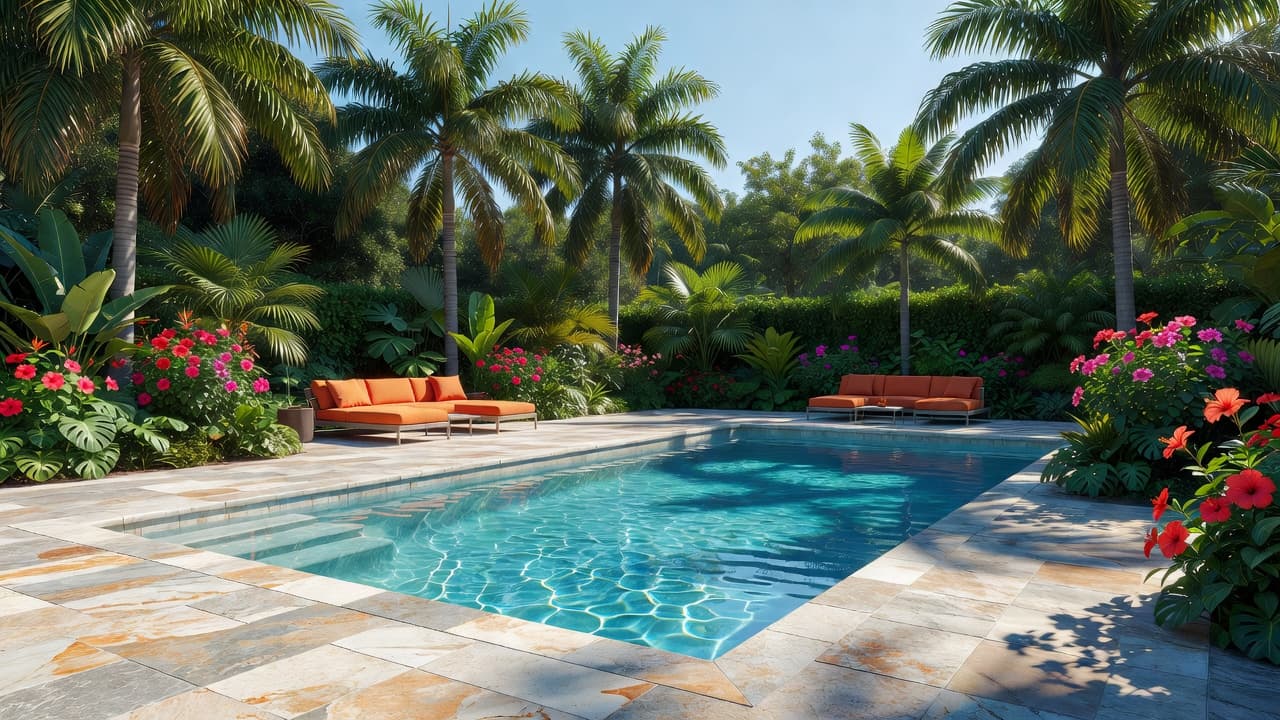
When I want the safest all-around answer, I start with porcelain pavers. These tiles are incredibly dense and offer low absorption, which makes them excellent heat-resistant pool decking that stays cool underfoot, even during the peak of a Florida summer. This combination of durability and temperature control is essential in a climate where humidity and moisture are constant factors.
Porcelain also gives me options. I can go for stone-look, concrete-look, or wood-look tile without the high level of upkeep that natural materials often require. If a homeowner wants a modern deck, large-format porcelain can create a clean, open look with fewer grout lines across the floor.
That does not mean I can ignore the finish. I still want enough grip for wet feet, which is why I often specify textured porcelain pavers for added safety. A glossy surface might look fine in a showroom, but it can feel slippery the first time someone steps out of the pool. For a busy backyard, I want a deck that wipes clean and feels steady when water is everywhere. When I look at pool deck tile Florida residents can rely on for long-term quality, porcelain consistently provides the best mix of performance and style. It is the material I reach for when I want the deck to stay sharp after a storm, a party, or a long summer afternoon.
Why a Travertine Pool Deck Still Makes Sense
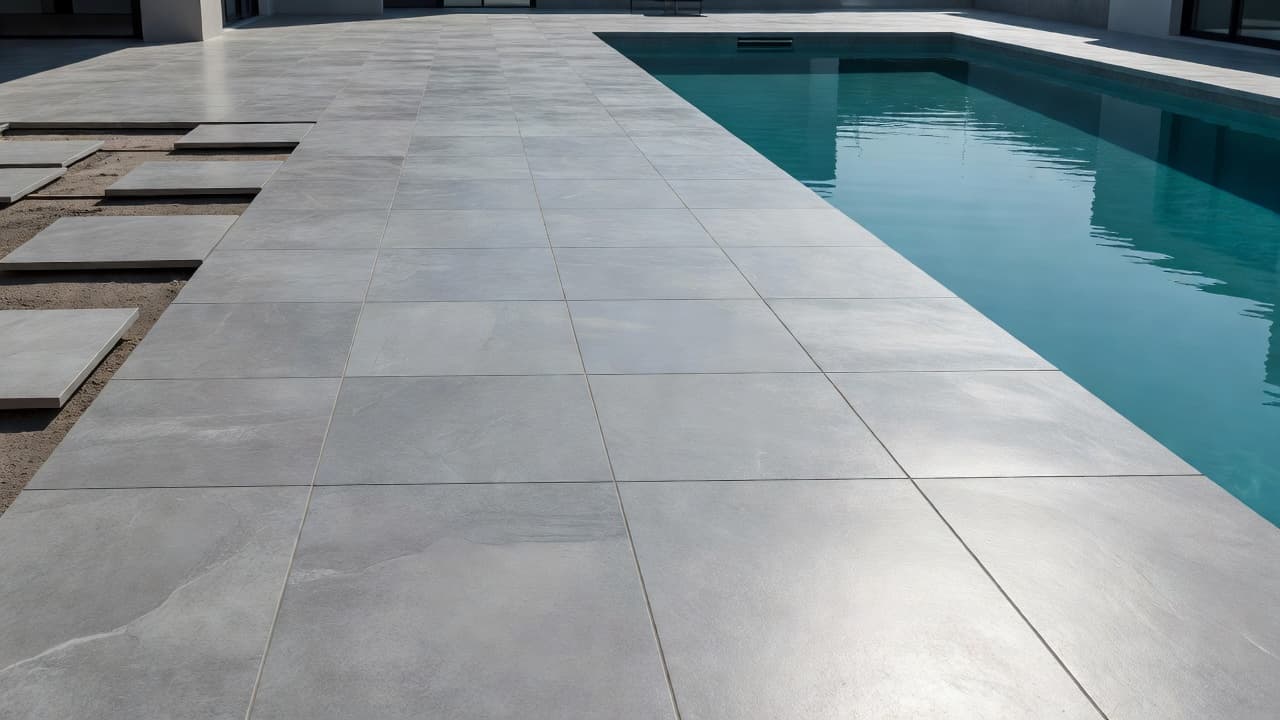
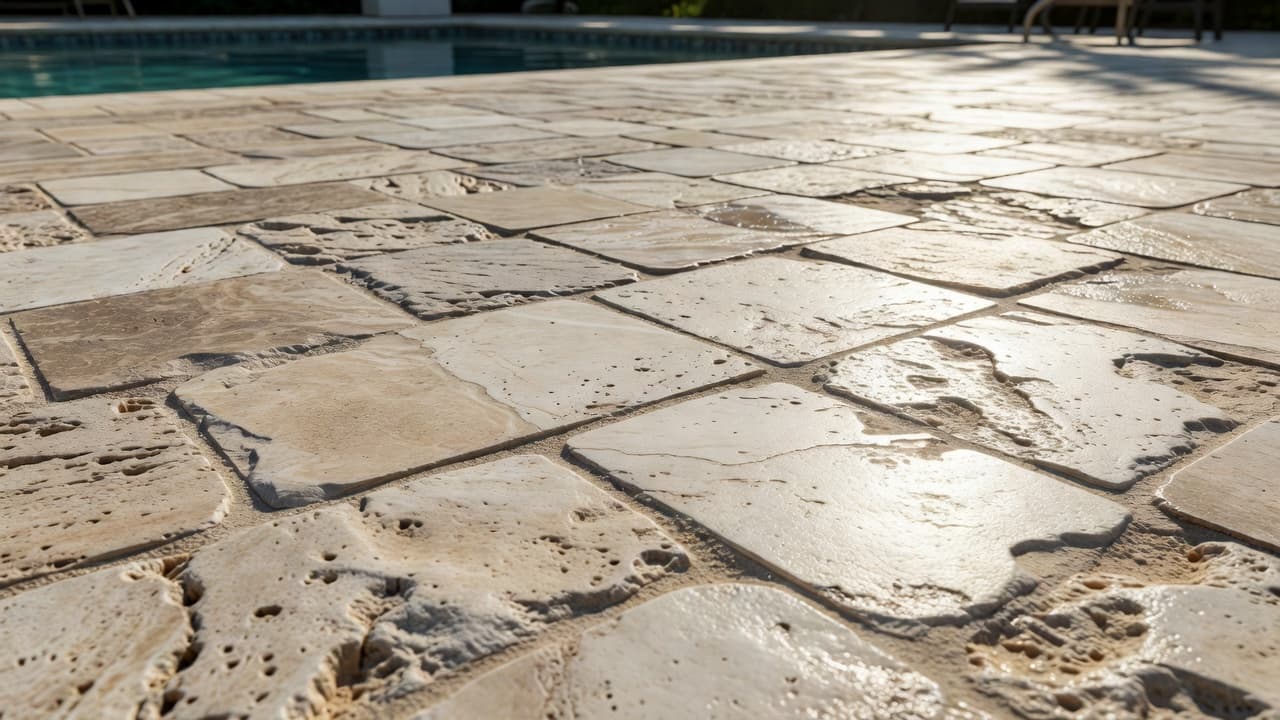
Travertine belongs in the conversation because it fits the Florida landscape so well. It has a warm, natural look that feels right at home around water. Whether you are looking for natural stone pavers or classic natural stone tiles, this material adds texture and color variation, which gives the deck life without making it feel busy.
I recommend a travertine pool deck when the homeowner wants a softer stone look and understands that the installation requires professional care. This is not a material I treat casually. The stone, the slab, and the layout all have to work together. Leveling and drainage matter a lot. If the base is wrong, the finished deck will show it quickly.
The upside is easy to see. Travertine has a classic Florida feel that never looks loud. Unlike stamped concrete, which can crack and fade under the intense sun, travertine offers superior durability while maintaining its charm. It works well when the yard already has natural textures, warm paint colors, and a relaxed backyard style. It also feels less hard-edged than some modern surfaces. For those seeking a similar high-end natural aesthetic, marble pavers serve as an excellent secondary alternative that provides a sophisticated finish for many pool areas.
My quick material comparison
When comparing pool deck pavers, Florida homeowners usually narrow their selection down to three primary choices. Each material has a specific place, but they are not created equal once water and intense weather conditions get involved. When deciding among these pool patio materials, consider how they perform over time in our unique climate.
| Material | What I like | Watch-outs | Best fit |
|---|---|---|---|
| Exterior-rated porcelain | Dense, low-absorption, low maintenance, wide style range | Needs the right finish and a solid install | Most Florida pool decks |
| Travertine | Natural variation, warm look, classic around pools | More porous, needs careful leveling and drainage | Homes that want a stone look |
| Ceramic tile | Lower upfront cost, easier to cut during installation | Less forgiving with heavy traffic, water, and sand | Light-use or covered spots |
If I had to narrow it down, porcelain is my first call, travertine is my style pick, and ceramic stays in the backup plan for specific, limited spaces. While ceramic can work in some settings, I do not put it at the top of the list for a wet, high-traffic deck. My focus is always on installing a high-quality pool deck that stands up to the elements while remaining beautiful for years to come.
The installation details I refuse to skip
A successful pool deck renovation begins with the foundation, as the slab underneath matters just as much as the tile choice itself. If the base is out of level, holds water, or already has structural problems, even the highest quality tile will not fix it. I prioritize creating a swimming pool deck that sheds water correctly and sits on a sound, durable concrete slab.
A beautiful tile will not save a bad installation.
That is where many projects go sideways. Outdoor tile needs the right prep, the correct bonding agents, and genuine attention to drainage. Whether we are installing large-format porcelain or traditional paving stones, I do not want a finished deck that looks great on day one only to struggle against the elements by the next season.
I also pay close attention to transitions. The surface should meet the pool coping, house edge, and walkway in a way that feels clean, cohesive, and stable. If there is old flooring to remove, it must be cleared properly before the new materials are laid. If the slab requires leveling, that process comes first. Furthermore, long-term maintenance is critical, and I always emphasize the importance of sealing pool deck pavers or tiles to protect your investment from Florida’s harsh humidity and sun. The front end of the job determines how long your new floor will stay solid.
A pretty sample in a showroom can hide a lot, but a finished backyard cannot.
The finish I choose for wet feet
The finish under wet feet is where the right choice becomes obvious. I want a slip-resistant surface that provides enough grip to feel safe, but not one so rough that it traps dirt and makes cleanup miserable. Around a pool, I avoid a polished look entirely because I want absolute control.
That balance matters even more when the deck gets steady use. Rain, sunscreen, pool chemicals, and sand all test the surface in different ways. A good outdoor tile passes those tests without making the space feel heavy or fussy.
A safe deck does not need to look harsh. It can still feel calm, clean, and pulled together. The trick is choosing the right texture, as utilizing non-slip pool deck options remains the most critical safety feature you can choose. When I get that part right, the backyard feels easy to live with.
Frequently Asked Questions
Why is porcelain usually preferred over other materials for Florida pool decks?
Porcelain is favored because it is incredibly dense, has very low water absorption, and stays cooler underfoot than many other materials during hot summers. It offers a wide variety of styles while requiring significantly less maintenance than natural stone.
Can I use regular ceramic tile for my outdoor pool area?
It is generally recommended to avoid standard ceramic tile for pool decks because it is less durable and often lacks the necessary slip resistance for high-traffic, wet areas. Ceramic tiles are better suited for light-use or fully covered spaces rather than an exposed, heavy-duty pool deck.
How important is the concrete slab beneath my new pool deck tiles?
The slab is the foundation of your entire project and must be perfectly level and properly sloped for water drainage. If the underlying base is compromised or improperly prepared, even the most expensive tiles will eventually crack or shift, regardless of how well they were installed.
Do I need to seal my pool deck pavers after installation?
Yes, sealing your pavers is a critical step in protecting your investment from Florida’s harsh humidity, intense UV rays, and potential staining. A quality sealer acts as a protective barrier that keeps the surface looking sharp and prevents moisture from damaging the material over time.
Conclusion
The right pool deck tile Florida homeowners need has to do more than look good in a photo. It must withstand the constant exposure to water and the intensity of Florida’s hot climate, all while handling heavy traffic without turning slippery or becoming a maintenance burden. That is why I usually start with exterior-rated porcelain, keep a travertine pool deck in the mix for a high-end look, and remain cautious with standard ceramic options.
While your choice of pool deck materials Florida experts recommend is vital, the preparation of the slab, the precision of the slope, and the final finish matter just as much. These details determine whether your outdoor space remains functional after a heavy storm or turns into a long-term headache.
If your selected pool patio materials feel safe under wet feet and stay clean after a busy weekend, you have made the right investment. When you balance durability with the right aesthetic, you ensure your deck remains a beautiful, low-stress centerpiece for your home.