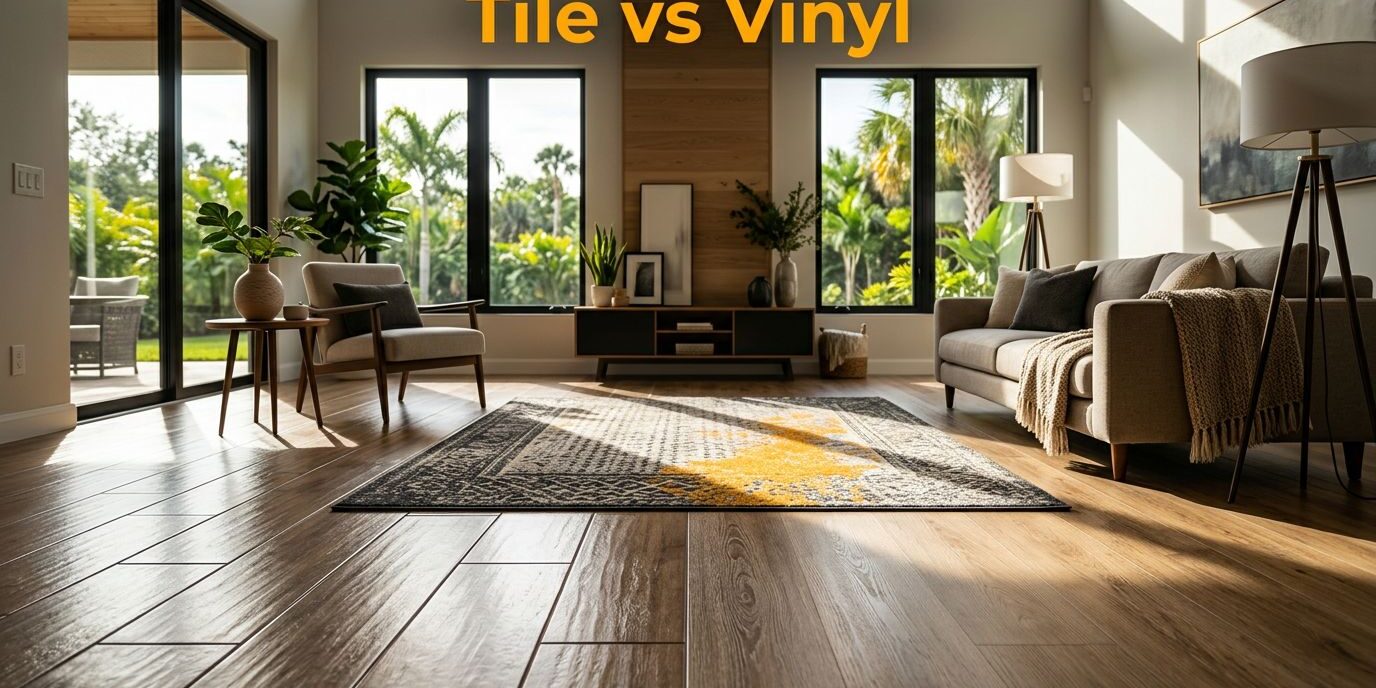
When people ask me about wood look tile vs vinyl plank in Florida, I start with one word: water.
If your floors see wet feet, sandy shoes, dog bowls, spilled drinks, and cold AC all year, the better choice isn’t just the one that offers a realistic wood look on a sample board. It is the one that remains completely water resistant after a few brutal summers. While I usually lean toward wood-look tile for the durability required by Florida living, modern luxury vinyl plank has real advantages too.
The trick is knowing where each option shines, and where it starts to feel like the wrong tool for the job.
Key Takeaways
- Climate-First Decision Making: Florida’s unique environment—featuring high humidity, salt air, and constant grit from sand—requires flooring that prioritizes durability over initial cost.
- The Superiority of Tile for Wet Zones: Porcelain wood-look tile is virtually impervious to water, making it the ideal choice for kitchens, bathrooms, pool-adjacent areas, and high-traffic entryways.
- Comfort and Versatility with LVP: Luxury Vinyl Plank (LVP) offers a softer, warmer, and quieter surface that excels in bedrooms, home offices, and second-story living spaces where comfort is prioritized.
- Installation and Budget Factors: While LVP is generally cheaper and faster to install, allowing for DIY projects and quick updates, tile provides a more permanent, high-value investment that stands up better to the heavy abuse of Florida living.
Florida changes the flooring equation
A lot of flooring advice online is written for places that do not live the way Florida lives. That matters.
Here, you get humidity, salt air near the coast, sudden rain, pool traffic, and a steady parade of wet feet. Then you walk inside to a heavily air-conditioned house. That swing between hot, damp outdoors and cool indoor air can expose weak materials and weak installs fast.
Sand is another big deal. It gets tracked in from driveways, beaches, patios, and lanais. Over time, it acts like grit under your shoes. This grit creates wear in areas with high foot traffic, which is a common concern for busy family homes, offices, rentals, and storefronts.
Most people comparing these floors are really choosing between porcelain wood-look tile, ceramic tile, and vinyl plank flooring. All of these options can mimic the aesthetic of hardwood flooring well. They all come in long plank formats and generally perform better in Florida than wood products in a lot of situations.
But they do not behave the same.
In Florida, the floor that handles water, sand, and daily traffic with the least drama usually wins.
That is why I do not look at this choice as a style question first. I look at it as a lifestyle question. Is this a beach condo with salty air and renters? A family home with kids running in from the pool? A quiet guest room? A retail space with constant foot traffic?
Once I frame it that way, the answer usually gets clearer.
Why wood-look tile often wins the long game
Wood-look tile has one big Florida advantage: it is essentially impervious to water.
That is the headline. In kitchens, bathrooms, main living spaces, entryways, and pool-adjacent rooms, that matters more than most homeowners realize. A porcelain tile surface will not swell or warp because the dog tipped a water bowl or a child came in dripping from the patio.
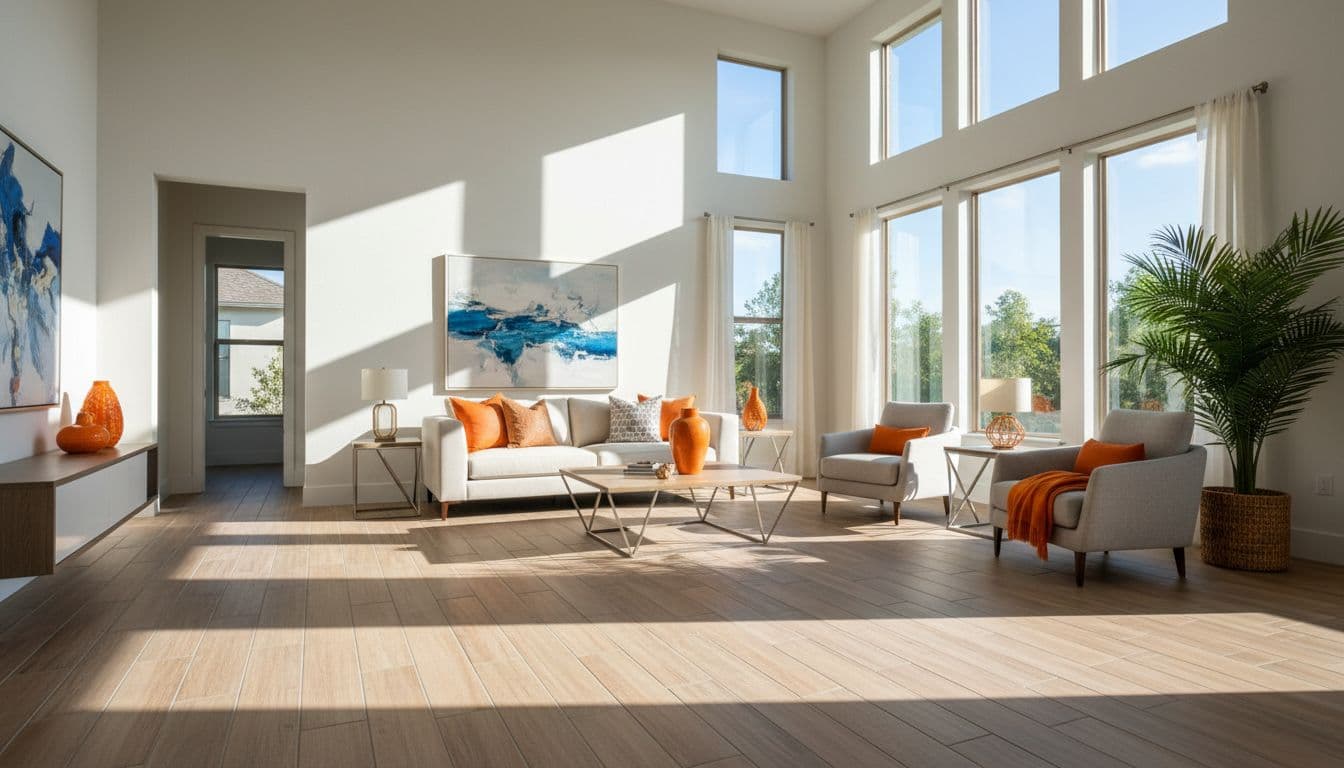
I also prefer porcelain tile for Florida homes because it handles sand, pet claws, rolling furniture, and intense sun better over time. Because it is highly scratch resistant, it is an ideal choice for high-traffic areas. If you have large sliders, bright rooms, or an open-plan layout that gets hammered every day, this material is hard to beat. It feels permanent and wears like it means it.
That does not mean it is perfect.
Porcelain plank tile is harder underfoot. If you stand and cook for long stretches, you will feel it. It can also feel cooler, though in Florida that often serves as a benefit rather than a drawback. Grout lines require some attention, and the wrong tile finish can get slick in wet zones. I would rather see a matte or lightly textured surface than a shiny, polished finish near a pool door.
Installation is another factor to consider. Using mortar and grout to secure your floor usually costs more, requires more labor, and is not as quick or low-disruption as other options. Because this material is heavy and requires precise cutting, it generally demands professional installation to ensure a long-lasting result. Once it is in, however, it tends to stay put for the long haul, provided you keep up with basic maintenance to keep the grout clean.
For coastal homes, busy family houses, and businesses that want durability first, this is where my bias shows. I trust tile more. If you want another outside take, this honest comparison of porcelain tile and LVP lands in a similar place on wear.
If I were choosing flooring for a Florida great room, a kitchen, or anywhere wet traffic is normal, I would put wood-look porcelain plank tile at the top of the list.
Where luxury vinyl plank earns its spot
Luxury vinyl plank is not the villain in this comparison. When used in the right room, it is a smart, versatile pick for many Florida homeowners.
The first thing people notice is comfort. LVP is warmer and softer underfoot than tile because it has a slight give. That matters in bedrooms, upstairs spaces, and home offices where you want a quieter, more acoustic-friendly environment. In a guest suite or a home office, that softer landing can be the main priority.
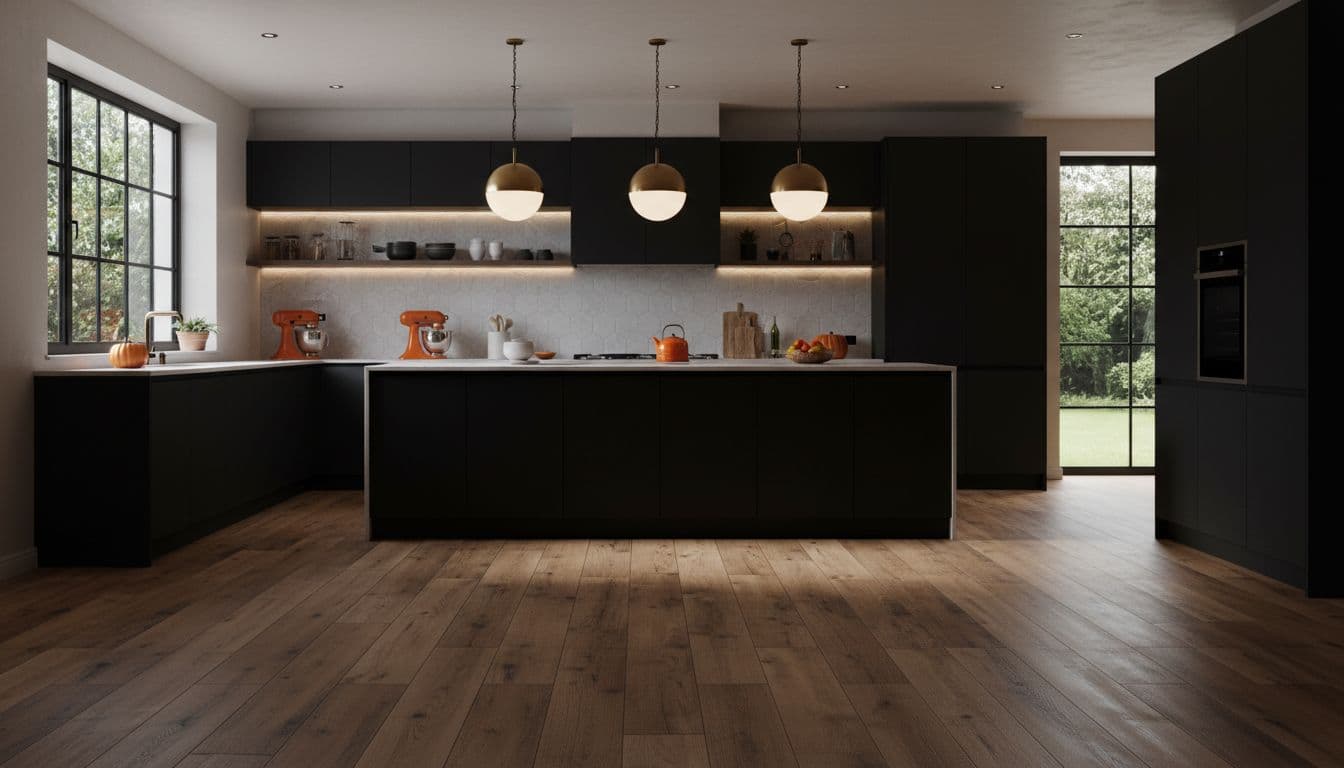
LVP also wins on speed and accessibility. Thanks to a simple click and lock system, this floating floor is a popular choice for DIY installation projects. It goes in faster and with significantly less mess than tile. If you need to update a rental property, flip a space quickly, or avoid a major renovation, that efficiency is a real advantage. Business owners often appreciate this as well, as it minimizes operational downtime.
Budget is another factor. While prices vary by brand and site conditions, LVP usually presents a lower upfront barrier to entry. This makes it attractive when you are remodeling several rooms at once or trying to control costs without sacrificing aesthetic appeal.
However, Florida environments pose specific challenges. While many products are marketed as waterproof flooring, this does not mean the entire floor system is immune to moisture issues. Water can still penetrate the tongue and groove joints or seep beneath the planks to reach the subfloor. Prolonged exposure to moisture is a different challenge than a simple spill. Furthermore, sun-drenched rooms with high UV exposure can sometimes affect vinyl, and sandy grit can wear down the protective wear layer over time if the product quality is low.
When choosing your material, look for a rigid core construction to ensure better stability under heavy furniture and consistent traffic. While high-quality LVP can handle daily life, it will not shrug off abuse the way porcelain tile will.
I recommend luxury vinyl plank for drier rooms, second-story installations, and homes where underfoot softness and noise reduction take priority over maximum durability. For a quick visual take on cost, maintenance, and long-term value, this tile vs LVP video comparison is a useful supplement.
The room-by-room answer for Florida homes and businesses
If I had to simplify the choice, I would match the floor to the stress level of the room, especially if you have kids and pets tracking sand or spills through the house.
Here is the quick version:
| Room or priority | My lean | Why |
|---|---|---|
| Main living areas, kitchens, bathrooms | Porcelain plank tile | Better for water, spills, sand, and constant traffic |
| Entryways, coastal homes, pool access points | Porcelain plank tile | Less worry about wet feet, salt, and grit |
| Bedrooms and upstairs rooms | Luxury vinyl plank | Softer, quieter, warmer feel |
| Quick rental updates or low-disruption remodels | Luxury vinyl plank | Faster install and easier on the budget |
| Busy retail or office spaces | Depends on traffic | Tile for hard wear, LVP for comfort and speed |
The takeaway is simple: the wetter and rougher the room, the more I lean toward tile.
Budget matters, but I would not stop at the initial sticker price. While the installation cost of tile is generally higher per square foot than luxury vinyl plank, a floor that is cheaper today can feel expensive later if it scratches, shifts, or looks tired too soon. On the other hand, paying for porcelain plank tile in a low-stress guest room may not provide much value if your primary goal is comfort.
I also believe resale value and perception matter, even if I would not make them the only factor. In many Florida homes, tile feels more at home. It fits the climate and the indoor-outdoor way people live here. While high-quality luxury vinyl plank can look great, bargain-grade vinyl is easier to spot than a well-chosen porcelain plank tile.
If you are choosing for a business, the same logic applies. A salon, boutique, or office may appreciate the quiet feel and faster installation of luxury vinyl plank. However, a busy lobby, restaurant entry, or any space with frequent wet traffic is where tile becomes the safer, more durable choice.
Frequently Asked Questions
Is luxury vinyl plank really waterproof?
While many LVP products are marketed as waterproof, they are only water-resistant at the surface level. Water can still seep through the joints between planks and damage your subfloor if standing water is not cleaned up promptly.
Can I install tile over my existing subfloor myself?
Porcelain tile is heavy, requires precise cutting, and demands a perfectly level, rigid subfloor to prevent cracking. Because of the complexity of mortar and grout application, professional installation is strongly recommended to ensure the floor lasts.
Which flooring option is better for homes with pets?
Porcelain tile is superior for households with pets because it is highly resistant to scratches from claws and impervious to accidents or water bowl spills. LVP can be durable, but it may be more susceptible to scratching from larger pets and does not provide the same long-term protection against heavy moisture.
Final Thoughts
When comparing wood-look tile and luxury vinyl plank in Florida, the decision ultimately comes down to a few practical factors. You should consider where the floor will experience the most water, sand, and heavy foot traffic.
If those elements reach almost every corner of your home, wood-look tile is often the superior long-term investment. It offers unmatched moisture resistance and fade resistance, which are essential for keeping your floors looking pristine under the harsh Florida sun. However, if you are looking for a space that is drier and prioritizes underfoot comfort, luxury vinyl plank is an excellent choice that does not feel like a compromise.
Both options feature realistic wood grain patterns that can elevate the design of any room. Furthermore, both materials significantly simplify cleaning and maintenance compared to traditional hardwood floors, allowing you to spend more time enjoying your home. The most attractive sample does not always win the decision. In Florida, the ideal floor is one that keeps its cool through high humidity, frequent spills, and the demands of daily life.