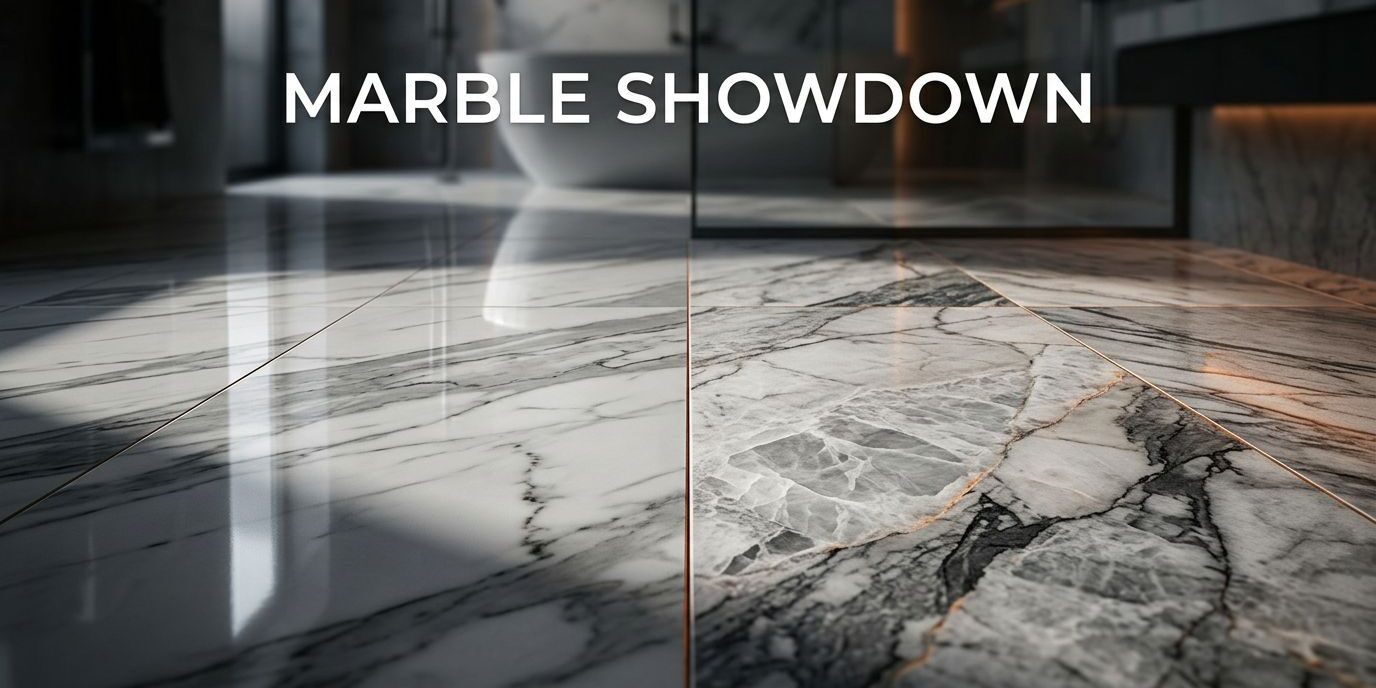
Real marble looks rich for a reason, but it also asks for patience. If you want a floor and wall tile that keeps up with real life, the prettier choice is not always the smarter one.
When I compare marble look porcelain with real marble, I start with traffic, moisture, cleaning, and the kind of wear the space will see. Choosing between high quality porcelain tile and natural stone in Florida is a unique challenge because sand, humidity, and wet feet change the equation fast.
The right answer depends on where the tile is going and how much upkeep you want to live with.
Key Takeaways
- Performance vs. Aesthetics: While real marble offers unmatched organic depth, marble look porcelain provides a superior, low-maintenance solution for high-traffic areas prone to spills, grit, and moisture.
- Strategic Application: Reserve natural marble for low-traffic zones like powder rooms or decorative wall accents where its unique character can shine without being subjected to heavy wear.
- Durability in Florida Environments: Due to the prevalence of tracked-in sand and high humidity, porcelain is the smarter long-term investment for Southwest Florida homes and businesses to protect property value.
- Importance of Installation: Regardless of the material chosen, the longevity of your floor depends heavily on a professional installation that ensures a level surface and proper moisture protection.
What you are really choosing between
I don’t see this as a simple style debate. I see it as a choice between a natural stone with real character and a manufactured tile that copies the look without asking for the same care.
Natural stone has a depth that is hard to fake. The veining moves in a way that feels organic, and no two pieces of this natural stone are the same. That is the charm. It also means marble can stain, etch, and show wear sooner than people expect, especially in kitchens, baths, entries, and business spaces.
Porcelain tile is a different animal. It is dense, consistent, and built for the kind of floors that get used every day. Because of its incredible durability, porcelain tile is a reliable choice for high-traffic areas. This marble look tile can mimic natural patterns well enough that most people only notice the difference up close. In larger rooms, especially with broad slabs or large-format porcelain tile, the effect can be sharp and clean.
I think of porcelain as the floor that has to work. Marble is the surface you protect.
That is really the heart of it. If I want a room to look polished without becoming high-maintenance, porcelain usually gets my vote.
Where marble look porcelain pulls ahead
Marble look porcelain wins most often when the space gets used like a real room, rather than a showroom. That means kitchens, laundry rooms, guest baths, entries, rentals, and commercial high traffic areas where cleaning matters and the daily movement never really stops.
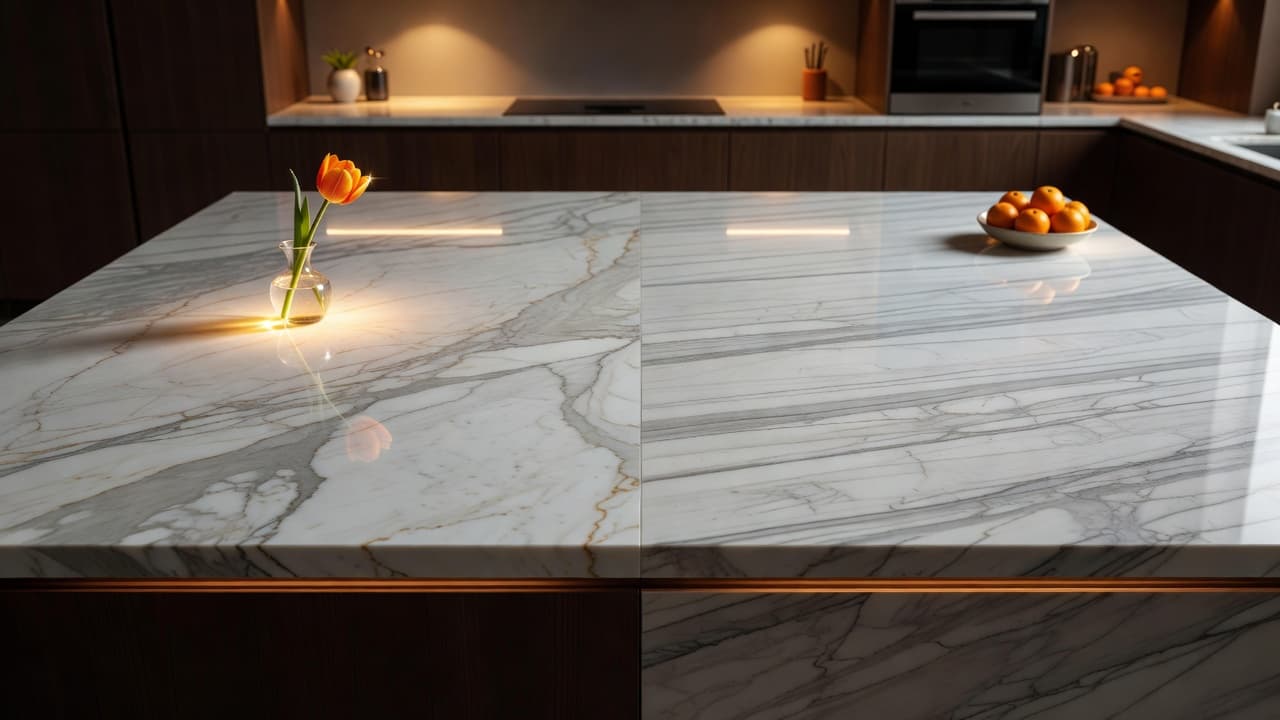
Here is the fast version I give clients when they want the plain answer regarding material performance.
| Factor | Marble look porcelain | Real marble |
|---|---|---|
| Water and spills | Highly stain-resistant and water-resistant | More porous, easier to stain if care slips |
| Daily maintenance | Simple sweep and mop | Needs sealing and gentler cleaning |
| Durability | High durability for busy households | Requires more delicate handling |
| Scratch-resistant | Superior performance against grit | Can scratch and etch more easily |
| Finish options | Polished porcelain tile, matte porcelain tile, honed porcelain | Natural finishes, but less forgiving |
| Visual consistency | Predictable pattern and color | Natural variation, unique slabs or tiles |
| Best use | Busy homes, baths, entries, businesses | Low-traffic rooms, walls, accents |
The takeaway is simple. If the space sees wet shoes, spills, rolling chairs, kids, pets, or customers, porcelain carries less baggage. I also like a matte or lightly textured finish for floors, because glossy surfaces can get slick when water shows up. When clients want the look of continuous stone, opting for large format porcelain tiles helps minimize grout lines for a seamless, expansive aesthetic.
Another thing I pay attention to is how the surface ages. Porcelain can hide everyday wear better, especially in through-body products where the color is not living only on the top layer. That matters when a chair scrapes across the floor or a dropped object leaves a mark.
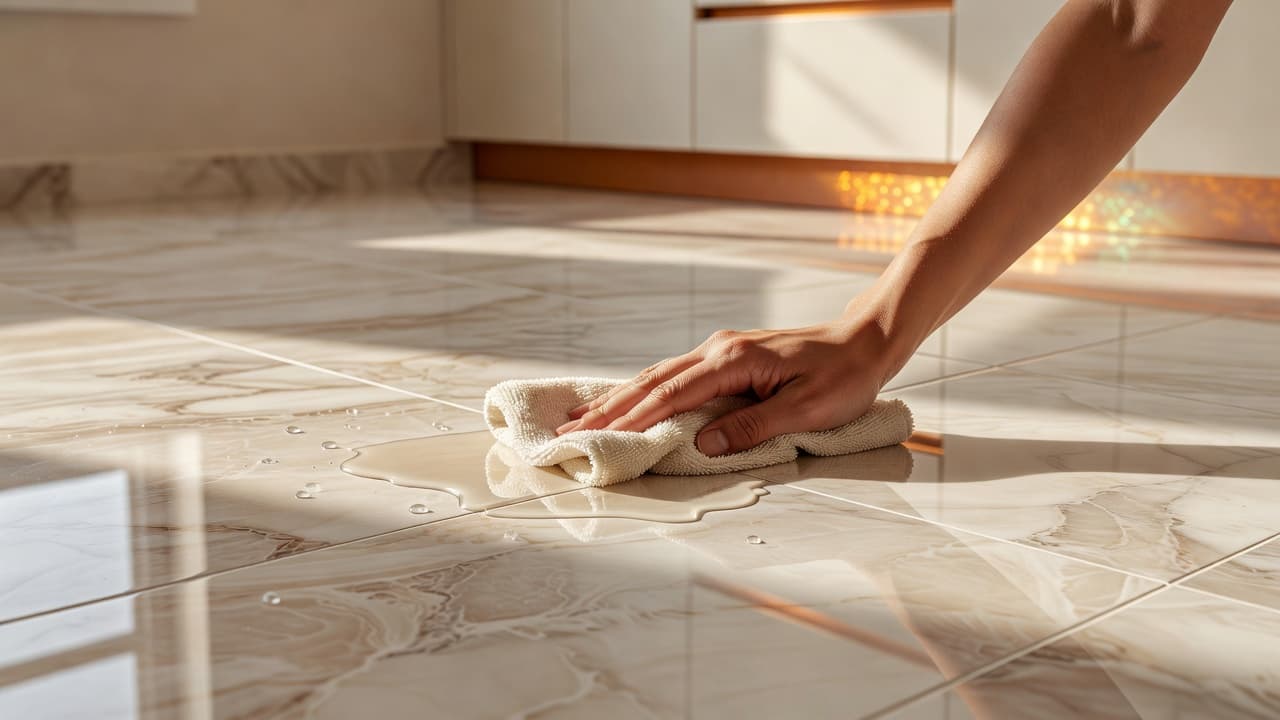
If I can wipe a spill and move on, that floor already has my respect.
When real marble still makes sense
I still like real marble. I just like it for the right jobs.
In a low-traffic powder room, a fireplace surround, a vanity wall featuring a striking Calacatta Oro pattern, or a quiet primary bath, marble can look beautiful in a way that modern stone look tile only imitates. Natural stone possesses a depth and movement that is difficult to replicate perfectly. If you are specifically chasing the iconic aesthetic of Bianco Carrara or the bold veining of Statuario, porcelain is simply not a perfect substitute.
Coolness underfoot is another reason people love it. Marble feels good in a warm climate, and that old-school Florida look still has a place. I get why people chase it. It feels classic without trying too hard.
The part I never skip is the upkeep talk. Because marble is naturally porous, it usually requires professional sealing to prevent damage. It can etch from acidic cleaners or spills, and it may stain if it is ignored. And once a natural stone floor starts getting marked up, some owners love the patina, while others wish they had chosen something easier to maintain.
If you want the real thing and you are fine treating it like a delicate natural material, marble can be worth it. However, if you want a floor you can live on without worrying every time somebody drops a drink, porcelain is much easier to own.
The install matters more than people think
I have seen expensive tile fail because the slab underneath was improperly prepared. Conversely, I have seen modest materials look great for years simply because they benefited from a professional installation.
This holds true for both marble and porcelain, but it is especially critical in wet rooms. The base must be sound. Cracks, loose coatings, old paint, and moisture problems need to be addressed before any tile goes down. In showers and other damp spaces, I require a waterproof substrate, a proper slope, and high-quality grout work suited for the room.
Porcelain tile is much denser than standard ceramic tile, so it requires specific tools and expert hands to cut and set cleanly. Marble also demands careful handling, as even minor prep mistakes become obvious on a natural stone floor. This is particularly important for large format tiles, where a perfectly level floor is essential to prevent lippage. If the floor is not flat, if the slope is wrong, or if movement joints are skipped, the finish suffers regardless of how nice the tile looked in the box.
Business owners must also consider safety. One slick or uneven surface can turn a beautiful floor into a liability. I never recommend a high-end tile if it becomes a safety hazard the first time the floor gets wet.
In the end, the material matters, but the installation decides whether your investment truly holds up.
My short answer for Florida homes and businesses
Florida changes the answer for me. Sand is constantly tracked in on shoes, humidity is a permanent fixture, and water often ends up where it does not belong. Because of these environmental factors, I frequently recommend stone look tile for Southwest Florida homes and commercial spaces. By choosing high-quality porcelain tile, you protect your property’s resale value because the floors continue to look brand new even after years of heavy use.
- Kitchens, laundry rooms, entries, and most family bathrooms are where I choose porcelain first.
- For high traffic areas like rentals, retail spaces, salons, office lobbies, and restaurants, I lean toward porcelain because it cleans quickly and stands up to constant foot traffic.
- Powder rooms, wall features, and low-traffic statement spaces are where real marble still earns a look, perhaps featuring a classic bianco carrara aesthetic.
- Any area near a pool, screened lanai, or wet entry gets a slip-resistant mosaic tile or a textured matte porcelain tile in my book.
I am not saying marble has no place in design. I am saying it has to earn its spot. If the room is quiet and the owner wants the look of natural stone enough to live with the intensive care, marble can be a great call. If the room gets used hard, or if you prefer a honed porcelain look that offers a consistent finish without the maintenance, porcelain is the smarter choice.
Frequently Asked Questions
Can you tell the difference between marble look porcelain and real marble?
Most people cannot distinguish between the two unless they are examining them very closely. High-quality porcelain uses advanced printing technology to replicate intricate veining, though it lacks the slight depth and unique organic variations found in natural stone slabs.
Is marble look porcelain slippery when wet?
Like any tile, the slip resistance depends on the finish you choose. I generally recommend opting for a matte or lightly textured porcelain finish in bathrooms, entries, or near pools to improve traction and safety compared to a highly polished surface.
Does porcelain require sealing like natural marble?
No, porcelain is a dense, non-porous material that does not require sealing to prevent stains or etching. This makes it significantly easier to maintain, as you can clean it with standard household products without the fear of damaging the surface.
How long does a marble look porcelain floor last?
When professionally installed and properly cared for, high-quality porcelain tile is incredibly durable and can last for decades. It is specifically designed to resist scratching, staining, and fading, making it an ideal choice for busy households or commercial spaces.
Conclusion
When performance is the primary concern, marble look porcelain wins most of the time. It provides the luxurious aesthetic homeowners desire while serving as a maintenance free alternative to natural stone.
Real marble still holds a place in design, but it belongs in areas where foot traffic is light and a consistent care plan is realistic. That distinction is the difference between an initially beautiful floor and one that stays beautiful for years.
If I had to make the call for most homes and businesses in Southwest Florida, I would prioritize high quality porcelain tile every time. While polished porcelain tile offers a stunning, reflective finish that mimics natural stone perfectly, it does so without the constant worry of etching or staining. That is the honest answer, and it usually ends up being the right one for long term satisfaction.