Sand does not just walk into a Florida home, it gets tracked in by the handful. A front entry can look worn long before the rest of the floor does.
I have seen this happen across all types of residential flooring, from beach houses and family homes to rentals and small offices. Whether I am working on projects in Pompano Beach FL or throughout the state, I know that when considering entryway tile Florida homes require a strategic approach. I do not start with color; I start with abrasion, cleanup, and how the foyer tile will look after months of grit under shoes.
Key Takeaways
- Prioritize Porcelain: Porcelain is the most durable choice for Florida entryways because it is dense, moisture-resistant, and capable of withstanding the constant abrasive action of tracked-in sand.
- Avoid High-Gloss Finishes: Polished or glossy tiles highlight every scratch and can become slippery when wet; matte or lightly textured finishes are superior for hiding grit and maintaining a clean appearance over time.
- Select Mid-Tone Colors: Solid white or black tiles show dirt and sand too easily, so opt for mid-tone colors like taupe, warm gray, or stone-look patterns to mask debris between cleanings.
- Manage Grout and Installation: Use grout that matches the tile color to minimize maintenance and ensure tiles are installed perfectly flat to avoid ‘lippage,’ which traps sand and creates a gritty surface.
- Use Protective Barriers: Even the best flooring needs help; pair your tile with heavy-duty exterior and interior floor mats to catch the majority of sand before it ever touches your permanent floors.
Why sand is the first thing I plan for
Florida sand is small, sharp, and stubborn. Once it lands at the front door, it acts like fine sandpaper.
That is the part many people miss. They picture a little dust by the threshold, but what they get is a daily grind of sand, salt, damp feet, dog traffic, grocery bags, and kids cutting across the entry at full speed. Many homeowners love the look of hardwood floors or engineered hardwood throughout their living spaces, but these materials often struggle to maintain their finish when faced with the abrasive nature of Florida sand at the entrance. The constant foot traffic creates a cycle of wear that is difficult to reverse.
Even homes that are not right on the beach deal with this issue. Sand comes from sidewalks, parking lots, driveways, landscaping, and work shoes. If the tile surface is too soft, too glossy, or too porous, the entry starts showing signs of damage very quickly.
Scratches show first, followed by dull spots and grout that always looks tired, even after mopping.
So when I am choosing a front entry tile, I want three things. I want a hard surface, a finish that does not spotlight every grain, and a color that still looks good with a little life on it. Pretty matters, of course. But at the front door, pretty has to survive.
Porcelain is the one I trust most
If I had to pick one material for most Florida entries, I would choose porcelain tile. It handles sand well, cleans up easily, and does not ask for much babysitting.
Porcelain is dense and tough. It holds up better than many softer surfaces when grit gets dragged across it every day. It also handles moisture well, which matters when the same door sees rainwater, pool traffic, and humid air.
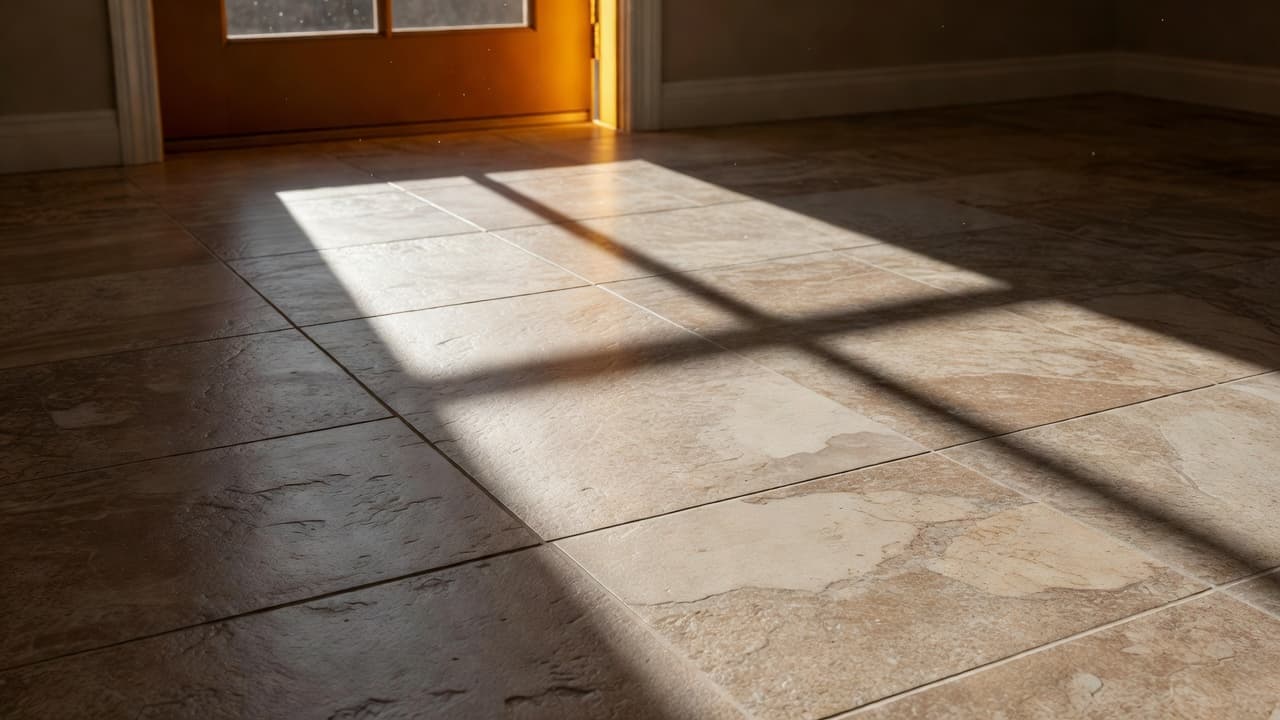
What I like most is the versatility. Porcelain tile can mimic the appearance of limestone tile, concrete, wood look tile, or marble without bringing the heavy maintenance requirements of those natural materials. This gives you the freedom to match the design of your home without creating a weak point in your entryway. If you want to see these textures and finishes in person, I recommend visiting a local showroom gallery to get a better sense of how they perform under different lighting conditions.
Skip polished finishes at the front door
This is where good choices often go sideways. A polished tile might look sharp in the showroom, but a glossy entry can show scratches sooner and feel slicker when it gets damp.
If a sample looks like a mirror under store lights, I keep it away from the front door.
I lean toward matte or lightly textured porcelain for most entries. It softens the look of sand, adds a little grip, and usually ages better. If you want a brighter, cleaner feel, you can still achieve it with a low-sheen finish. You do not need a highly reflective surface to make the space feel finished.
How the main tile options compare
A quick side-by-side look makes the choice easier.
| Tile material | How it handles sand | Maintenance | Best fit |
|---|---|---|---|
| Porcelain | Excellent | Low | Most homes, rentals, and business entries |
| Ceramic tile | Good, but varies by product | Low | Lighter-traffic homes |
| Travertine flooring | Fair | Medium to high | Homes where looks matter more than entry abuse |
| Marble tile | Poor to fair at the front door | High | Better away from sand-heavy entries |
| Quarry tile | Very good | Low | Utility-style entries and some commercial spaces |
Porcelain is the clear winner because it perfectly balances toughness, style, and low upkeep. It even provides a high-end look at an affordable price when compared to the cost of stone.
Standard ceramic tile can work in certain spots, but I would be very picky. Some ceramic options wear well, but not all of them are built for the level of grit found in Florida entries. For a quiet home entry, it may be enough. However, for a busy front door, I still trust porcelain more.
Natural stone is where people often fall in love first and regret later. I like the aesthetic of stone, but sand is quite rough on it. Travertine flooring can wear down over time, marble tile is prone to scratching, and both materials require more maintenance than most owners want at the entry. They look beautiful, but the front door is a harsh environment for such a delicate surface.
Color, grout, and finish decide how the floor ages
The best interior floor tile can still look wrong if the color is too precious. Pure black shows pale sand, while pure white shows dirt. A solid, flat color with no movement highlights every footprint, making constant cleaning a requirement.
I usually recommend mid-tones for a Florida entry. Warm grays, taupes, stone looks, soft beige, and mixed mineral patterns tend to hide grit better than stark, solid colors. A little variation in the face of the tile helps too. It should not be busy or loud, just enough movement to keep the floor from looking dusty five minutes after sweeping.
Grout matters more than most people expect. Bright white grout at a front door is a brave choice; it may look crisp on day one, but it often looks stressed by day thirty. I prefer grout that sits close to the tile color or goes a shade darker. This gives the floor a steadier look and prevents every bit of tracked-in sand from becoming a visual highlight.
Tile size plays a part as well. While a mosaic tile can be beautiful, it means many grout lines, and those lines act as magnets for dirt and sand. Extra-large tiles can look great, but in a small entry, they sometimes show every smudge on a broad, uninterrupted surface. I often land in the middle. A 12×24 or 24×24 porcelain tile usually provides a clean look without making the entry feel fussy or slippery.
What I would pick for homes, rentals, and business entries
For a busy family home, I would go with matte porcelain in a mid-tone color. Something with a stone look works well because it feels classic and forgives mess. Kids, pets, visitors, and wet flip-flops will not treat the entry gently, so the floor has to do the heavy lifting. If you are renovating multiple areas, design consultants can help you coordinate your entryway choice with your kitchen floor tiles or bathroom tile design to ensure a cohesive look throughout the property.
For a vacation rental, I would get even more practical. Renters do not baby floors, and quick turnover matters. I want a surface that sweeps fast, mops fast, and still looks good when nobody has time for perfect maintenance. Porcelain with a little visual movement is hard to beat when you want the durability of a low-maintenance material while still achieving the high-end aesthetic of luxury flooring.
For a small office, salon, shop, or other business entry, I would still stay in the porcelain lane most of the time. Business owners need durability, slip resistance, and easy cleaning. They also need an entry that keeps looking professional after constant foot traffic. While quarry tile can make sense for purely utilitarian spaces, many businesses want something cleaner and more current. That is where high-quality commercial tile stands out, offering the perfect blend of resilience and style to handle heavy daily use.
Installation details that keep the entry working
Even the best entryway tile for Florida homes can disappoint if the installation is sloppy. The front entry receives heavy daily traffic, so it is not the place to take shortcuts.
I prioritize a perfectly flat substrate, precise workmanship, and a grout choice that stands up to the job. If you choose larger tiles, you must avoid lippage. When tiles are uneven, sand and dirt collect along the exposed edges, creating a gritty surface that you can feel underfoot. This is not only annoying, but it also makes the entire entryway look permanently dirty. For this reason, I advise against using delicate materials like glass mosaic in a foyer. While glass mosaic can look beautiful, the high volume of grout lines and the potential for scratching from tracked-in sand make it a maintenance challenge in high-traffic zones.
I also think beyond the tile itself. A heavy-duty exterior mat combined with an interior runner will catch a significant amount of grit before it starts grinding into your flooring. Think of these mats as a pre-filter for your home. While the tile choice is critical, creating a dedicated landing zone for debris makes a world of difference.
If someone asks me for the safest all-around answer for a Florida home, I keep it simple. Choose a quality porcelain tile rated for floor use, select a matte or lightly textured finish, and stick to a mid-tone color family. That is the reliable combination I trust most when dealing with the constant challenge of Florida sand.
Frequently Asked Questions
Why is porcelain better than natural stone for a Florida entryway?
Porcelain is significantly denser and less porous than natural stone like marble or travertine, making it much more resistant to deep scratches from sand. Additionally, porcelain does not require the specialized sealing and intensive maintenance that porous stones need to prevent staining and wear in high-traffic zones.
Can I use large-format tiles in a small entryway?
Yes, large-format tiles can work well in small spaces, provided the installation is perfectly level to avoid uneven edges known as lippage. While they offer fewer grout lines to clean, you should ensure the finish is matte to prevent the large surface area from showing every smudge and footprint.
What is the best way to hide sand in an entry without looking dirty?
Choose tiles with ‘movement’ or patterns that mimic natural materials like concrete, slate, or limestone. These designs have visual depth that blends in light-colored sand and dust, preventing the floor from looking like it needs to be swept immediately after foot traffic.
Final Thoughts
Sand is going to show up. The goal is not to pretend it will stay away, but to choose a floor that handles the daily abrasion and still looks clean a year later.
If I am making the call for most homes and small businesses, I choose porcelain every time. When you are searching for the best entryway tile Florida homes require, bring a few samples to your front door. Look at them in natural daylight and ask one honest question: which option will still look good even when the sand wins a little today?