When homeowners compare rectified vs non-rectified tile, the edge style can seem like a small detail. It isn’t. That choice affects grout lines, layout, installation requirements, and the overall appearance of your Florida floor.
I help homeowners and business owners choose tile flooring based on how the space will be used, not only how a sample looks under showroom lighting. Florida floors deal with sand, humidity, moisture, heavy traffic, and concrete slab movement, so the right tile needs the right installation behind it.
Key Takeaways
- Rectified porcelain tile has precisely cut edges, while non-rectified tiles have natural edge variation.
- Rectified tile creates a cleaner look with narrower grout lines, but it demands a flatter surface and more precise installation.
- Non-rectified tile offers a softer, more traditional appearance and can be more forgiving during installation.
- Porcelain tile is usually my first choice for busy Florida floors because it resists moisture, sand, and daily wear.
- Tile quality is only half the investment. Subfloor preparation, mortar coverage, grout, movement joints, drainage, and professional tile installation matter just as much.
Rectified vs non-rectified tile: what the terms mean
When evaluating rectified vs non-rectified tile, you are looking at the edges of the tile, not the material itself. You can find both styles in porcelain and ceramic products.
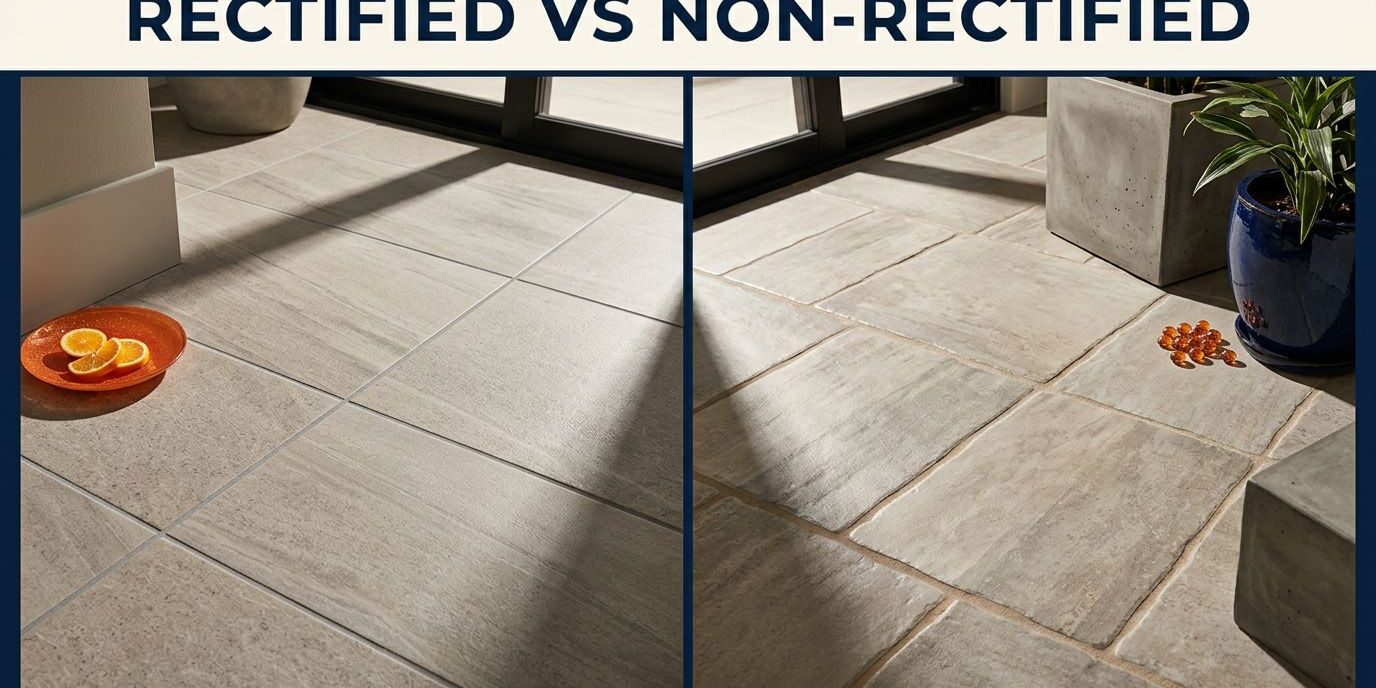
Rectified tile is cut after it has been fired. This mechanical process uses diamond saws or waterjets to make precise cuts that create very straight, consistent edges and high dimensional accuracy. Because each piece is closely matched, installers can create narrow joints and a precise, contemporary layout.
Non-rectified tile, also called pressed-edge tile, keeps the slight variations created during the manufacturing process. Instead of uniform factory trims, these pressed tiles feature natural edges with a gentle curve or softer profile. These tiles typically use wider grout joints, which help accommodate differences between individual pieces while maintaining a traditional aesthetic.
The edge finish is easy to see when the tiles are placed side by side:
- Rectified tile has sharp, machine-cut tile edges and a more structured appearance.
- Non-rectified tile has softer tile edges and a more relaxed, traditional look.
- Rectified tile can support narrow grout lines when the manufacturer allows it.
- Non-rectified tile usually needs wider joints to keep the layout looking balanced.
This does not mean one type is automatically stronger. Edge treatment does not determine whether a tile is suitable for a lanai, kitchen, bathroom, or commercial entry. The tile’s material, rating, finish, thickness, and installation requirements all matter.
For a helpful visual comparison, this explanation of rectified and non-rectified tile shows how the edge profiles affect grout and layout.
How Florida conditions affect the decision
Florida floors experience more daily stress than many homeowners expect. Sand gets tracked inside from driveways, beaches, pool areas, and patios. Humidity brings moisture into bathrooms, kitchens, laundry rooms, and screened lanais. Outdoor floors also deal with rain, sunscreen, wet feet, and standing water when drainage is poor.
For most busy spaces, I usually recommend porcelain tile first. Porcelain is dense and typically has a water absorption rate of 0.5% or less. It resists moisture, stains, scratching, and the abrasive wear caused by tracked-in sand. It also comes in wood look tile, stone look, concrete look, and marble inspired styles, so durability does not limit your design choices.
Rectified porcelain tile works well when you want a clean, modern floor throughout a living area, kitchen, entry, or commercial spaces. Using rectified porcelain tile with large format tiles can make a room feel more open because fewer grout lines interrupt the visual flow. The effect is polished without requiring natural stone maintenance.
Non-rectified tiles can be a better fit when you prefer a softer look or a more traditional installation. The wider grout lines can add definition to smaller tile patterns, decorative layouts, and rustic designs. They also provide more room for the natural size variation that comes with pressed-edge tile.
For a Florida lanai or pool-adjacent floor, the edge style comes after the surface finish and product rating. I want an exterior-rated tile with enough texture for wet feet, but not such a rough surface that it traps sand and becomes difficult to clean. I avoid polished surfaces in wet outdoor areas because a beautiful finish is not worth creating a slipping concern.
Here is how I generally compare the two options for common Florida applications:
| Tile type | Main advantage | Main concern | Good fit |
|---|---|---|---|
| Rectified porcelain | Clean layout, narrow grout options, strong performance | Needs precise installation and a flat substrate | Living areas, kitchens, entries, businesses |
| Non-rectified porcelain | Durable with a softer visual style | Wider grout joints and more edge variation | Traditional interiors, rustic designs, select outdoor areas |
| Rectified ceramic tile | Affordable, consistent appearance | Less suited to heavy exterior use | Light to moderate interior traffic |
| Non-rectified ceramic | Budget-friendly and flexible style | More variation and less resistance in demanding areas | Covered, lower-traffic rooms |
The best choice depends on the room’s exposure, traffic, and design goals. A commercial lobby or busy rental property usually needs a more durable porcelain product than a lightly used guest room.
Appearance, grout, and installation differences
Many homeowners choose rectified porcelain tile because they want a clean floor with minimal visual interruption. Narrow grout lines can make large rooms look more continuous, especially when the grout color is close to the tile. That look pairs well with modern kitchens, open living areas, and large-format porcelain, creating a seamless appearance that aligns with modern design.
Still, narrow grout lines do not make installation easier. The slab or substrate must be flat, and the tile layout must be carefully planned during the installation process, especially when working with large format tiles. Small differences in height can create lippage, which means one tile edge sits higher than the next. Lippage can become a trip point, collect dirt, and make the finished floor look uneven.
Rectified edges also show layout mistakes more clearly. If the walls are not square or the room has an uneven transition, the installer needs to plan the starting lines and cuts before setting the tile. A precise layout protects the appearance of the entire room.
Non-rectified tiles are more forgiving because the wider grout joint helps absorb minor size differences. That does not excuse poor workmanship, but it gives the layout a little more flexibility. The grout becomes a stronger part of the design, especially with handmade-looking tile, natural colors, and textured surfaces.
The grout itself deserves attention in Florida. Sand and grit can wear on grout joints in entries and pool-adjacent spaces. Kitchens and bathrooms also expose grout to spills, soap residue, and humidity. I recommend choosing grout based on the location and following the care instructions for that product.
One common mistake is assuming rectified tile needs almost no grout. Grout joints still allow for installation tolerances and help protect the tile assembly. The correct joint width, including narrow joints, must follow the tile manufacturer’s instructions rather than a homeowner’s preferred appearance alone.
Which tile fits homes and businesses best?
For a busy Florida home, rectified porcelain tile is often a strong choice for kitchens, living areas, hallways, entries, and connected open floor plans. It provides a tailored appearance while handling pets, furniture, spills, and regular foot traffic across your tile flooring.
I also like high-quality porcelain tile in vacation homes and rental properties because those floors often receive sand, luggage wheels, wet feet, and frequent cleanups. The low absorption rate makes porcelain highly water-resistant, although I don’t describe any flooring as completely waterproof in every situation.
Non-rectified tiles can make sense when the design calls for larger grout joints, a softer edge, or a more classic appearance. They remain a durable option when the product is rated for the space and installed correctly.
Ceramic tile has a place, too. It can work well in moderate-traffic interior rooms and offers a broad range of colors, patterns, and price points. However, I am more cautious with ceramic tile in exposed lanais, pool decks, commercial entries, and floors that receive constant sand and moisture. Porcelain’s extra density is usually worth considering in those settings.
For commercial spaces, the floor needs to handle more than appearance. Retail shops, restaurants, office lobbies, salons, and waiting areas deal with constant traffic, rolling furniture, tracked-in grit, and frequent cleaning. In those spaces, I usually stay with a commercial-grade porcelain product and choose the finish based on the expected moisture and foot traffic.
The tile edge is only one part of the decision. I also consider:
- The product’s floor and exterior rating
- Surface texture and wet traction
- Tile size and layout
- Expected traffic and impact
- Grout color and maintenance
- Existing slab condition
- Drainage in outdoor areas
A matte or lightly textured surface is often more practical than a smooth finish in Florida rooms that receive water or pool traffic. The finish needs to provide useful grip without becoming a dirt trap.
Professional installation protects the finished floor
I say this every chance I get: the tile type is only half the story. A poor installation can ruin even the most expensive flooring.
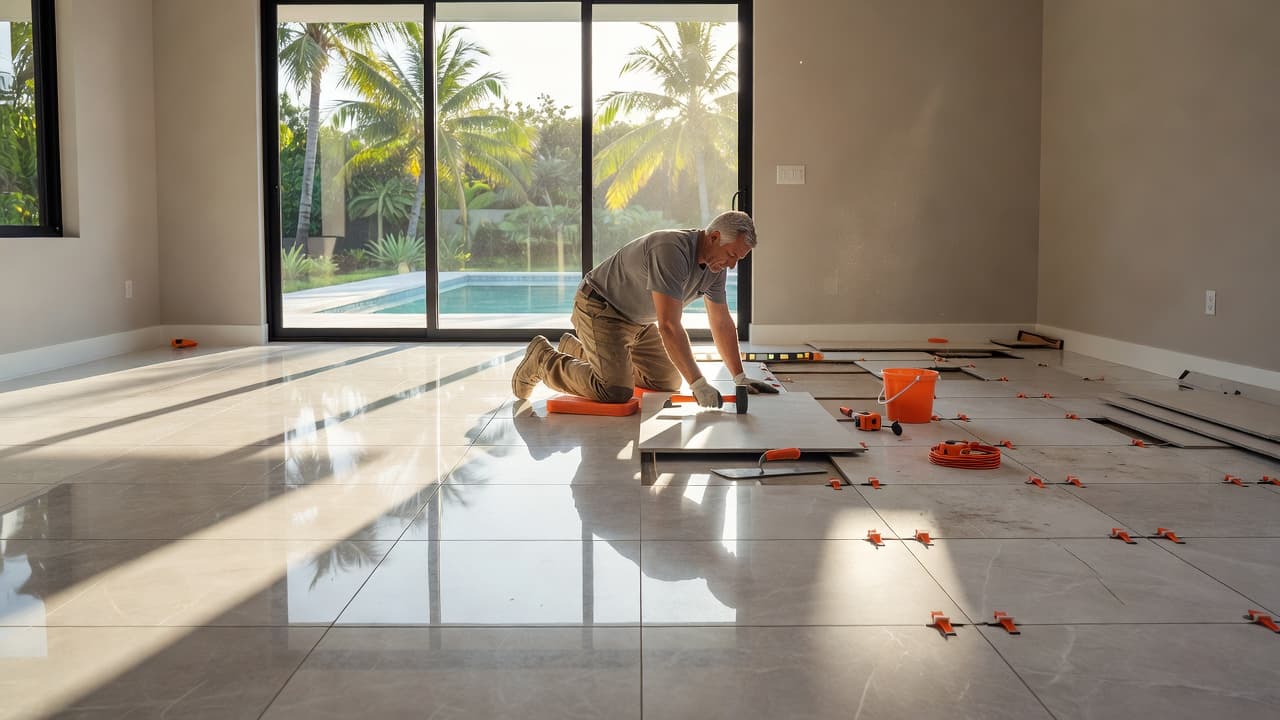
Working with rectified porcelain tile requires specialized tools and careful handling because the material is dense and difficult to cut. The installer needs to prepare a clean, flat surface, choose the correct mortar, achieve proper coverage, and maintain the planned grout joints. Large-format tile requires even more attention because uneven support can create hollow spots or cracked pieces.
The concrete slab also needs to be evaluated before any tile installation goes down. Existing cracks, damaged areas, old coatings, dust, moisture concerns, or control joints may affect the installation. In some situations, an uncoupling membrane or crack-isolation layer is an important part of the installation process. It cannot correct major structural movement, but it can help manage minor substrate movement when heavy porcelain tile systems are installed correctly.
Movement joints are another detail that should never be skipped. Tile and concrete expand and contract differently. Without room for movement at perimeters and appropriate locations, pressure can push tiles against one another or force grout out of the joints. Compared to traditional pressed tiles with natural edges, precision products demand strict adherence to these layout rules.
Outdoor installations add drainage to the list. Tile cannot correct a slab that holds water. A lanai, patio, or pool deck needs proper slope, suitable mortar, sound support, and a finish selected for wet conditions.
At Distinctive Tile & Marble of SWFL, I look at the full tile installation instead of focusing only on the sample. We handle old flooring removal, surface preparation, tile installation, grout work, and custom layouts for homes and businesses in Cape Coral, Fort Myers, Bonita Springs, and surrounding Southwest Florida communities.
For another manufacturer-based comparison of the two edge styles, Arizona Tile’s rectified tile guide explains how pressed edges differ from precisely cut edges.
Frequently Asked Questions
Is rectified tile better than non-rectified tile for Florida homes?
Neither option is universally better, as both have distinct advantages depending on your design preferences and lifestyle. Rectified tile offers a modern look with narrow grout lines, while non-rectified tile provides a traditional appearance and is more forgiving during installation.
Can I use narrow grout lines with rectified tile in Florida?
Yes, rectified tiles are cut to precise dimensions, allowing for much narrower grout joints than pressed tiles. However, your subfloor must be perfectly flat, and you should always follow the manufacturer’s specific guidelines regarding minimum joint widths.
Which edge style is better for high-traffic or outdoor Florida spaces?
Edge style is less important than the material rating and finish when dealing with high traffic, sand, and moisture. For most demanding spaces, durable porcelain tile is recommended regardless of whether you choose a rectified or non-rectified edge profile.
Final Thoughts
Rectified tile gives Florida floors a precise, modern appearance with the option for narrower grout joints. Non-rectified tile provides a softer look and can offer more flexibility with traditional layouts. When weighing rectified vs non-rectified tile, neither choice replaces the need for the right material, finish, substrate, mortar, grout, and movement planning.
When I choose tile for a Florida home or business, I start with how the floor must perform. For most high-traffic, moisture-prone areas, a properly installed rectified porcelain tile is my first call for clean lines, while non-rectified tiles suit projects aiming for a traditional aesthetic and minimal upkeep on narrow grout lines. The finished tile flooring should look beautiful, but it also needs to keep working after the sand, water, traffic, and daily life arrive.