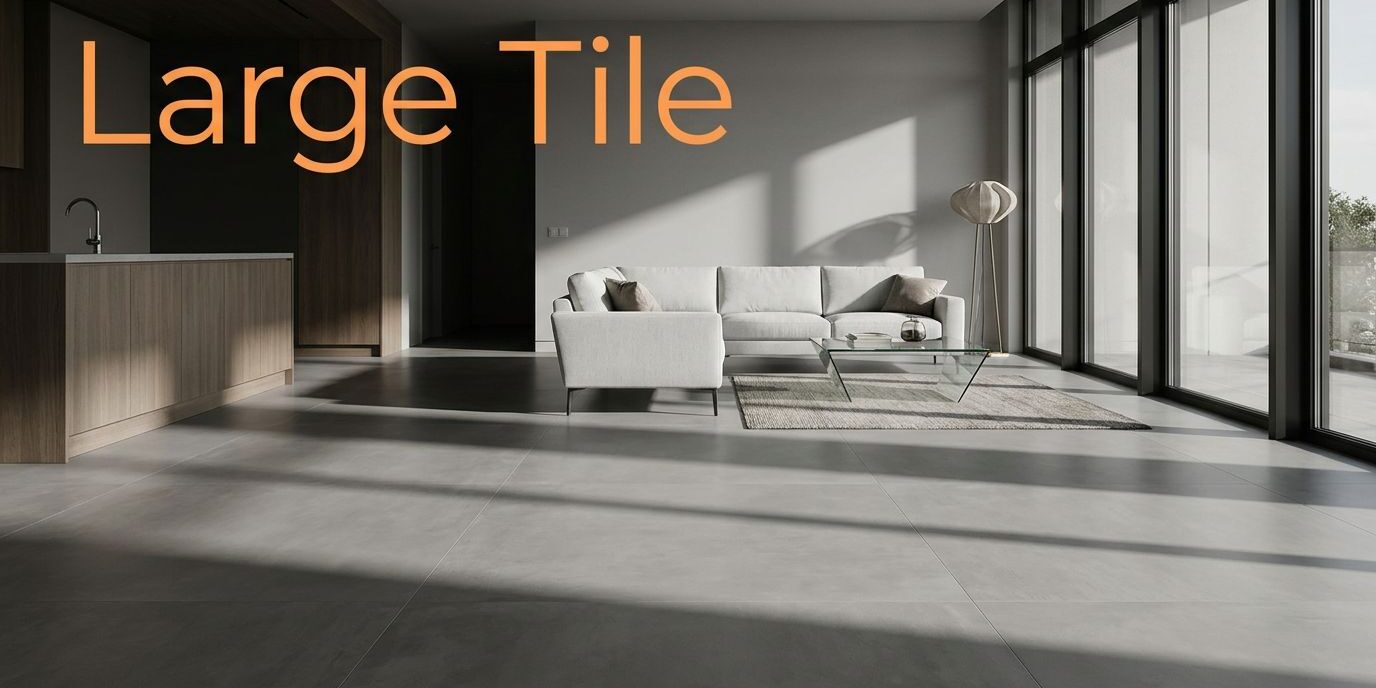
Open floor plans make flooring do more than cover a slab. Every line, color shift, and install flaw gets more attention across a wide space.
Large-format tile can give you that calm, open look people want, but it also asks for a flatter subfloor and a careful install. When I weigh the large-format tile pros and cons, I always look at how the room lives, not just how it looks on a sample board.
If you are deciding whether oversized tile fits your home or business, the details matter. The right choice can make a room feel polished and connected, creating a seamless look that enhances the space, while the wrong one can turn into a costly headache.
Key Takeaways
- Large-format tile reduces grout lines and gives open rooms a cleaner, more unified look.
- Porcelain tile is usually the stronger choice for busy kitchens, family rooms, and high-traffic spaces.
- Ceramic tile can still be a smart option when budget and style matter more than maximum durability.
- A level subfloor and skilled installation matter just as much as the tile you pick.
Why Large-Format Tile Works So Well in Open Floor Plans
Open floor plans need a floor that can carry the whole space. When the kitchen, dining area, and living room all share one surface, the flooring sets the tone fast.
That is where large-format tile earns its place. I like the way it cuts down on visual clutter, especially in spaces with tall ceilings, big windows, and long sightlines. By utilizing this material to create a modern aesthetic, the room feels calmer, broader, and more intentional.
This is the kind of look I like when a kitchen, dining area, and living room all share one floor.
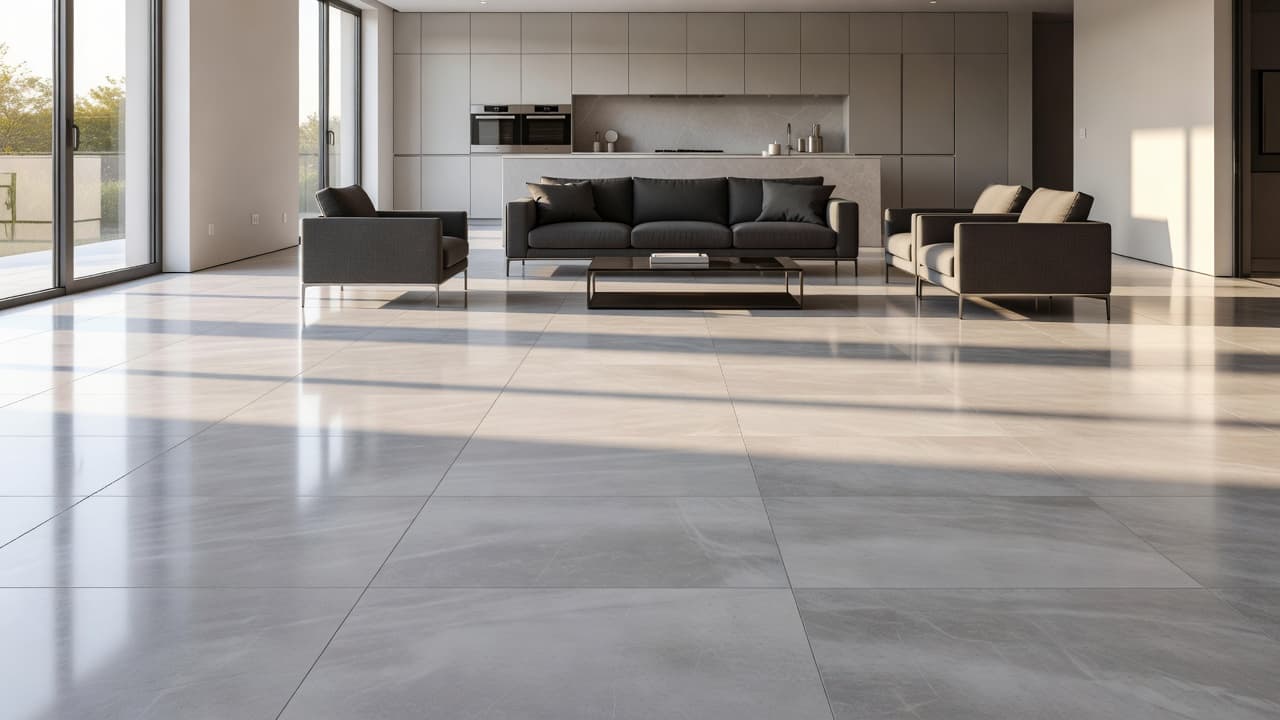
The minimal grout joints you see, the more your eye reads the floor as one surface. That matters in a room that already has a lot going on, like cabinets, furniture, lighting, and maybe a kitchen island in the middle of it all.
I also like the design flexibility. Large-format tile comes in wood looks, stone-inspired patterns, and clean modern finishes. So you can keep the open feel without locking yourself into one style. In a bright Florida home, that can be a real advantage because these tiles provide an expansive appearance to the floor while standing up to constant sunlight, heavy foot traffic, and the need for easy cleanup.
The Biggest Advantages, and the Tradeoffs You Should Know
Here is the quick side-by-side view I give homeowners when they are choosing between oversized tile and more traditional tiles.
| Advantage | What it means in an open room | Tradeoff |
|---|---|---|
| Fewer grout lines | The floor looks cleaner and less busy | Any layout flaw is easier to spot |
| Bigger visual scale | The room can feel larger and more unified | The slab has to be flatter |
| Low maintenance | Sweeping and mopping are simple | Some finishes show streaks more easily |
| Strong design range | Wood, stone, and modern looks all work well | The wrong pattern can feel plain or cold |
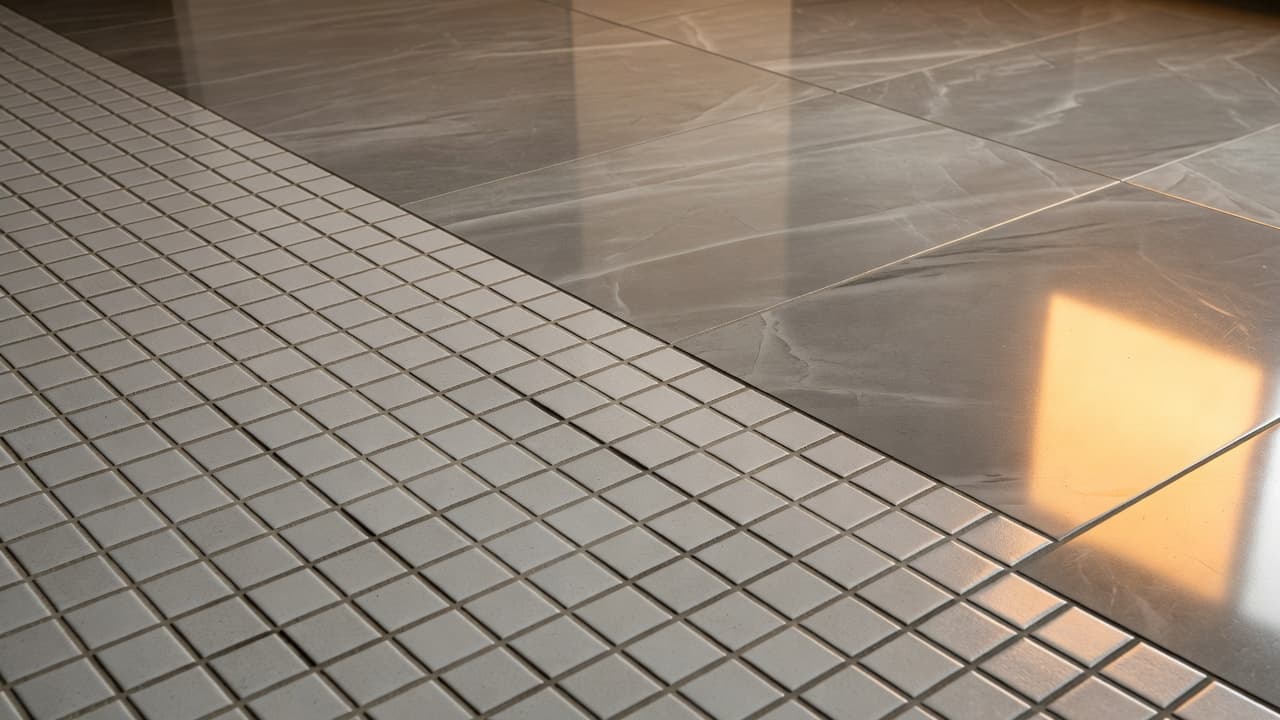
The upside is obvious. Large-format tile makes a room feel wider, cleaner, and more finished compared to the busier appearance of traditional tiles. It is especially strong in open layouts where you want one floor to connect several zones without breaking them up.
The tradeoff is just as real. Oversized tile does not hide problems. If the floor underneath is uneven, you see it. If the layout is careless, you see that too. So the style payoff is high, but the margin for error is small.
Porcelain vs. Ceramic in Oversized Tile
When I help someone narrow the options, porcelain tile usually comes up first. It is dense, tough, and well suited to high-traffic areas, busy kitchens, family rooms, and open spaces that get steady traffic.
Ceramic tile still has a place. It often costs less, comes in a wide range of colors and patterns, and holds up well in many active homes. It is a smart option when you want style and value without pushing the budget too hard.
| Material | What I like about it | When I recommend it |
|---|---|---|
| Porcelain | Dense, durable, moisture resistant, and easy to clean | Busy open floor plans, families with kids or pets, kitchen and living area combinations |
| Ceramic | More affordable, versatile, and available in many looks | Moderate-traffic rooms, style-focused projects, tighter budgets |
If the room sees heavy daily use, I usually lean toward porcelain tile. If the space is lighter duty and the design calls for more color, specific pattern options, or savings, ceramic tile deserves a close look. Either way, the tile has to suit the way you live.
In kitchens, that matters even more. Porcelain tile handles busy prep areas well, and it is easy to keep clean with a simple sweep and mop. Ceramic tile also resists moisture, which is helpful in a kitchen, but I still think about traffic and wear before I call it the better choice.
Installation Details That Decide the Final Result
Open floor plans are honest. There is nowhere for a bad floor to hide.
A large-format tile can hide clutter in a room, but it won’t hide a crooked slab.
That is why I spend so much time on the prep work. The level subfloor is essential for the tile size to lay correctly. The layout has to be planned so the cuts look balanced, and the grout joints need to support the design instead of fighting it.
Large-format tile also needs the right handling during installation. Because these pieces are cumbersome, they require special handling and the use of specialized tools during substrate preparation to ensure a perfectly flat surface. Hiring a professional installer is key to preventing lippage and ensuring a high-quality finish, as even a small error can be visually jarring with such large tiles. That is one reason I never treat oversized tile like a quick job.
I also look at movement and transitions. In a home with long sightlines, or in a business with steady foot traffic, the floor has to stay stable and safe. If the room connects to a patio, lanai, or another living zone, I think about how the flooring will perform as a whole, not just in one corner.
Where I Recommend Large-Format Tile Most Often
I like large-format tile in spaces that need a clean, connected look. Great rooms are a strong fit, as are kitchen and living room combinations, long hallways, and open dining spaces that need one consistent floor. These tiles are also excellent for a bathroom remodel, providing a seamless aesthetic on both shower walls and floors. Even in small spaces, the right tile size for small bathrooms can make a room feel significantly larger by reducing the number of visible grout lines.
It also works well in commercial settings where the floor has to look polished and handle heavy traffic. A lobby, showroom, or office entry can benefit from the same wide, controlled look. If the finish is too slick, though, I slow down and reconsider. Safety matters just as much as style.
For homes in Southwest Florida, I also think about sand, tracked-in moisture, and daily cleanup. Natural stone looks are a common design choice for these tiles, offering a luxury aesthetic that mimics the outdoors. A floor that looks good but is hard to maintain loses its appeal fast. Large-format porcelain often makes sense there because it balances style with practical care.
There are times when I would choose something else. If a room has too many tight turns, a slab that is not ready, or a design that calls for more movement in the pattern, smaller tile can be the smarter answer. The right floor is the one that fits the space, not the trend.
Frequently Asked Questions
Can I install large-format tiles over an existing floor?
While it is sometimes possible, I generally advise against it because large-format tiles require an exceptionally flat, stable subfloor. If your existing floor has even slight imperfections or flex, the new tiles will likely crack or suffer from lippage. It is almost always better to remove the old flooring and properly prep the substrate first.
Do larger tiles make a small room look bigger?
Yes, they can make a space feel significantly more open and unified. By reducing the number of visible grout lines, the floor reads as one continuous surface rather than a collection of small pieces, which helps decrease visual clutter in tighter areas.
Is it more expensive to install large-format tiles?
Yes, you should expect higher installation costs compared to traditional tiles. The pieces are heavy and cumbersome, requiring specialized tools, extra labor for safe handling, and meticulous subfloor preparation to ensure a perfectly level finish.
Can large-format tiles be used on walls as well as floors?
Absolutely, using the same tile on both the floors and walls can create a luxurious, seamless look that is especially popular in bathrooms. It provides a cohesive aesthetic that makes the entire room feel larger and more intentional, though you must ensure the wall structure is strong enough to support the weight of the larger tiles.
Conclusion
Large-format tile is a beautiful choice for an open floor plan, as it perfectly complements a contemporary design by providing a cleaner look, fewer grout lines, and a strong visual flow across connected rooms.
I still treat it as a project that needs the right material and the right prep. Porcelain usually wins on durability. Ceramic can work well when the space and budget call for it. In both cases, the install decides how good the finished floor will look.
If you are planning a floor for an open home or business space, I recommend starting with the room itself, not the tile display. While the installation cost may be higher than standard tile due to the intensive subfloor prep and handling requirements, the visual payoff is significant for open homes. Once the layout, traffic, and slab condition are clear, the right choice becomes much easier to make.