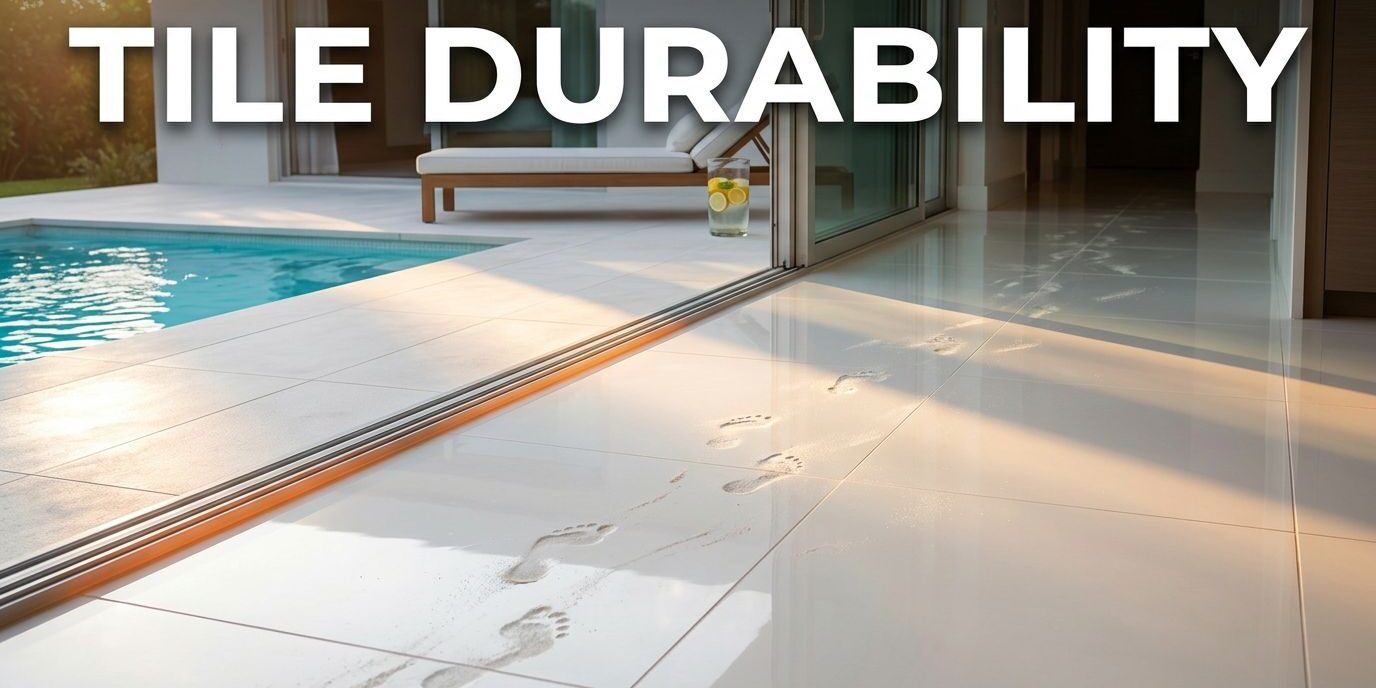
Florida vacation homes experience a lot of wear and tear. Sand tracks in on shoes, wet feet from the pool hit the floors constantly, and guests do not treat the property with the same care an owner would. For many homeowners in South Florida, keeping these properties in top shape requires flooring that can withstand heavy traffic.
That means I do not start with style alone. I start with what the floor has to survive, and then I work back to the look.
If you want a floor that still looks good after hundreds of check-ins, beach days, and quick cleanups, tile flooring florida has to be chosen with a little more discipline. Here is how I look at it.
Key Takeaways
- Durability is Paramount: Vacation homes face unique challenges like tracked-in sand, pool water, and high-frequency traffic, requiring flooring that prioritizes resilience over purely aesthetic choices.
- Porcelain as the Gold Standard: Due to its low water absorption rate, high density, and scratch resistance, porcelain tile is the most reliable choice for kitchens, bathrooms, and entryways in Florida.
- Finish and Color Selection: Choosing matte or lightly textured, mid-tone tiles helps mask the appearance of sand and grit while providing better traction than polished surfaces.
- Installation Excellence: Even high-quality tile will fail without proper subfloor preparation, specialized cutting, and correctly applied waterproofing membranes in moisture-prone areas.
Why Florida vacation homes wear out floors fast
Vacation homes endure a unique pattern of use. They can sit quiet for days, then take a beating all weekend long. That inconsistent cycle is particularly rough on residential flooring.
Sand is a primary culprit. In Florida, tracked-in sand acts like fine grit under every step. It dulls surfaces, scratches delicate finishes, and makes a floor look tired long before its time.
Moisture is the other significant challenge. Pool water, rain on bare feet, bathroom splashes, kitchen spills, and humid air all impact the home environment. When you combine these factors with the weight of luggage wheels, dragging chair legs, and higher foot traffic than a standard residence, the floor has to work much harder than most homeowners expect. To combat this, choosing durable finishes is essential for maintaining a high-end look that stands up to constant environmental stress.
If the floor gets sand and water on the same day, I want a material that does not flinch.
That is why I approach vacation-home flooring as a durability decision first. If the surface can handle the daily abuse, the style part of your renovation gets a lot easier.
Porcelain is usually my first choice
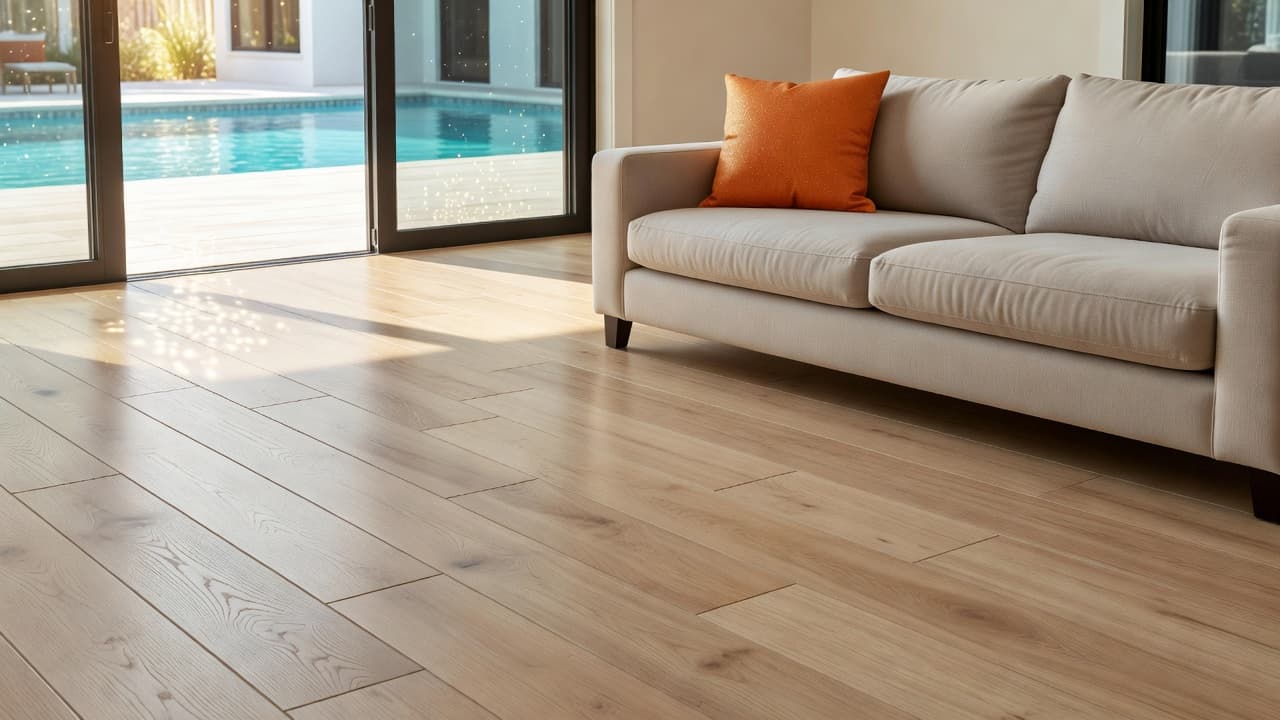
When I am picking flooring for a Florida vacation home, porcelain tile is usually where I land. It is dense, tough, and far better at handling abrasion than softer options.
That matters because porcelain has a very low absorption rate, usually 0.5% or less. It is highly water-resistant, which is exactly what you want near pools, bathrooms, kitchens, and entries that get wet feet. While standard ceramic tile still has a place, it is often cheaper and easier to cut during installation. That can help in low-traffic rooms, but for higher traffic or wetter spaces, I do not think the cost savings hold up over time.
Here is the short version I give people who want a quick comparison:
| Material | What I like | Where I use it |
|---|---|---|
| Porcelain tile | Dense, moisture-resistant, scratch resistant, easy to clean | Most vacation-home floors, kitchens, baths, lanais |
| Ceramic tile | Lower cost, easier to cut, lots of style options | Light-traffic rooms with low moisture |
| Travertine | Natural look, cooler underfoot | Covered outdoor spaces if upkeep is acceptable |
That table is the whole story for most projects. Porcelain gives me the best mix of durability, appearance, and low maintenance. If you want a specific aesthetic, you can opt for Italian porcelain or Spanish porcelain, which provides the upscale look of luxury flooring while maintaining superior durability.
I also like how porcelain holds up to Florida sand. A harder, denser surface does not get chewed up as fast when grit gets tracked across it all day. While natural stone options like travertine offer a beautiful, authentic look, they require more maintenance than high-quality manufactured tile. If you want a floor that still looks clean and elegant after a week of guests, porcelain is the smarter long-term investment.
Where tile matters most inside the house
Some rooms punish flooring more than others. In a vacation home, those are the places I focus on first.
Entryways and living rooms
The entry is where the trouble starts. Sand, shoes, coolers, and bags all come through the same door. If the floor is soft or delicate, you see it fast.
I like high-quality porcelain here, often choosing large format porcelain or wood look tile to minimize the amount of grout lines that collect dirt. A matte or lightly textured finish provides excellent grip and helps hide the inevitable marks from heavy foot traffic. Mid-tone colors also help because light sand and dust do not show up as easily.
A heavy-duty exterior mat outside, plus an interior runner, makes a bigger difference than people think. Those two pieces catch a lot of grit before it starts grinding into the floor. This is also where I prefer tiles that look calm and steady, as vacation homes should feel relaxed rather than fragile.
Kitchen and bathroom
Kitchens are notoriously rough on floors. Water drips, dropped utensils, food spills, and high activity levels all happen in a concentrated area. While ceramic tile can work in light-use spaces, porcelain is the smarter choice for most Florida kitchens. Many owners now opt for porcelain that mimics the elegance of marble flooring, providing a luxury look that stands up to spills.
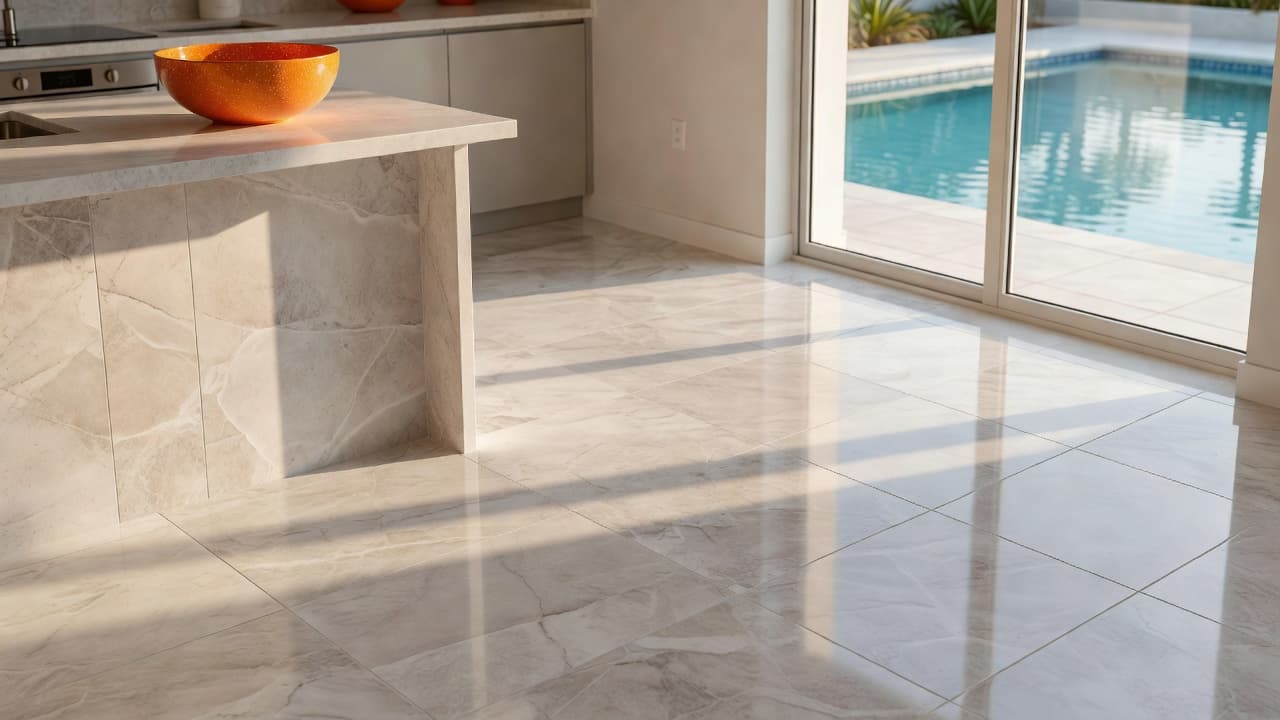
Bathrooms require even more caution. Wet feet, splash zones, and constant humidity make them a poor environment for flooring that absorbs water. Porcelain is the material I trust most because it stays water-resistant and cleans up without fuss. When renovating these spaces, adding a stylish backsplash tile or a decorative mosaic tile can elevate the design while keeping the area easy to maintain. I do not call any flooring waterproof in every possible situation, but porcelain gets as close as I want for a busy vacation home bathroom or kitchen.
Screened lanais and pool-adjacent spaces
Florida lanais are their own category. They sit between inside and outside, which means the flooring must handle sun, moisture, and traffic without becoming slippery or showing signs of wear.
For these spaces, I want an outdoor tile that is specifically rated for the job, feels solid underfoot, and maintains enough texture to remain slip resistant when wet. A polished surface can look sharp, but it quickly becomes a liability. Ideally, this flooring should also provide a cohesive transition to your swimming pool tile.
One slick floor is all it takes to make a beautiful lanai feel like a bad idea.
Travertine still has a fan base here, and I understand why. It offers a classic Florida aesthetic and often feels cooler underfoot. However, it requires more care. It needs regular sealing, and it can stain or wear over time. For most screened lanais, I still pick porcelain first. If the space requires the look of natural stone, I make sure the owner understands the long-term upkeep requirements before a single tile goes down.
Good tile needs good installation
I say this every chance I get, tile type is only half the story. A great product can fail if the install is sloppy. Because of this, homeowners should always work with licensed contractors for complex floor and wall installations to ensure the job meets high standards.
Porcelain is dense, so it usually needs specialized tools to cut and set properly. That is not a problem if the installer knows the material, but it matters. I suggest reaching out to reputable suppliers for installation referrals, as they often know which pros have the experience required to handle slab prep and complex layouts correctly.
I pay attention to the base first. The slab or subfloor has to be sound, flat, and ready. Cracks, loose coatings, paint, or moisture issues should be handled before tile starts.
A proper installation should also include the right mortar, solid grout work, and movement joints where they belong. In wet or exterior-adjacent spaces, a waterproofing membrane over the base is smart protection. If the floor needs slope for drainage, that has to be built in too. Tile will not fix bad water flow by magic.
Bad prep is how good floors end up with hollow spots, cracks, or grout problems. In a vacation home, that turns into callbacks, stress, and repair bills nobody wanted.
The finish matters as much as the material
I usually steer people toward matte or lightly textured tile for Florida vacation homes, a recommendation that many interior designers and design consultants support for high-traffic rentals. These finishes handle tracked-in grit better than polished surfaces, and they tend to feel more relaxed in a coastal home. By selecting a high-quality porcelain with the right texture, you can achieve a look of affordable luxury that stands up to heavy guest turnover.
Color matters too. I like mid-tone shades for busy homes because they hide dust and sand better than very dark or very light floors. A floor that looks good after a full weekend of guests is worth far more than one that only photographs well for a minute.
If the home gets a lot of pool traffic, I also think about how the floor feels under wet feet. A good tile should stay easy to clean, rather than turning into a constant maintenance project.
That is the whole formula for me: durable material, a practical finish, and an installation that respects the slab. If you miss one of those components, the floor will eventually start fighting back.
Frequently Asked Questions
Is porcelain tile truly better than ceramic for my Florida home?
Yes, for high-traffic vacation rentals, porcelain is significantly denser and more water-resistant than ceramic. While ceramic can be more cost-effective for low-use rooms, porcelain’s superior ability to resist scratching from sand and moisture makes it a much better long-term investment.
Can I use natural stone like travertine instead of porcelain?
Travertine offers a beautiful, authentic Florida aesthetic and feels cooler underfoot, which many owners appreciate. However, it is a porous natural material that requires regular professional sealing and consistent maintenance to prevent staining and wear, making it less “hands-off” than high-quality porcelain.
Why does the finish of the tile matter so much?
A polished or high-gloss tile will show scratches from grit and sand almost immediately in a busy rental. A matte or lightly textured finish is much more forgiving, as it hides minor wear and provides necessary slip resistance for areas that see frequent pool traffic.
How can I make my floors last longer against sand?
Preventing grit from ever reaching your tile is the best strategy. Using heavy-duty mats outside the entry and placing rugs or runners inside the main doorways will capture the majority of the sand before it can be ground into your floors by guest foot traffic.
Conclusion
When I choose flooring for a Florida vacation home, I want the simple answer that lasts. That usually means choosing high-quality porcelain tile, a matte or lightly textured finish, and an installation that is built to handle water, sand, and heavy guest turnover.
Ceramic can work in lighter-use spaces, and natural stone like travertine can look beautiful in the right setting. However, for most vacation properties, I prioritize the flooring material that maintains its structural integrity, keeps its aesthetic appeal, and does not require constant attention from property managers.
That is exactly what a great floor is supposed to do. It should disappear into the background and continue performing its job, even when the sand wins a little today. If you are ready to start your next project, I highly recommend visiting a local showroom gallery or design center. Seeing these textures and durability samples in person is the best way to ensure you select the perfect surface for your home.